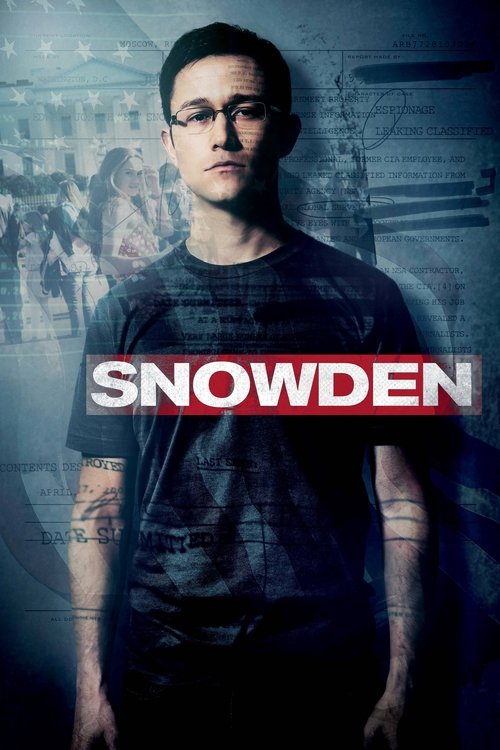
Snowden
2016 · Directed by Oliver Stone
Woke Score
CriticCritic Score
Audience
Ultra Based
Critics rated this 50 points above its woke score. Among Ultra Based films, this critic score ranks #954 of 1469.
Representation Casting
Score: 15/100
LaKeith Stanfield appears in a minor role, but there is no evidence of deliberate casting choices aimed at representational equity. The film's leadership and primary focus remain with white male characters.
LGBTQ+ Themes
Score: 0/100
There are no LGBTQ+ themes, characters, or representation present in the film. The romantic subplot involves a heterosexual relationship.
Feminist Agenda
Score: 5/100
Shailene Woodley's character exists primarily as emotional support for the male protagonist. Melissa Leo plays a government official, but the film contains no meaningful examination of gender dynamics or feminist critique.
Racial Consciousness
Score: 0/100
The film does not examine how surveillance systems disproportionately affect communities of color or engage with racial justice themes. Racial dynamics are not a focus.
Climate Crusade
Score: 0/100
Climate change and environmental concerns are entirely absent from the film's narrative and thematic concerns.
Eat the Rich
Score: 10/100
While the film critiques institutional power and government overreach, it does not specifically target capitalism or corporate systems. The critique is focused on surveillance bureaucracy rather than economic systems.
Body Positivity
Score: 0/100
There is no evidence of body positivity messaging, representation, or commentary in the film. Bodies are presented in conventional ways without any challenge to normative standards.
Neurodivergence
Score: 0/100
The film contains no representation of or engagement with neurodivergent characters or themes.
Revisionist History
Score: 0/100
While the film dramatizes recent historical events, it does not reinterpret or revise historical narratives in service of progressive ideology. It presents events relatively straightforwardly.
Lecture Energy
Score: 15/100
The film contains expository sequences explaining surveillance programs and their implications, though this is inherent to the biographical thriller genre rather than a deliberate preachy approach.


Synopsis
CIA employee Edward Snowden leaks thousands of classified documents to the press.
Consciousness Assessment
Oliver Stone's "Snowden" represents the dying gasps of a particular strain of political cinema, one concerned with institutional critique and the moral failures of government. The film operates almost entirely within a pre-2015 paradigm of progressive politics, which is to say it concerns itself with power structures and their abuses rather than the specific markers of contemporary cultural consciousness. Joseph Gordon-Levitt's Snowden is presented as a principled individual whose moral awakening stems from discovering vast surveillance programs, a narrative that privileges individual conscience over systemic analysis of the kind that has come to dominate contemporary discourse.
The cast, while competent, reflects no particular commitment to representational equity. LaKeith Stanfield appears in a supporting role, but his presence feels incidental rather than deliberate. The film's concerns are masculine and technocratic, focused on the whistleblower's journey and the mechanics of information exposure rather than any examination of how surveillance systems disproportionately affect marginalized communities. There is no interrogation of gender dynamics within the intelligence apparatus, no consideration of neurodivergence, and certainly no body positivity rhetoric. Shailene Woodley's girlfriend character exists primarily as emotional ballast for the male protagonist.
What we observe instead is a throwback to Oliver Stone's 1990s mode: righteous anger at American imperial overreach, paranoia about government surveillance, and a fundamental mistrust of institutions. These are the preoccupations of a different era of political filmmaking, one that preceded the crystallization of contemporary progressive cultural markers. "Snowden" is politically engaged but not culturally conscious in the specific modern sense. It is a film about power and its concealment, not about identity and its recognition.
Analysis generated by our Consciousness Algorithm
Critic Reviews
“You might not agree with Stone that the man is a hero, but you probably do want to see the film so you can compute what the whole uproar was about.”
“It’s the most important and galvanizing political drama by an American filmmaker in years.”
“Moviegoers will love or hate Oliver Stone and his politics until the end of time. With well-made movies such as Snowden, though, his skill as a filmmaker becomes much harder for the detractors to debate.”
“Snowden is mostly flat, overlong, unfocused and didactic.”
Consciousness Markers
LaKeith Stanfield appears in a minor role, but there is no evidence of deliberate casting choices aimed at representational equity. The film's leadership and primary focus remain with white male characters.
There are no LGBTQ+ themes, characters, or representation present in the film. The romantic subplot involves a heterosexual relationship.
Shailene Woodley's character exists primarily as emotional support for the male protagonist. Melissa Leo plays a government official, but the film contains no meaningful examination of gender dynamics or feminist critique.
The film does not examine how surveillance systems disproportionately affect communities of color or engage with racial justice themes. Racial dynamics are not a focus.
Climate change and environmental concerns are entirely absent from the film's narrative and thematic concerns.
While the film critiques institutional power and government overreach, it does not specifically target capitalism or corporate systems. The critique is focused on surveillance bureaucracy rather than economic systems.
There is no evidence of body positivity messaging, representation, or commentary in the film. Bodies are presented in conventional ways without any challenge to normative standards.
The film contains no representation of or engagement with neurodivergent characters or themes.
While the film dramatizes recent historical events, it does not reinterpret or revise historical narratives in service of progressive ideology. It presents events relatively straightforwardly.
The film contains expository sequences explaining surveillance programs and their implications, though this is inherent to the biographical thriller genre rather than a deliberate preachy approach.