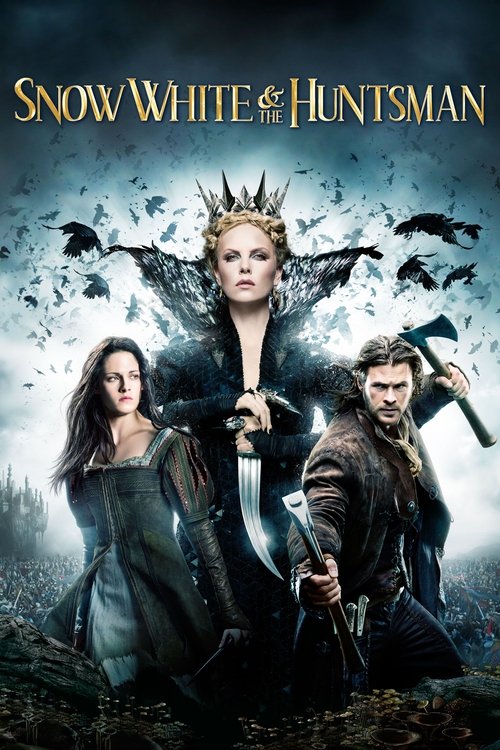
Snow White and the Huntsman
2012 · Directed by Rupert Sanders
Woke Score
CriticCritic Score
Audience
Ultra Based
Critics rated this 49 points above its woke score. Among Ultra Based films, this critic score ranks #986 of 1469.
Representation Casting
Score: 25/100
Female leads in prominent roles, but predominantly white cast with no apparent diversity consciousness. Female agency present but treated as narrative convention rather than ideological statement.
LGBTQ+ Themes
Score: 0/100
No LGBTQ+ characters, relationships, or themes present in the film.
Feminist Agenda
Score: 35/100
Snow White functions as a warrior and leader rather than a damsel, and the Evil Queen is a complex antagonist. However, this reflects generic action-hero feminism rather than ideological engagement with gender systems.
Racial Consciousness
Score: 0/100
No meaningful racial diversity, representation, or commentary about race present in the film.
Climate Crusade
Score: 0/100
No environmental themes or climate-related commentary in the narrative.
Eat the Rich
Score: 0/100
No critique of capitalism, wealth inequality, or class systems present in the film.
Body Positivity
Score: 0/100
No engagement with body diversity or body positivity themes. All characters conform to conventional beauty standards.
Neurodivergence
Score: 0/100
No representation of neurodivergent characters or themes.
Revisionist History
Score: 0/100
This is a fantasy adaptation of a fairy tale, not historical fiction, so revisionism of actual history does not apply.
Lecture Energy
Score: 0/100
The film does not engage in social commentary or lecture audiences about contemporary social issues.


Synopsis
After the Evil Queen marries the King, she performs a violent coup in which the King is murdered and his daughter, Snow White, is taken captive. Almost a decade later, a grown Snow White is still in the clutches of the Queen. In order to obtain immortality, The Evil Queen needs the heart of Snow White. After Snow escapes the castle, the Queen sends the Huntsman to find her in the Dark Forest.
Consciousness Assessment
Snow White and the Huntsman arrives as a muscular attempt to retrofit a centuries-old fairy tale into the action-adventure template circa 2012, a period when studios were still calibrating how female protagonists ought to swing swords. The film positions its titular character as a warrior-leader rather than a victim, and Charlize Theron's Evil Queen possesses more dimension than the typical cackling antagonist, but these choices reflect the broader Hollywood pivot toward female-centered action franchises rather than any coherent social consciousness. The film operates within a purely narrative logic, not an ideological one.
What distinguishes this adaptation from its source material is primarily a matter of scale and spectacle, not progressive sensibility. Snow White leads an army, commands loyalty through martial prowess, and the film treats her authority as legitimate within its own fantasy framework. Yet the film never examines power structures, gender dynamics, or systemic oppression in ways that would constitute modern cultural commentary. The Evil Queen's motivations stem from vanity and a hunger for immortality, not from any structural injustice worth interrogating.
The film remains fundamentally a fairy tale adaptation dressed in contemporary action grammar. It contains no LGBTQ+ representation, no racial consciousness, no interrogation of capitalism or class, no engagement with disability or neurodivergence, and no environmental themes. The female agency on display, while present, emerges from generic storytelling conventions rather than from any deliberate attempt to engage with contemporary social discourse. This is entertainment in service of entertainment.
Analysis generated by our Consciousness Algorithm
Critic Reviews
“Snow White and the Huntsman reinvents the legendary story in a film of astonishing beauty and imagination.”
“I resisted this derivative mishmash of classic fairytale and modern epic fantasy for as long as I could, but ultimately it swept me up into its geeky but manly embrace and carried me away on a white charger.”
“Ambitious, brutish, ruthlessly unromantic – has the right idea casting its heroine as a Joan of Arc-type crusader and its evil queen a dissertation (albeit first draft) on beauty as the most direct path to power for the disenfranchised female.”
“Suffers from a problem in its rhythm. It's not that its pace is too slow, but that it's too regular, and this lack of syncopation makes it feel slow. ”
Consciousness Markers
Female leads in prominent roles, but predominantly white cast with no apparent diversity consciousness. Female agency present but treated as narrative convention rather than ideological statement.
No LGBTQ+ characters, relationships, or themes present in the film.
Snow White functions as a warrior and leader rather than a damsel, and the Evil Queen is a complex antagonist. However, this reflects generic action-hero feminism rather than ideological engagement with gender systems.
No meaningful racial diversity, representation, or commentary about race present in the film.
No environmental themes or climate-related commentary in the narrative.
No critique of capitalism, wealth inequality, or class systems present in the film.
No engagement with body diversity or body positivity themes. All characters conform to conventional beauty standards.
No representation of neurodivergent characters or themes.
This is a fantasy adaptation of a fairy tale, not historical fiction, so revisionism of actual history does not apply.
The film does not engage in social commentary or lecture audiences about contemporary social issues.