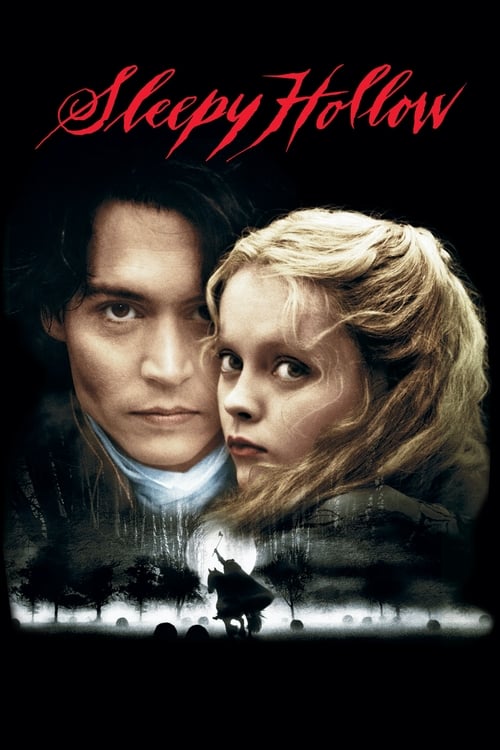
Sleepy Hollow
1999 · Directed by Tim Burton
Woke Score
CriticCritic Score
Audience
Ultra Based
Critics rated this 63 points above its woke score. Among Ultra Based films, this critic score ranks #774 of 1469.
Representation Casting
Score: 0/100
The cast is predominantly white with no apparent effort toward diverse representation. This reflects period-appropriate casting for a 1999 film but shows no intentional progressive diversity work.
LGBTQ+ Themes
Score: 0/100
No LGBTQ+ themes, characters, or representation are present in the film. The narrative focuses entirely on heterosexual romantic relationships within a gothic horror framework.
Feminist Agenda
Score: 5/100
While Christina Ricci's character Katrina is intelligent and resourceful, she ultimately functions as a love interest and plot device. Her agency is limited and her role conforms to traditional period drama expectations for female characters.
Racial Consciousness
Score: 0/100
The film shows no racial consciousness or engagement with issues of colonialism, slavery, or indigenous peoples. The colonial New York setting is treated as pure aesthetic backdrop.
Climate Crusade
Score: 0/100
Climate themes are entirely absent from this gothic horror film. Environmental consciousness plays no role in the narrative or thematic concerns.
Eat the Rich
Score: 0/100
The film contains no critique of capitalism, class systems, or economic inequality. The narrative operates in a purely supernatural register divorced from material concerns.
Body Positivity
Score: 0/100
Body positivity themes are not present. The film's interest in bodies is purely in their disfigurement and destruction as elements of gothic horror spectacle.
Neurodivergence
Score: 0/100
No representation of neurodivergence or disability is evident. Ichabod Crane's character traits are presented as personality quirks rather than any intentional commentary on neurodivergence.
Revisionist History
Score: 0/100
The film makes no attempt to revise or reexamine historical events through a modern lens. It treats its colonial setting as a purely fantastical backdrop for supernatural horror.
Lecture Energy
Score: 0/100
The film contains no preachy moments or attempts to educate the audience about social issues. Its concerns are purely narrative and aesthetic.


Synopsis
Skeptical young detective Ichabod Crane gets transferred to the hamlet of Sleepy Hollow, New York, where he is tasked with investigating the decapitations of three people – murders the townsfolk attribute to a legendary specter, The Headless Horseman.
Consciousness Assessment
Sleepy Hollow arrives as a gothic exercise in style without substance, a period horror film that concerns itself exclusively with atmosphere, gore, and the peculiar affectations of its lead actor. Tim Burton's adaptation of Washington Irving's 1820 short story transposes the material into 1799 colonial New York, where detective Ichabod Crane pursues the Headless Horseman through fog and blood. The film operates within a purely aesthetic register, treating its colonial setting as a backdrop for Burton's signature visual obsessions rather than as a historical moment worthy of examination or critique. Christina Ricci's Katrina Van Tassel exists primarily as a romantic interest, her agency confined to the traditional female role of the period drama.
The cast, composed almost entirely of white British and American character actors, reflects the film's indifference to contemporary casting sensibilities. One might note that the film does not actively condemn the colonial enterprise or examine the violence inherent in European settlement, but nor does it celebrate such systems. It simply ignores them entirely. The supernatural murders dominate the narrative to the exclusion of any social commentary. The Headless Horseman functions as pure malevolence, a vehicle for Burton's interest in grotesque imagery rather than as a symbol laden with meaning about class struggle, imperialism, or religious persecution.
The film's violence, while graphic, serves no progressive purpose. Decapitations are presented as spectacle, the blood and brutality existing for their own sake. There is no attempt to critique systems of power, interrogate gender roles, or explore the treatment of marginalized populations. This is horror as pure genre exercise, untethered from any contemporary social consciousness. For a 1999 film, this is precisely what one would expect. The absence of progressive markers is not an oversight but rather the film's fundamental nature as a period entertainment.
Analysis generated by our Consciousness Algorithm
Critic Reviews
“Gorgeous filmmaking that brims over with funhouse thrills and ravishing romance.”
“This is the best-looking horror film since Coppola's "Bram Stoker's Dracula."”
“This is a very bloody fantasy (reds do eke their way into the black-and-blues), but it's hard to think of another film with as many severed heads whose overall tone is so sweet.”
“A film with no theatrical core and no integrity in the writing, acting or storytelling.”
Consciousness Markers
The cast is predominantly white with no apparent effort toward diverse representation. This reflects period-appropriate casting for a 1999 film but shows no intentional progressive diversity work.
No LGBTQ+ themes, characters, or representation are present in the film. The narrative focuses entirely on heterosexual romantic relationships within a gothic horror framework.
While Christina Ricci's character Katrina is intelligent and resourceful, she ultimately functions as a love interest and plot device. Her agency is limited and her role conforms to traditional period drama expectations for female characters.
The film shows no racial consciousness or engagement with issues of colonialism, slavery, or indigenous peoples. The colonial New York setting is treated as pure aesthetic backdrop.
Climate themes are entirely absent from this gothic horror film. Environmental consciousness plays no role in the narrative or thematic concerns.
The film contains no critique of capitalism, class systems, or economic inequality. The narrative operates in a purely supernatural register divorced from material concerns.
Body positivity themes are not present. The film's interest in bodies is purely in their disfigurement and destruction as elements of gothic horror spectacle.
No representation of neurodivergence or disability is evident. Ichabod Crane's character traits are presented as personality quirks rather than any intentional commentary on neurodivergence.
The film makes no attempt to revise or reexamine historical events through a modern lens. It treats its colonial setting as a purely fantastical backdrop for supernatural horror.
The film contains no preachy moments or attempts to educate the audience about social issues. Its concerns are purely narrative and aesthetic.