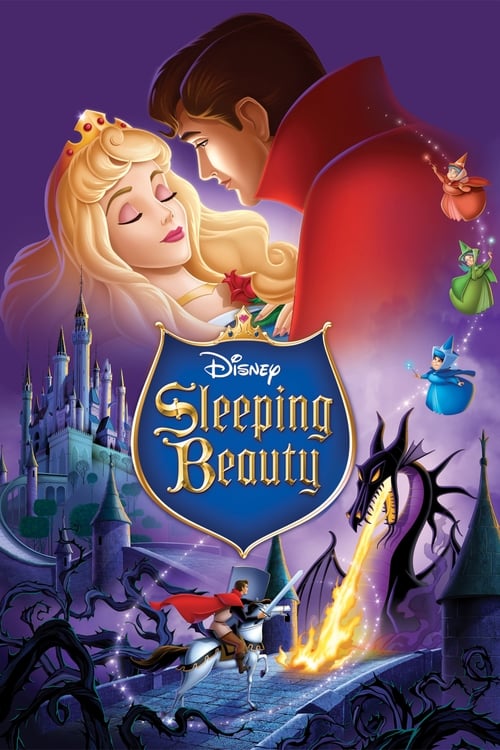
Sleeping Beauty
1959 · Directed by Clyde Geronimi
Woke Score
CriticCritic Score
Audience
Ultra Based
Critics rated this 60 points above its woke score. Among Ultra Based films, this critic score ranks #887 of 1469.
Representation Casting
Score: 0/100
The film features only white characters with no attention to representation or diversity of any kind. This reflects the era's complete absence of such considerations.
LGBTQ+ Themes
Score: 0/100
No LGBTQ+ themes, characters, or subtext are present. The film presents exclusively heterosexual romantic dynamics.
Feminist Agenda
Score: 2/100
While the three good fairies demonstrate agency and capability, the protagonist Princess Aurora is fundamentally passive and dependent on others for resolution. The narrative ultimately endorses romantic love as the solution to her predicament.
Racial Consciousness
Score: 0/100
No racial consciousness or commentary of any kind is present. The film operates in an entirely race-unaware context.
Climate Crusade
Score: 0/100
No environmental themes, climate messaging, or ecological awareness appears in the narrative.
Eat the Rich
Score: 0/100
The film contains no critique of capitalism, class systems, or wealth inequality. It presents monarchy as a natural and benevolent system.
Body Positivity
Score: 0/100
No body positivity messaging or representation of diverse body types is present. Aurora represents a single idealized aesthetic standard.
Neurodivergence
Score: 0/100
No neurodivergent characters or representation of neurodivergence appears in the film.
Revisionist History
Score: 0/100
The film contains no historical narrative or revisionist reinterpretation of history.
Lecture Energy
Score: 0/100
The film presents no preachy messaging or lecture-like delivery of social or political viewpoints.


Synopsis
Cursed to die by the evil fairy Maleficent when she was a baby, Princess Aurora is sent into hiding under protection from three good fairies. As she grows up far away, Maleficent becomes increasingly determined to seal the princess's fate.
Consciousness Assessment
Sleeping Beauty occupies a peculiar position in the Disney canon as a technical masterpiece of animation that has, over the decades, become a lightning rod for critics of traditional gender representation. The film's narrative concerns itself almost entirely with male and female characters acting upon the passive Princess Aurora rather than with Aurora's own volition or growth. She appears briefly, smiles pleasantly, dances with a prince she has just met, and spends the climactic sequence in a magical sleep while others resolve the conflict. This is not to diminish the film's artistic or narrative accomplishments, but rather to observe that it embodies precisely the kind of princess narrative that later animated films would work to complicate and subvert.
The three good fairies, particularly Flora and Fauna, emerge as the film's true protagonists and possess considerably more agency than the princess they are charged with protecting. They scheme, argue, plan, and act throughout. Yet even their efforts are ultimately subordinate to the conflict between good and evil forces represented by the fairies and Maleficent. The film presents a world in which women exist primarily in relation to their magical or domestic duties, and in which romantic love functions as the ultimate resolution to the heroine's predicament.
From the vantage point of contemporary cultural analysis, Sleeping Beauty contains none of the markers that define modern progressive sensibilities. There are no attempts at representation casting, no LGBTQ+ themes, no feminist agenda, no racial consciousness, no climate messaging, no anti-capitalist sentiment, no body positivity, no neurodivergence, no revisionist history, and certainly no lecture energy about social issues. This is simply a film of its era, animated with precision and presented without irony or self-awareness about its gender dynamics. One observes it as an artifact of 1959 without pretense.
Analysis generated by our Consciousness Algorithm
Critic Reviews
“For those eager to tease out what Leigh’s conceptual exercise is about, the key no doubt lies in Lucy’s relation to her own mortality, with each descent into sleep resembling a death of sorts.”
“This will divide audiences as much as "The Tree Of Life," but it's a brave and beautiful calling card for both filmmaker and star. Drink it up, sit back and think of a very different Australia. ”
“Leigh does a stellar job of showing how these events seep into the unaware girl's everyday existence - almost all of the film's sequences are photographed in precisely composed, inherently surreal single shots.”
“Though Julia Leigh's surprisingly dull debut is meant to present the mysteries of a troubled young woman, you're more likely to wonder why its star, Emily Browning, is drawn to such demeaning roles. ”
Consciousness Markers
The film features only white characters with no attention to representation or diversity of any kind. This reflects the era's complete absence of such considerations.
No LGBTQ+ themes, characters, or subtext are present. The film presents exclusively heterosexual romantic dynamics.
While the three good fairies demonstrate agency and capability, the protagonist Princess Aurora is fundamentally passive and dependent on others for resolution. The narrative ultimately endorses romantic love as the solution to her predicament.
No racial consciousness or commentary of any kind is present. The film operates in an entirely race-unaware context.
No environmental themes, climate messaging, or ecological awareness appears in the narrative.
The film contains no critique of capitalism, class systems, or wealth inequality. It presents monarchy as a natural and benevolent system.
No body positivity messaging or representation of diverse body types is present. Aurora represents a single idealized aesthetic standard.
No neurodivergent characters or representation of neurodivergence appears in the film.
The film contains no historical narrative or revisionist reinterpretation of history.
The film presents no preachy messaging or lecture-like delivery of social or political viewpoints.