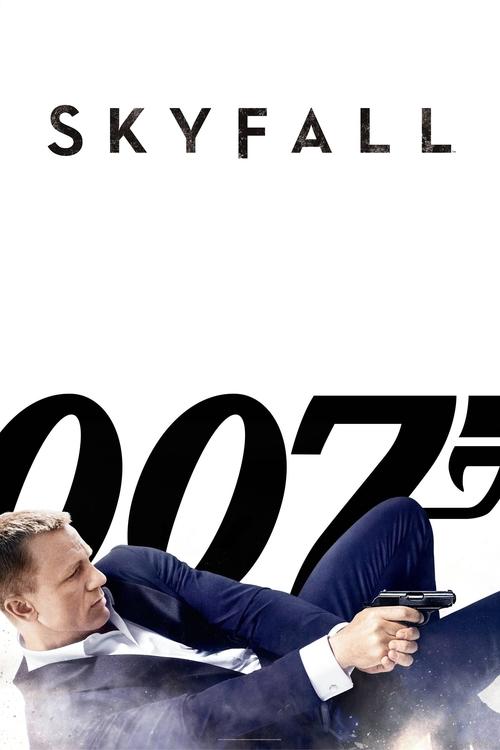
Skyfall
2012 · Directed by Sam Mendes
Woke Score
CriticCritic Score
Audience
Based
Critics rated this 59 points above its woke score. Among Based films, this critic score ranks #66 of 345.
Representation Casting
Score: 35/100
The film includes Judi Dench as a complex female authority figure and Naomie Harris as a capable field agent, representing modest progress for the Bond franchise. However, both characters remain subordinate to Bond's narrative centrality, and the cast remains predominantly white.
LGBTQ+ Themes
Score: 0/100
There are no LGBTQ themes or representation in Skyfall. The film maintains the heteronormative framework of the Bond franchise without any meaningful engagement with LGBTQ narratives.
Feminist Agenda
Score: 25/100
While female characters demonstrate competence and authority, the film does not interrogate gender dynamics or patriarchal structures. Female agency exists within conventional narrative frameworks rather than challenging them.
Racial Consciousness
Score: 10/100
Racial consciousness is not a significant element of the film's thematic structure. The presence of actors of color is incidental to the narrative rather than central to any exploration of racial dynamics.
Climate Crusade
Score: 0/100
There are no climate-related themes or environmental consciousness in Skyfall. The film does not engage with ecological concerns or climate activism.
Eat the Rich
Score: 15/100
While the film depicts institutional critique and explores themes of power and surveillance, it does not mount any systematic critique of capitalism. The villain's motivation is personal vendetta rather than ideological opposition to economic systems.
Body Positivity
Score: 5/100
Bond's aging body is presented as a liability to be overcome rather than celebrated or normalized. The film uses physical deterioration as a marker of obsolescence rather than embracing body diversity or challenging conventional beauty standards.
Neurodivergence
Score: 0/100
There is no representation of or engagement with neurodivergent characters or experiences. The film does not acknowledge neurodiversity as a meaningful element of human experience.
Revisionist History
Score: 0/100
Skyfall does not engage in revisionist history or reexamine historical narratives through a contemporary lens. The film accepts the historical framework of British intelligence and Cold War politics without critical reevaluation.
Lecture Energy
Score: 20/100
The film occasionally comments on surveillance and institutional power in ways that feel somewhat preachy, but it avoids sustained moral lecturing. The social commentary is embedded in mood and visual language rather than explicit dialogue.


Synopsis
When Bond's latest assignment goes gravely wrong, agents around the world are exposed and MI6 headquarters is attacked. While M faces challenges to her authority and position from Gareth Mallory, the new Chairman of the Intelligence and Security Committee, it's up to Bond, aided only by field agent Eve, to locate the mastermind behind the attack.
Consciousness Assessment
Skyfall presents itself as a meditation on obsolescence, yet remains committed to the reassurance of tradition. Sam Mendes orchestrates a visually sumptuous exploration of aging masculinity and institutional decay, suggesting that the old order of masculine heroism cannot sustain itself in a world of digital surveillance and distributed power. Bond's deteriorating body becomes the film's primary text, a canvas upon which questions of relevance and mortality are written. However, this critique never extends to interrogating the power structures Bond represents or the colonial assumptions baked into the very concept of British intelligence supremacy.
The film's treatment of female characters reflects a franchise learning to accommodate contemporary expectations without fundamentally altering its DNA. Judi Dench's M commands respect and occupies genuine authority, yet her arc resolves in protection and sacrifice rather than transformation. Naomie Harris as Eve provides competence and presence but remains subordinate to Bond's narrative gravity. The film grants these characters complexity within the conventional framework of espionage cinema, which is to say it grants them less than modern sensibilities might demand but more than earlier entries would have permitted.
Skyfall succeeds as a blockbuster meditation on power, surveillance, and institutional vulnerability, but it does so in the language of traditional narrative cinema rather than in the vocabulary of contemporary social consciousness. The film's political commentary, such as it exists, emerges through mood and visual language rather than explicit engagement with systemic critique. It is a handsome film that thinks it is saying something profound about the world, and perhaps it is, but what it says belongs to the grammar of 2012 rather than to any sustained engagement with the progressive sensibilities that would come to dominate cultural discourse in the years that followed.
Analysis generated by our Consciousness Algorithm
Critic Reviews
“Putting the "intelligence" in MI6, Skyfall reps a smart, savvy and incredibly satisfying addition to the 007 oeuvre, one that places Judi Dench's M at the center of the action.”
“The Daniel Craig era comes of age with a ballsy Bond that takes brave chances and bold risks. Guess what? Turns out you can teach an old dog new tricks.”
“The third starring the totally captivating cool cucumber Daniel Craig as Agent 007 - is both an elegy and a mission statement. It's also a great, long-lasting jolt of pleasure.”
“In the utterly routine effort Skyfall, we're actually expected to cheer each chord we've heard so many times (here's a martini shaker! Look, it's a Walther PPK! And there's an Aston Martin!) We've been turned into wretched Pavlovian dogs, salivating at the bell instead of the snack. The highlight, by far, is a classic animated credit sequence: Adele, you are the new Shirley Bassey. ”
Consciousness Markers
The film includes Judi Dench as a complex female authority figure and Naomie Harris as a capable field agent, representing modest progress for the Bond franchise. However, both characters remain subordinate to Bond's narrative centrality, and the cast remains predominantly white.
There are no LGBTQ themes or representation in Skyfall. The film maintains the heteronormative framework of the Bond franchise without any meaningful engagement with LGBTQ narratives.
While female characters demonstrate competence and authority, the film does not interrogate gender dynamics or patriarchal structures. Female agency exists within conventional narrative frameworks rather than challenging them.
Racial consciousness is not a significant element of the film's thematic structure. The presence of actors of color is incidental to the narrative rather than central to any exploration of racial dynamics.
There are no climate-related themes or environmental consciousness in Skyfall. The film does not engage with ecological concerns or climate activism.
While the film depicts institutional critique and explores themes of power and surveillance, it does not mount any systematic critique of capitalism. The villain's motivation is personal vendetta rather than ideological opposition to economic systems.
Bond's aging body is presented as a liability to be overcome rather than celebrated or normalized. The film uses physical deterioration as a marker of obsolescence rather than embracing body diversity or challenging conventional beauty standards.
There is no representation of or engagement with neurodivergent characters or experiences. The film does not acknowledge neurodiversity as a meaningful element of human experience.
Skyfall does not engage in revisionist history or reexamine historical narratives through a contemporary lens. The film accepts the historical framework of British intelligence and Cold War politics without critical reevaluation.
The film occasionally comments on surveillance and institutional power in ways that feel somewhat preachy, but it avoids sustained moral lecturing. The social commentary is embedded in mood and visual language rather than explicit dialogue.