Sirāt
2025 · Directed by Oliver Laxe
Woke Score
CriticCritic Score
Ultra Based
Critics rated this 60 points above its woke score. Among Ultra Based films, this critic score ranks #404 of 1469.
Representation Casting
Score: 25/100
The film features North African and international cast members, but they function primarily as aesthetic elements within Laxe's metaphysical vision rather than as subjects with agency or narrative complexity. Representation here is incidental, not ideological.
LGBTQ+ Themes
Score: 5/100
No LGBTQ+ themes or representation are evident in the narrative or critical reception. The film's concerns are entirely metaphysical and existential rather than identity-based.
Feminist Agenda
Score: 15/100
The missing daughter serves as narrative motivation but is never fully present or developed as a character. The film does not engage with gender politics or feminist critique in any discernible way.
Racial Consciousness
Score: 20/100
The Moroccan setting and North African cast are visually integrated into the film, but without any explicit engagement with colonial history, postcolonial critique, or racial consciousness. The landscape and people are treated as universal metaphors.
Climate Crusade
Score: 10/100
While the desert landscape is central to the film's aesthetic, there is no evidence of climate activism or environmental consciousness in the narrative. The desert is a metaphysical space, not a political one.
Eat the Rich
Score: 15/100
The film explores underground rave culture and spiritual transcendence, which carry implicit critiques of mainstream consumer society, but this is not articulated as anti-capitalist ideology. The critique is aesthetic and spiritual rather than political.
Body Positivity
Score: 10/100
The film depicts bodies in states of exhaustion and transcendence within rave culture, but there is no engagement with body positivity discourse or celebration of diverse embodiment. Bodies are treated as vehicles for metaphysical experience.
Neurodivergence
Score: 5/100
No representation or engagement with neurodivergence is evident. The film's concerns are entirely removed from contemporary disability or neurodiversity discourse.
Revisionist History
Score: 0/100
The film does not engage with historical narratives or revisionism. Its temporal orientation is mythic and spiritual rather than historical.
Lecture Energy
Score: 25/100
While Laxe's film is challenging and demands interpretation, it operates through sensory immersion and aesthetic abstraction rather than explicit preachiness. The lecture energy is minimal, replaced by pure experience.
Synopsis
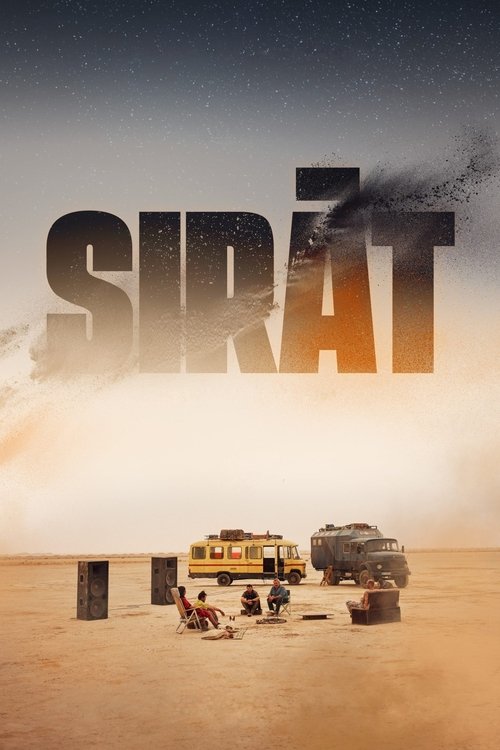
A man and his son arrive at a rave lost in the mountains of Morocco. They are looking for Marina, their daughter and sister, who disappeared months ago at another rave. Driven by fate, they decide to follow a group of ravers in search of one last party, in hopes Marina will be there.
Consciousness Assessment
Oliver Laxe's "Sirāt" is a metaphysical endurance test masquerading as a thriller, a film so committed to aesthetic abstraction that it barely acknowledges the social world at all. The narrative concerns a father and son traversing the Moroccan desert in search of their missing daughter, but the plot functions mainly as a pretext for Laxe to explore states of exhaustion, transcendence, and spiritual dissolution through sound and landscape. We are meant to experience this film rather than decode it, to surrender to its sensory bombardment rather than extract meaning. This is a work more interested in the metaphysics of grief than in any particular social consciousness.
The casting is deliberately international and the Moroccan setting is treated with visual reverence, yet neither gesture constitutes progressive representation in any meaningful sense. The film features North African extras and locations without attempting to construct narratives around their experience or dignity. They are scenery, albeit gorgeous scenery. The soundtrack and visual design suggest a kind of spiritual egalitarianism, a techno-fueled humanism that treats all bodies as equally vulnerable to the desert's indifference. Yet this universalism is precisely the opposite of the modern progressive sensibility, which demands specificity, particularity, and named historical grievance. Laxe's vision dissolves such distinctions into an undifferentiated aesthetic sublime.
The result is a film that actively resists the concerns that animate contemporary cultural criticism. The characters are not defined by identity categories, no systemic injustices are interrogated, and the film's central preoccupation is metaphysical rather than social. "Sirāt" is a work that has transcended ideology altogether, which means it scores low on every marker of modern progressive cultural consciousness. It is neither good nor bad on these metrics because it simply refuses to play the game. In this sense, it may be the most honest film one could make in 2025, though honesty of this kind offers no comfort to those seeking affirmation of their values.
Analysis generated by our Consciousness Algorithm
Critic Reviews
“A brutal reminder that the journey can be more important than the destination, Sirât is an unforgettable exercise in tension that wallops its audience like a deafening blast of bass to the face.”
“The cast of mostly first-time actors is unforgettable, each face elemental in its own way, and it's wonderful to see López in a sympathetic role.”
“Lopez is haunting as a Job-like Everyman being put through one horror after another.”
“Sirāt will frustrate viewers seeking answers, but it rewards those attentive to process, trusting accumulation over explanation, behavior over speech.”
Consciousness Markers
The film features North African and international cast members, but they function primarily as aesthetic elements within Laxe's metaphysical vision rather than as subjects with agency or narrative complexity. Representation here is incidental, not ideological.
No LGBTQ+ themes or representation are evident in the narrative or critical reception. The film's concerns are entirely metaphysical and existential rather than identity-based.
The missing daughter serves as narrative motivation but is never fully present or developed as a character. The film does not engage with gender politics or feminist critique in any discernible way.
The Moroccan setting and North African cast are visually integrated into the film, but without any explicit engagement with colonial history, postcolonial critique, or racial consciousness. The landscape and people are treated as universal metaphors.
While the desert landscape is central to the film's aesthetic, there is no evidence of climate activism or environmental consciousness in the narrative. The desert is a metaphysical space, not a political one.
The film explores underground rave culture and spiritual transcendence, which carry implicit critiques of mainstream consumer society, but this is not articulated as anti-capitalist ideology. The critique is aesthetic and spiritual rather than political.
The film depicts bodies in states of exhaustion and transcendence within rave culture, but there is no engagement with body positivity discourse or celebration of diverse embodiment. Bodies are treated as vehicles for metaphysical experience.
No representation or engagement with neurodivergence is evident. The film's concerns are entirely removed from contemporary disability or neurodiversity discourse.
The film does not engage with historical narratives or revisionism. Its temporal orientation is mythic and spiritual rather than historical.
While Laxe's film is challenging and demands interpretation, it operates through sensory immersion and aesthetic abstraction rather than explicit preachiness. The lecture energy is minimal, replaced by pure experience.