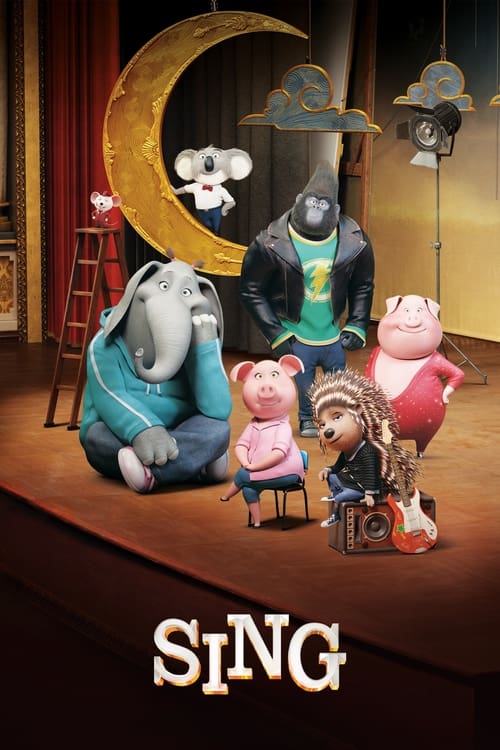
Sing
2016 · Directed by Garth Jennings
Woke Score
CriticCritic Score
Audience
Ultra Based
Critics rated this 44 points above its woke score. Among Ultra Based films, this critic score ranks #925 of 1469.
Representation Casting
Score: 35/100
The ensemble cast includes multiple animal species and features several female voice actors in substantial roles. However, the representation appears primarily as visual diversity rather than deliberate casting strategy addressing systemic underrepresentation.
LGBTQ+ Themes
Score: 0/100
No LGBTQ+ themes, characters, or relationships are present in the film. The romantic subplots all involve heterosexual pairings without any alternative representation.
Feminist Agenda
Score: 15/100
Female characters exist and have narrative agency, but the film does not interrogate gender dynamics or systemic inequality. Their arcs focus on personal growth rather than confronting gendered constraints.
Racial Consciousness
Score: 0/100
The film presents no racial themes or consciousness. Characters are anthropomorphic animals without racial markers or commentary on racial dynamics.
Climate Crusade
Score: 0/100
Climate change and environmental concerns receive no attention in the narrative. The film's setting and plot contain no elements related to climate activism or environmental consciousness.
Eat the Rich
Score: 0/100
The film presents no critique of capitalism or wealth accumulation. Economic struggle is framed as a personal challenge to overcome through individual merit rather than systemic critique.
Body Positivity
Score: 20/100
The cast includes characters of varied body types, and Rosita is depicted as a pig without explicit mockery of her appearance. However, the film does not actively promote body positivity messaging or address weight-related social commentary.
Neurodivergence
Score: 0/100
No neurodivergent characters or conditions are represented or discussed in the film. Performance anxiety is treated as a temporary emotional state rather than neurodivergence.
Revisionist History
Score: 0/100
The film contains no historical content or revisionist interpretations. It is a contemporary fictional narrative with no engagement with historical events or narratives.
Lecture Energy
Score: 10/100
The film maintains a light, entertainment-focused tone without delivering preachy messages about social issues. Characters express generic motivational platitudes about following dreams without explicit moralizing.


Synopsis
A koala named Buster recruits his best friend to help him drum up business for his theater by hosting a singing competition.
Consciousness Assessment
Sing operates as a straightforward animated vehicle for celebrity voice talent and chart-topping musical numbers, a formula that requires minimal engagement with the social consciousness markers of contemporary progressive cinema. The film assembles an ensemble of animal characters with varied species representation, though this diversity serves primarily as visual novelty rather than any explicit commitment to representation politics. Buster the koala is the clear protagonist through whose eyes we view the narrative, while the supporting cast includes Rosita (a pig), Ash (a porcupine), Johnny (a gorilla), and Meena (an elephant), each bearing broadly sketched personality traits that map onto their animal archetypes with little complication.
The film's engagement with gender exists at the level of basic inclusion. Reese Witherspoon voices Rosita, a pig struggling to balance family obligations with artistic ambition, and Scarlett Johansson voices Ash, a porcupine navigating romantic disappointment. These characters occupy narrative space and their arcs receive attention, but the film presents no sustained interrogation of gender dynamics or systemic inequality. The storyline functions as entertainment predicated on universal themes of self-discovery and artistic expression rather than any pointed critique of how gendered expectations constrain these pursuits. Jennifer Hudson's Meena, an elephant with performance anxiety, similarly receives a sympathetic arc without the film offering commentary on the social structures that might produce such anxiety.
The film's economic dimensions remain largely unexamined. While Buster's theater faces financial crisis and serves as the nominal plot driver, the film treats this predicament as a personal challenge to overcome through determination and talent rather than as a structural condition warranting analysis. The singing competition itself functions as a meritocratic pathway to success, with no interrogation of systemic barriers or the luck required to achieve artistic prominence. No character grapples with their economic circumstances in ways that would suggest systemic awareness. The film remains comfortable in its apolitical space, content to celebrate individual perseverance through song.
Analysis generated by our Consciousness Algorithm
Critic Reviews
“When the big show finally happens at the end of the picture? You can’t help but smile.”
“While there are no profound life lessons to be found in these subplots, Jennings and his cast manage to deliver a steady supply of laughs, while respecting one of Illumination’s core principles: It’s OK to be silly.”
“This is the kind of movie "Trolls" set out to be and with this kind of innovation in animation, it succeeds on far more levels as well. There are just so many laughs to be had but there's also plenty of warmth with a lot of focus put on each contestant's family.”
“Sing is the Platonic ideal of an Illumination movie. It’s a profoundly soulless piece of work that shines a light on the mediocrity they foist upon the children of the world.”
Consciousness Markers
The ensemble cast includes multiple animal species and features several female voice actors in substantial roles. However, the representation appears primarily as visual diversity rather than deliberate casting strategy addressing systemic underrepresentation.
No LGBTQ+ themes, characters, or relationships are present in the film. The romantic subplots all involve heterosexual pairings without any alternative representation.
Female characters exist and have narrative agency, but the film does not interrogate gender dynamics or systemic inequality. Their arcs focus on personal growth rather than confronting gendered constraints.
The film presents no racial themes or consciousness. Characters are anthropomorphic animals without racial markers or commentary on racial dynamics.
Climate change and environmental concerns receive no attention in the narrative. The film's setting and plot contain no elements related to climate activism or environmental consciousness.
The film presents no critique of capitalism or wealth accumulation. Economic struggle is framed as a personal challenge to overcome through individual merit rather than systemic critique.
The cast includes characters of varied body types, and Rosita is depicted as a pig without explicit mockery of her appearance. However, the film does not actively promote body positivity messaging or address weight-related social commentary.
No neurodivergent characters or conditions are represented or discussed in the film. Performance anxiety is treated as a temporary emotional state rather than neurodivergence.
The film contains no historical content or revisionist interpretations. It is a contemporary fictional narrative with no engagement with historical events or narratives.
The film maintains a light, entertainment-focused tone without delivering preachy messages about social issues. Characters express generic motivational platitudes about following dreams without explicit moralizing.