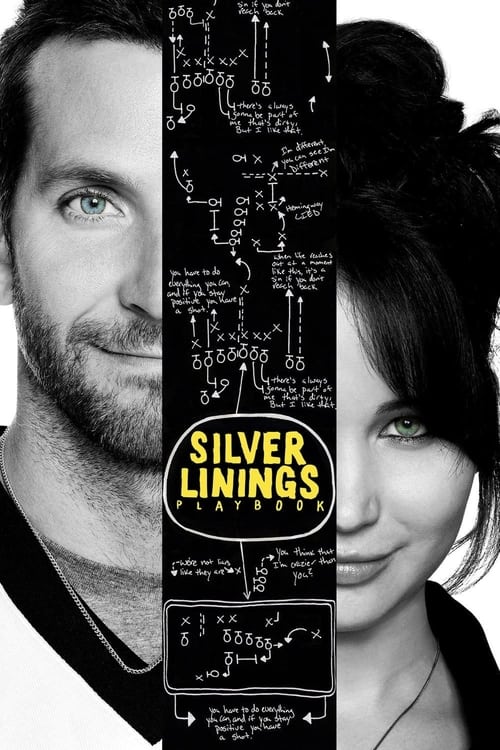
Silver Linings Playbook
2012 · Directed by David O. Russell
Woke Score
CriticCritic Score
Audience
Based
Critics rated this 46 points above its woke score. Among Based films, this critic score ranks #65 of 345.
Representation Casting
Score: 35/100
The cast includes Anupam Kher and Chris Tucker in supporting roles, providing some ethnic diversity, though their characters remain subordinate to the central white romance narrative.
LGBTQ+ Themes
Score: 0/100
No LGBTQ themes, characters, or representation appear in the film. Sexuality is entirely heteronormative.
Feminist Agenda
Score: 45/100
Tiffany Maxwell is portrayed as sexually autonomous and agential, refusing victimhood and pursuing her own goals. However, the narrative ultimately centers male emotional recovery and reconciliation.
Racial Consciousness
Score: 15/100
Minority characters exist in the film but without explicit acknowledgment of race or racial dynamics. Their presence is incidental rather than thematic.
Climate Crusade
Score: 0/100
No climate themes, messaging, or environmental consciousness appears in the film.
Eat the Rich
Score: 0/100
The film contains no critique of capitalism, wealth inequality, or systemic economic injustice. Economic struggle is treated as personal misfortune.
Body Positivity
Score: 0/100
No body positivity messaging or commentary on body image standards appears in the film.
Neurodivergence
Score: 60/100
The film centers on bipolar disorder and mental health recovery with considerable nuance, treating mental illness as a condition to be managed rather than overcome or cured, though it ultimately frames mental health through a romantic reconciliation lens.
Revisionist History
Score: 0/100
No revisionist historical narratives or reinterpretations of historical events appear in the film.
Lecture Energy
Score: 10/100
The film occasionally includes exposition about mental health and medication, but resists preachy moralizing or instructional tone overall.


Synopsis
After losing his job and wife, and spending time in an institution, a former teacher winds up living with his parents. He wants to rebuild his life and reconcile with his wife, but his father would be happy if he shared his obsession with the Philadelphia Eagles. Things get complicated when he meets Tiffany Maxwell who offers to help him reconnect with his wife if he will do something very important for her in exchange.
Consciousness Assessment
Silver Linings Playbook arrives at the intersection of prestige filmmaking and mass appeal, a place where the mentally ill are treated with enough dignity that we might mistake competent representation for progressive consciousness. The film centers the experiences of a bipolar man and a woman with unspecified trauma, granting them agency and complexity rather than relegating them to supporting roles as cautionary tales. Bradley Cooper and Jennifer Lawrence carry the film with performances that suggest genuine interiority, and the narrative refuses to punish its characters for their conditions. This is admirable, but we must be careful not to confuse basic humanistic treatment of mental illness with the specific cultural markers of contemporary progressive sensibility.
The supporting cast includes Anupam Kher in a role that, while present, remains subordinate to the film's domestic concerns. The film's feminism, such as it is, emerges through Tiffany's agency and sexual autonomy rather than through explicit messaging. She is neither punished for her desires nor elevated as a prize. Yet the film's fundamental project remains a romantic reconciliation that privileges male emotional recovery above all else. The Philadelphia Eagles function as shorthand for working-class masculinity and family obligation, never interrogated or critiqued. There is no climate consciousness, no anti-capitalist sentiment, and the film's relationship to disability is one of sympathetic understanding rather than structural critique.
What we have is a film made with genuine care for its characters, a mainstream drama that treats mental health with seriousness and avoids cheap sentiment. This is not nothing. But neither is it an expression of contemporary progressive cultural consciousness. It is a well-made film from 2012 that happens to include people of various backgrounds and treats its female protagonist with respect. The impulse to read this as culturally conscious says more about our baseline expectations of mainstream cinema than it does about the film itself.
Analysis generated by our Consciousness Algorithm
Critic Reviews
“An enormously entertaining, crowd-pleasing winner from the director whose comedic edge has never been sharper.”
“It is, without doubt, a transcendent endeavor, from its exhilaratingly smart screenplay - director David O. Russell's adaptation of the novel by former South Jersey teacher Matthew Quick - to the unexpected and moving turns of its two leads. ”
“Family nuttiness, football madness, romantic obsession, and certifiable mental illness coexist happily in Silver Linings Playbook - a crazy beaut of a comedy that brims with generosity and manages to circumvent predictability at every turn. ”
“When one stops to consider how irksomely on the nose so much of this is, the qualities which intend to most readily ingratiate the film with us begin to appear perceptibly disingenuous and false.”
Consciousness Markers
The cast includes Anupam Kher and Chris Tucker in supporting roles, providing some ethnic diversity, though their characters remain subordinate to the central white romance narrative.
No LGBTQ themes, characters, or representation appear in the film. Sexuality is entirely heteronormative.
Tiffany Maxwell is portrayed as sexually autonomous and agential, refusing victimhood and pursuing her own goals. However, the narrative ultimately centers male emotional recovery and reconciliation.
Minority characters exist in the film but without explicit acknowledgment of race or racial dynamics. Their presence is incidental rather than thematic.
No climate themes, messaging, or environmental consciousness appears in the film.
The film contains no critique of capitalism, wealth inequality, or systemic economic injustice. Economic struggle is treated as personal misfortune.
No body positivity messaging or commentary on body image standards appears in the film.
The film centers on bipolar disorder and mental health recovery with considerable nuance, treating mental illness as a condition to be managed rather than overcome or cured, though it ultimately frames mental health through a romantic reconciliation lens.
No revisionist historical narratives or reinterpretations of historical events appear in the film.
The film occasionally includes exposition about mental health and medication, but resists preachy moralizing or instructional tone overall.