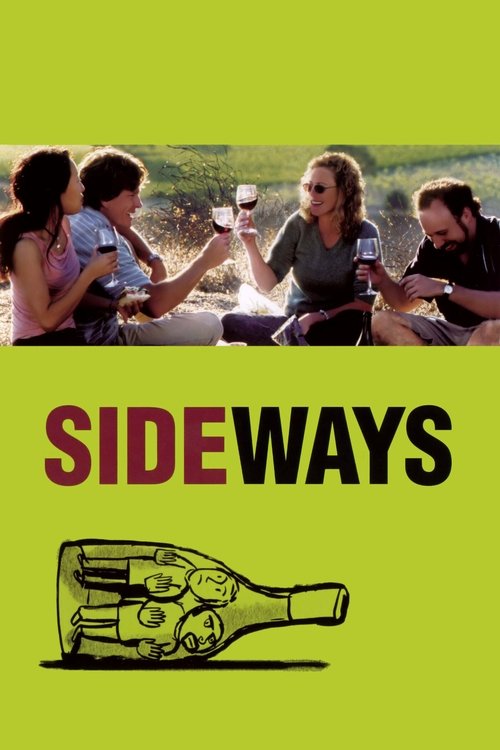
Sideways
2004 · Directed by Alexander Payne
Woke Score
CriticCritic Score
Audience
Ultra Based
Critics rated this 90 points above its woke score. Among Ultra Based films, this critic score ranks #66 of 1469.
Representation Casting
Score: 15/100
Female characters are present but primarily serve male narrative needs. Sandra Oh has a small role; Virginia Madsen is the romantic interest rather than a fully developed character.
LGBTQ+ Themes
Score: 0/100
No LGBTQ themes, representation, or subtext present in the film.
Feminist Agenda
Score: 8/100
The narrative privileges male introspection and emotional development. Women exist as romantic prospects and emotional support rather than as protagonists with their own arcs.
Racial Consciousness
Score: 5/100
Sandra Oh is cast in a supporting role, but there is no thematic engagement with race or racial identity. Her presence does not constitute racial consciousness.
Climate Crusade
Score: 0/100
No climate messaging or environmental themes present.
Eat the Rich
Score: 0/100
The film romanticizes wine country leisure and contains no critique of capitalism or class structures.
Body Positivity
Score: 0/100
No body positivity messaging. The film treats physical appearance and aging with comedic detachment but no progressive framework.
Neurodivergence
Score: 0/100
No representation of neurodivergent characters or themes.
Revisionist History
Score: 0/100
No historical narratives or revisionist framings present.
Lecture Energy
Score: 0/100
The film does not attempt to educate or instruct the audience on social or political matters.


Synopsis
Two middle-aged men embark on a spiritual journey through Californian wine country. One is an unpublished novelist suffering from depression, and the other is only days away from walking down the aisle.
Consciousness Assessment
Sideways arrives at the precipice of modern cultural consciousness but does not cross it. Released in 2004, this film remains thoroughly committed to the sensibilities of an earlier era, where middle-aged white male ennui could serve as the primary engine of narrative interest. The two protagonists are granted unlimited access to introspection, self-pity, and philosophical rambling, while the women in their orbits exist primarily as romantic prospects, emotional support systems, or convenient foils for the men's various inadequacies. Virginia Madsen's character receives perhaps the most sympathy, yet even she functions largely as a mirror for the lead character's emotional development rather than as a fully realized person with her own arc.
The film's treatment of gender dynamics is distinctly pre-contemporary. The female characters are largely passive recipients of male attention and male dysfunction. Sandra Oh's role is minimal and peripheral. The narrative structure itself privileges the emotional journey of two men over any genuine exploration of female subjectivity. There is no questioning of the underlying assumptions about gender roles, no examination of how these men's romantic entitlements might be problematic, no representation politics at work in the casting or storytelling. The film is simply not interested in such matters, and that disinterest is the point.
On every other marker of modern progressive sensibility, the film registers as essentially inert. There are no LGBTQ themes, no racial consciousness, no climate messaging, no critique of capitalism, no body positivity, no neurodivergent representation, no revisionist history, and no preachy impulse. What we have instead is a comedy-drama about wine, infidelity, and middle age that treats its subjects with a kind of weary, humanistic sympathy that predates by many years the cultural frameworks we now use to analyze media. It is not a bad film. It simply exists in a different cultural moment.
Analysis generated by our Consciousness Algorithm
Critic Reviews
“Hysterically funny yet melancholy comedy.”
“In Sideways, Payne has created four of the most lived-in, indelible characters in recent American movies. This deliciously bittersweet movie makes magic out of the quotidian.”
“Sweetest, funniest, most humane movie I've seen all year.”
“Alexander Payne's new movie, Sideways, makes you feel like you're trapped at dinner with a wiseass who's trying to convince you what a sensitive guy he is.”
Consciousness Markers
Female characters are present but primarily serve male narrative needs. Sandra Oh has a small role; Virginia Madsen is the romantic interest rather than a fully developed character.
No LGBTQ themes, representation, or subtext present in the film.
The narrative privileges male introspection and emotional development. Women exist as romantic prospects and emotional support rather than as protagonists with their own arcs.
Sandra Oh is cast in a supporting role, but there is no thematic engagement with race or racial identity. Her presence does not constitute racial consciousness.
No climate messaging or environmental themes present.
The film romanticizes wine country leisure and contains no critique of capitalism or class structures.
No body positivity messaging. The film treats physical appearance and aging with comedic detachment but no progressive framework.
No representation of neurodivergent characters or themes.
No historical narratives or revisionist framings present.
The film does not attempt to educate or instruct the audience on social or political matters.