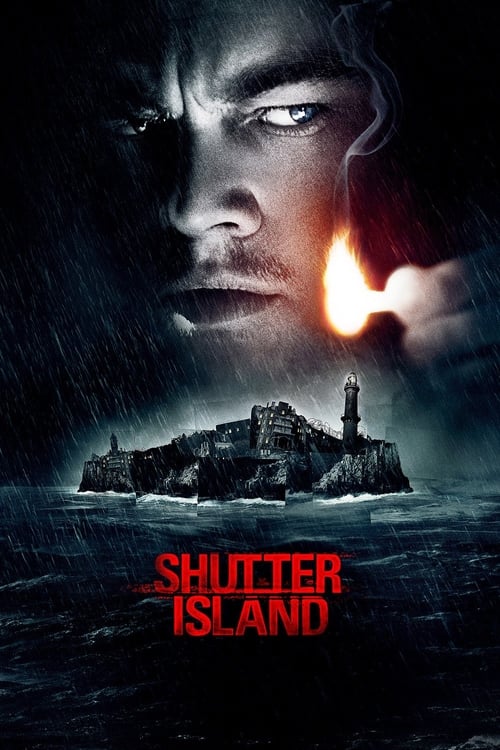
Shutter Island
2010 · Directed by Martin Scorsese
Woke Score
Critic Score
Audience
Ultra Based
Critics rated this 79 points above its woke score. Among Ultra Based films, this critic score ranks #350 of 833.
Representation Casting
Score: 5/100
The cast is predominantly white and male. Michelle Williams and Emily Mortimer appear in supporting roles as wives/patients, with limited agency. No meaningful diversity in principal characters.
LGBTQ+ Themes
Score: 0/100
No LGBTQ+ themes, characters, or representation present in the film.
Feminist Agenda
Score: 0/100
Female characters are largely passive and defined by their relationships to male protagonists. No feminist messaging or themes.
Racial Consciousness
Score: 0/100
No racial consciousness or commentary present. The film does not engage with race or racial dynamics.
Climate Crusade
Score: 0/100
No climate themes or environmental messaging in the film.
Eat the Rich
Score: 0/100
No anti-capitalist or class-based critique. The film does not engage with economic systems or wealth disparity.
Body Positivity
Score: 0/100
No body positivity themes or messaging present.
Neurodivergence
Score: 2/100
Mental illness is portrayed as pathology and trauma rather than neurodivergence. The film treats psychiatric conditions as mysteries to be solved, not as identities to be celebrated or normalized.
Revisionist History
Score: 0/100
Set in the 1950s but does not engage in revisionist historical narrative. Treats the period straightforwardly without reframing historical events.
Lecture Energy
Score: 8/100
The film has considerable didactic quality, particularly in its final act when characters explicitly explain the protagonist's psychological condition and motivations. The ending functions almost as a lecture on trauma and delusion.


Synopsis
World War II soldier-turned-U.S. Marshal Teddy Daniels investigates the disappearance of a patient from a hospital for the criminally insane, but his efforts are compromised by troubling visions and a mysterious doctor.
Consciousness Assessment
Shutter Island arrives as a masterwork of psychological storytelling that regrettably lacks any meaningful contemporary social consciousness. Scorsese has crafted a film of genuine cinematic sophistication, one that explores trauma, guilt, and the fragility of perception with considerable narrative skill. Yet it remains fundamentally indifferent to the markers of modern progressive sensibility that have come to define cultural discourse in the years since its 2010 release. The film is concerned with the interior architecture of a damaged mind, not with the external structures of social inequality.
The cast, led by Leonardo DiCaprio with strong support from Mark Ruffalo and a parade of character actors, is almost entirely male. The female characters exist primarily as spectral presences: Michelle Williams as a haunting memory, Emily Mortimer as a patient defined by her institutional status, Patricia Clarkson as an administrator. They have no agency within the narrative, serving instead as landscape elements in the male protagonist's descent into madness. This is not ignorance but rather a reflection of the film's 1950s setting and noir conventions, both of which the director embraces without irony or commentary.
The film's treatment of mental illness deserves particular scrutiny. Here we find the closest thing to a progressive marker, yet even this falls short of contemporary standards. Mental illness is presented not as neurodivergence to be understood and accommodated but as pathology to be diagnosed and contained. The hospital itself functions as a Gothic villain, and the patients are rendered as objects of medical mystery rather than as fully realized individuals. By the final act, when the film essentially stops to explain its protagonist's condition through extended dialogue, we witness the triumph of clinical psychology over human complexity. This is not consciousness-raising. It is, if anything, the opposite: a retreat into medical rationalism that would have felt dated even in 1960.
Analysis generated by our Consciousness Algorithm
Critic Reviews
“When was the last time you had to wait until the final sentence of a film to understand all the details? When was the last time you went to a genre movie – or what looked like one in spooky trailers – and realized the director had fulfilled that promise and meditated on his favorite topic? Shutter Island does just that.”
“There's a purpose to all this madness--though to talk about the primary reason the film succeeds would be giving the game away--but it should be appreciated first as a vivid, waking nightmare.”
“Martin Scorsese has created a divinely dark and devious brain tease of a movie in the best noir tradition with its smarter than you'd think cops, their tougher than you'd imagine cases to crack and enough nods to the classic genre for an all-night parlor game.”
“Not since "Raging Bull" has Mr. Scorsese so brazenly married brutality to beauty. Not since "Kundun" has one of his films felt so aspirational.”
“DiCaprio, in his most haunting and emotionally complex performance yet, is the vessel Scorsese uses to lead us through the film's labyrinth.”
“The film's primary effect is on the senses. Everything is brought together into a disturbing foreshadow of dreadful secrets.”
Consciousness Markers
The cast is predominantly white and male. Michelle Williams and Emily Mortimer appear in supporting roles as wives/patients, with limited agency. No meaningful diversity in principal characters.
No LGBTQ+ themes, characters, or representation present in the film.
Female characters are largely passive and defined by their relationships to male protagonists. No feminist messaging or themes.
No racial consciousness or commentary present. The film does not engage with race or racial dynamics.
No climate themes or environmental messaging in the film.
No anti-capitalist or class-based critique. The film does not engage with economic systems or wealth disparity.
No body positivity themes or messaging present.
Mental illness is portrayed as pathology and trauma rather than neurodivergence. The film treats psychiatric conditions as mysteries to be solved, not as identities to be celebrated or normalized.
Set in the 1950s but does not engage in revisionist historical narrative. Treats the period straightforwardly without reframing historical events.
The film has considerable didactic quality, particularly in its final act when characters explicitly explain the protagonist's psychological condition and motivations. The ending functions almost as a lecture on trauma and delusion.