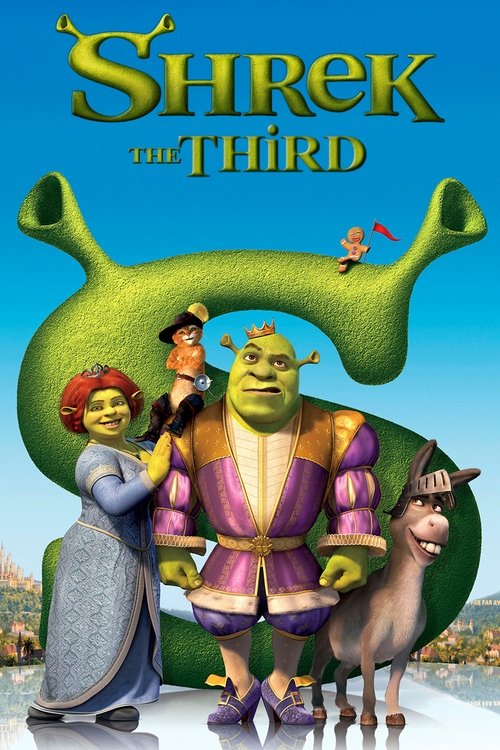
Shrek the Third
2007 · Directed by Chris Miller
Woke Score
CriticCritic Score
Audience
Based
Critics rated this 36 points above its woke score. Among Based films, this critic score ranks #263 of 345.
Representation Casting
Score: 35/100
Diverse voice cast with Eddie Murphy, but characters exist without meaningful representation of their identities. Standard mid-2000s Hollywood diversity quota.
LGBTQ+ Themes
Score: 15/100
Rupert Everett's Prince Charming contains possible subtext, but the film never acknowledges or explores this. Ambiguity without intentionality.
Feminist Agenda
Score: 25/100
Fiona is pregnant and briefly appears with other princesses, but character agency remains limited. Gestures toward feminist themes without commitment.
Racial Consciousness
Score: 20/100
Racially diverse cast exists without any examination of racial identity or systemic issues. Representation divorced from consciousness.
Climate Crusade
Score: 0/100
No environmental themes or climate messaging present in the narrative.
Eat the Rich
Score: 10/100
The film critiques monarchy and aristocracy superficially but presents no meaningful examination of economic systems or class structures.
Body Positivity
Score: 30/100
Ogres and other non-human characters are presented as desirable, but this reflects the original franchise premise rather than conscious body positivity messaging.
Neurodivergence
Score: 5/100
No representation of neurodivergent characters or acknowledgment of cognitive differences.
Revisionist History
Score: 0/100
The film operates within fairy tale fantasy conventions and makes no attempt at historical revisionism.
Lecture Energy
Score: 15/100
The film delivers messages through comedy rather than explicit instruction, though it occasionally strains to impart life lessons about fatherhood and responsibility.


Synopsis
The King of Far Far Away has died and Shrek and Fiona are to become King & Queen. However, Shrek wants to return to his cozy swamp and live in peace and quiet, so when he finds out there is another heir to the throne, they set off to bring him back to rule the kingdom.
Consciousness Assessment
Shrek the Third occupies that peculiar space of mid-2000s family entertainment where progressive sensibilities were beginning to permeate mainstream culture, yet the film remains committed to conventional narrative structures and character arcs. The film attempts to subvert fairy tale tropes by introducing a pregnant Fiona and positioning her alongside other fairytale princesses who briefly assert agency, though these moments feel more like window dressing than substantive character development. The movie's most curious element is its casting of Rupert Everett as Prince Charming, which some have read as containing LGBTQ subtext, though the film itself treats this ambiguity with the seriousness of a wink.
The racial and gender composition of the ensemble cast reflects mid-2000s Hollywood thinking, which is to say it includes a token diverse voice in Eddie Murphy's Donkey without examining or interrogating that presence in any meaningful way. The film's humor relies heavily on references to adult anxieties about fatherhood and adulthood, but these concerns are presented through a lens that assumes the audience shares a particular demographic perspective. There is no climate consciousness, no examination of class structures, and certainly no neurodivergent representation. The film's body positivity credentials rest entirely on Shrek's and Fiona's acceptance of their non-human forms, which hardly counts as groundbreaking social commentary.
This sequel exists in the pre-2020s entertainment landscape, before the specific cultural markers of modern progressive sensibility became standard features of mainstream filmmaking. It is not a conservative film, precisely, but rather an apolitical one, content to entertain without interrogating. This is neither criticism nor praise, merely observation.
Analysis generated by our Consciousness Algorithm
Critic Reviews
“So far in this year's cartoon feature sweepstakes, Shrek the Third rules.”
“After a buoyantly funny first half-hour, stylish animated comedy takes a breather before ramping it up again for a rambunctious, girrrl-power finale that provides a convenient springboard for further adventures to come.”
“Shrek the Third seems at once more energetic and more relaxed, less desperate to prove its cleverness and therefore to some extent smarter.”
“Shrek The Third instead goes for less: fewer jokes, less energy, and toned-down characters.”
Consciousness Markers
Diverse voice cast with Eddie Murphy, but characters exist without meaningful representation of their identities. Standard mid-2000s Hollywood diversity quota.
Rupert Everett's Prince Charming contains possible subtext, but the film never acknowledges or explores this. Ambiguity without intentionality.
Fiona is pregnant and briefly appears with other princesses, but character agency remains limited. Gestures toward feminist themes without commitment.
Racially diverse cast exists without any examination of racial identity or systemic issues. Representation divorced from consciousness.
No environmental themes or climate messaging present in the narrative.
The film critiques monarchy and aristocracy superficially but presents no meaningful examination of economic systems or class structures.
Ogres and other non-human characters are presented as desirable, but this reflects the original franchise premise rather than conscious body positivity messaging.
No representation of neurodivergent characters or acknowledgment of cognitive differences.
The film operates within fairy tale fantasy conventions and makes no attempt at historical revisionism.
The film delivers messages through comedy rather than explicit instruction, though it occasionally strains to impart life lessons about fatherhood and responsibility.