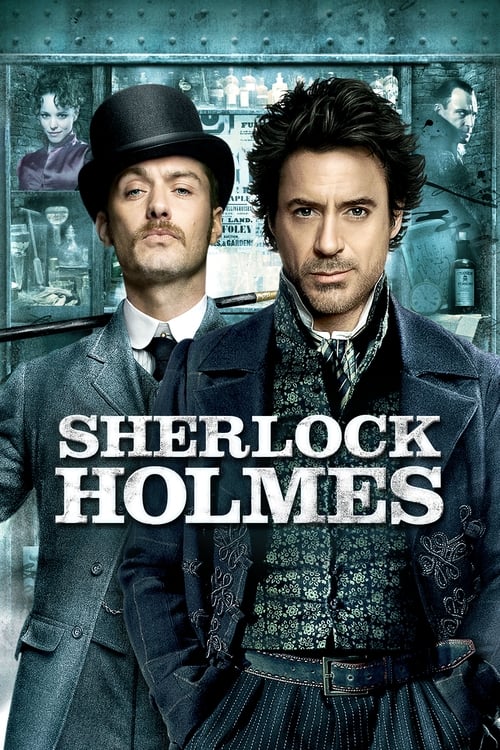
Sherlock Holmes
2009 · Directed by Guy Ritchie
Woke Score
CriticCritic Score
Audience
Ultra Based
Critics rated this 53 points above its woke score. Among Ultra Based films, this critic score ranks #992 of 1469.
Representation Casting
Score: 15/100
The cast is predominantly white and male with minimal representation of other ethnicities. Rachel McAdams is the only significant female presence in a supporting role.
LGBTQ+ Themes
Score: 0/100
No identifiable LGBTQ representation or themes present in the film.
Feminist Agenda
Score: 12/100
Female characters exist primarily as romantic interest or supporting players. No meaningful exploration of gender dynamics or female agency.
Racial Consciousness
Score: 8/100
The film takes place in Victorian London with no critical engagement with the racial politics of the era or its own casting choices.
Climate Crusade
Score: 0/100
No environmental themes or climate-related messaging present in the narrative.
Eat the Rich
Score: 5/100
While the plot involves criminal enterprises, there is no systemic critique of capitalism or wealth inequality despite the class dynamics inherent to the setting.
Body Positivity
Score: 0/100
No body diversity or body positivity messaging. The cast reflects conventional Hollywood physical standards.
Neurodivergence
Score: 10/100
Holmes is portrayed as eccentric and unconventional, though this is played for comedic effect rather than treated as authentic neurodivergence representation.
Revisionist History
Score: 0/100
The film makes no attempt to revise or reframe historical narratives. It treats its Victorian setting as aesthetic backdrop.
Lecture Energy
Score: 5/100
Holmes occasionally explains his deductive methods to Watson, but this is integral to the source material rather than preachy moralizing about social issues.


Synopsis
Eccentric consulting detective Sherlock Holmes and Doctor John Watson battle to bring down a new nemesis and unravel a deadly plot that could destroy England.
Consciousness Assessment
Guy Ritchie's Sherlock Holmes arrives as a period action film thoroughly unconcerned with the social consciousness that would later dominate critical discourse. The film casts Robert Downey Jr. as an erratic detective and Jude Law as his companion Watson, a pairing that generates considerable chemistry but zero interrogation of its own homogeneity. Rachel McAdams appears as the sole significant female character, a role that functions primarily to create romantic tension rather than examine gender dynamics with any seriousness. The narrative concerns itself entirely with plot mechanics and comedic violence, treating Victorian London as a playground for frenetic action sequences.
What emerges from this adaptation is a film at ease with its own aesthetic conservatism. The cast is overwhelmingly white and male, the female characters exist in supporting capacities, and no element of the story pauses to contemplate systemic power structures, environmental degradation, or the social hierarchies that define its historical setting. Ritchie's direction prizes kinetic spectacle and buddy-comedy dynamics over any form of social interrogation. The film contains no identifiable LGBTQ representation, no disability representation, and no meaningful engagement with the class politics inherent to its own premise, despite the obvious opportunities a story about a wealthy detective in an industrializing empire might provide.
This is a product of its era, a 2009 blockbuster that operates according to the entertainment conventions of that moment. The film asks nothing of its audience beyond acceptance of its chosen aesthetic and narrative momentum. It is neither progressive nor regressive in any contemporary sense, simply indifferent to frameworks that would not become central to cultural criticism for another five years. Viewed through the lens of modern social consciousness, it reads as a fossil, competent in its execution but utterly uninvested in the world beyond its immediate spectacle.
Analysis generated by our Consciousness Algorithm
Critic Reviews
“Downey has a winning take on Holmes: He's always on.”
“Hey, remember “fun”? If you’re sick of the apocalypse and tortured anti-heroes, then you need to see Sherlock Holmes. It’s a blast from start to finish.”
“The less I thought about Sherlock Holmes, the more I liked "Sherlock Holmes." Yet another classic hero has been fed into the f/x mill, emerging as a modern superman.”
“The very idea of handing him over to professional lad Guy Ritchie (who directed Snatch, Lock, Stock and Two Smoking Barrels), to be played as a punch-throwing quipster by Robert Downey Jr., is so profoundly stupid one can only step back in dismay.”
Consciousness Markers
The cast is predominantly white and male with minimal representation of other ethnicities. Rachel McAdams is the only significant female presence in a supporting role.
No identifiable LGBTQ representation or themes present in the film.
Female characters exist primarily as romantic interest or supporting players. No meaningful exploration of gender dynamics or female agency.
The film takes place in Victorian London with no critical engagement with the racial politics of the era or its own casting choices.
No environmental themes or climate-related messaging present in the narrative.
While the plot involves criminal enterprises, there is no systemic critique of capitalism or wealth inequality despite the class dynamics inherent to the setting.
No body diversity or body positivity messaging. The cast reflects conventional Hollywood physical standards.
Holmes is portrayed as eccentric and unconventional, though this is played for comedic effect rather than treated as authentic neurodivergence representation.
The film makes no attempt to revise or reframe historical narratives. It treats its Victorian setting as aesthetic backdrop.
Holmes occasionally explains his deductive methods to Watson, but this is integral to the source material rather than preachy moralizing about social issues.