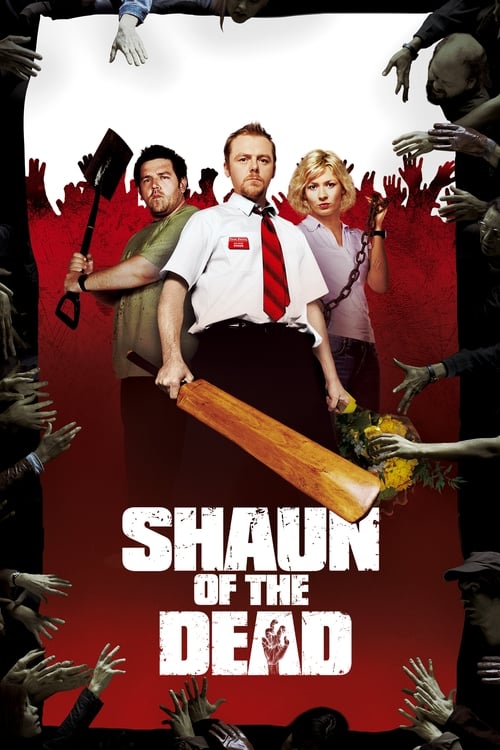
Shaun of the Dead
2004 · Directed by Edgar Wright
Woke Score
CriticCritic Score
Audience
Ultra Based
Critics rated this 72 points above its woke score. Among Ultra Based films, this critic score ranks #454 of 1469.
Representation Casting
Score: 5/100
The cast is predominantly white British, with female characters present but in secondary roles. No deliberate effort toward diverse representation is evident.
LGBTQ+ Themes
Score: 0/100
No LGBTQ+ themes, characters, or representation present in the film.
Feminist Agenda
Score: 8/100
Female characters exist in the narrative but lack significant agency or development. The girlfriend is largely passive; the female characters are reactive rather than driving the plot.
Racial Consciousness
Score: 0/100
No explicit racial consciousness or commentary present. The film makes no effort to address racial themes.
Climate Crusade
Score: 0/100
No climate-related themes or messaging present in the film.
Eat the Rich
Score: 18/100
Subtle critiques of consumerism and societal drift appear through the zombie metaphor, but these function as background satire rather than explicit anti-capitalist messaging.
Body Positivity
Score: 0/100
No body positivity messaging or representation of diverse body types as positive appears in the film.
Neurodivergence
Score: 0/100
No neurodivergent characters or themes present.
Revisionist History
Score: 0/100
No revisionist historical narratives present. The film is set in contemporary London.
Lecture Energy
Score: 5/100
The film employs satire and formal pastiche rather than direct preachy messaging, though some implicit social commentary exists in the zombie metaphor.


Synopsis
Shaun lives a supremely uneventful life, which revolves around his girlfriend, his mother, and, above all, his local pub. This gentle routine is threatened when the dead return to life and make strenuous attempts to snack on ordinary Londoners.
Consciousness Assessment
Shaun of the Dead is a 2004 British zombie comedy that functions primarily as a satire of suburban ennui and generational drift, employing the undead as a metaphor for the walking somnambulism of modern consumer culture. The film's social commentary operates through genre pastiche and formal invention rather than through the explicitly progressive cultural markers that have come to define contemporary social consciousness cinema. While the film does contain subtle critiques of class and societal complacency, these emerge organically from its narrative rather than as preachy pronouncements, which is to say the film does not announce its own social awareness with the insistence that has become customary in the last decade.
The cast is predominantly white and British, reflecting the London setting with little apparent concern for demographic representation. The female characters, though competent enough within the story, occupy secondary roles and lack the narrative agency that might signal modern feminist sensibilities. There is no meaningful LGBTQ+ representation, no body positivity agenda, no climate consciousness, and certainly no neurodivergent characters presented as such. The film's anti-capitalist elements, such as they are, function as background texture rather than explicit critique. The humor derives from the collision of suburban mundanity with zombie apocalypse, not from the exposure of systemic injustice.
What results is a film of genuine charm and stylistic innovation that remains stubbornly untouched by the cultural frameworks that now dominate prestige cinema. This is not a moral failing on the film's part, only an observation that it was made in an era before progressive cultural consciousness became a primary organizing principle of mainstream filmmaking. It succeeds entirely on its own terms, which do not include the categories we now use to measure cultural awareness.
Analysis generated by our Consciousness Algorithm
Critic Reviews
“It's not only a modern classic of the zombie genre, but one that is sure to stand the test of time for the next 20 years and beyond.”
“For those who like their spoofs silly and their cartoonish gore vivid, Shaun offers some amusement.”
Consciousness Markers
The cast is predominantly white British, with female characters present but in secondary roles. No deliberate effort toward diverse representation is evident.
No LGBTQ+ themes, characters, or representation present in the film.
Female characters exist in the narrative but lack significant agency or development. The girlfriend is largely passive; the female characters are reactive rather than driving the plot.
No explicit racial consciousness or commentary present. The film makes no effort to address racial themes.
No climate-related themes or messaging present in the film.
Subtle critiques of consumerism and societal drift appear through the zombie metaphor, but these function as background satire rather than explicit anti-capitalist messaging.
No body positivity messaging or representation of diverse body types as positive appears in the film.
No neurodivergent characters or themes present.
No revisionist historical narratives present. The film is set in contemporary London.
The film employs satire and formal pastiche rather than direct preachy messaging, though some implicit social commentary exists in the zombie metaphor.