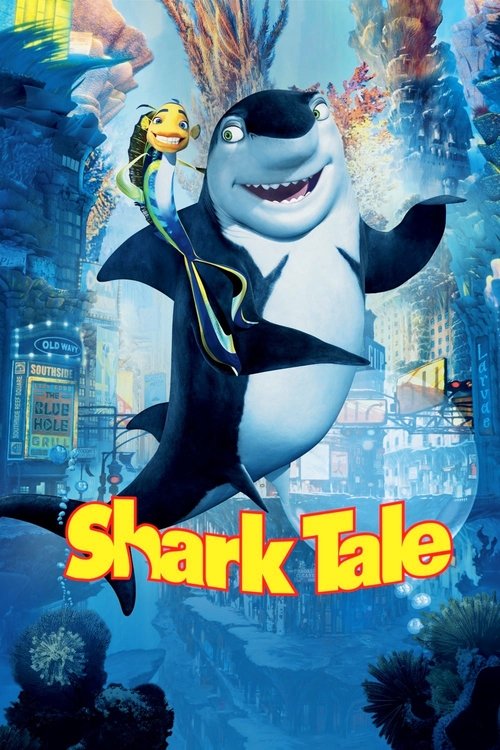
Shark Tale
2004 · Directed by Bibo Bergeron
Woke Score
CriticCritic Score
Audience
Ultra Based
Critics rated this 36 points above its woke score. Among Ultra Based films, this critic score ranks #1209 of 1469.
Representation Casting
Score: 25/100
The film features diverse voice talent and an ensemble cast with various ethnic backgrounds represented among the sea creatures, but this appears incidental to the story rather than a deliberate casting philosophy. No particular attention is paid to meaningful representation of marginalized groups.
LGBTQ+ Themes
Score: 5/100
The vegetarian shark could generously be read as coded nonconformity, but there are no explicit LGBTQ themes or characters. This is a straightforward family comedy with no engagement with sexual orientation or gender identity.
Feminist Agenda
Score: 8/100
Female characters exist primarily as romantic interests and supporting roles. Renée Zellweger's character serves the conventional love-interest function without agency or character development focused on gender equality or female empowerment.
Racial Consciousness
Score: 15/100
While the voice cast includes performers of various backgrounds, the film contains no apparent commentary on race, racism, or racial dynamics. Characters are simply fish of different types rather than carriers of racial significance.
Climate Crusade
Score: 10/100
The film is set in an underwater environment but does not engage with environmental themes, ocean conservation, or climate consciousness. The setting is purely fantastical backdrop.
Eat the Rich
Score: 20/100
The plot involves status-seeking and commercial ambition among the characters, but the film does not critique capitalism or class structures. Oscar's desire for wealth and fame is presented as comedic rather than morally problematic.
Body Positivity
Score: 12/100
The film depicts various fish body types without commentary or judgment, but this reflects the inherent diversity of sea creatures rather than any deliberate body positivity agenda. No explicit messaging around body acceptance exists.
Neurodivergence
Score: 0/100
There is no representation of neurodivergence, disability, or any engagement with neurodiverse themes or characters in the film.
Revisionist History
Score: 0/100
The film contains no historical content or revisionist historical interpretation. It is a contemporary fictional fantasy with no engagement with history.
Lecture Energy
Score: 8/100
The film prioritizes entertainment and humor without preachy messaging. There are no sequences in which characters or narrative voice deliver explicit moral lessons to the audience.


Synopsis
Oscar is a small fish whose big aspirations often get him into trouble. Meanwhile, Lenny is a great white shark with a surprising secret that no sea creature would guess: He's a vegetarian. When a lie turns Oscar into an improbable hero and Lenny becomes an outcast, the two form an unlikely friendship.
Consciousness Assessment
Shark Tale stands as a curious artifact of mid-2000s animated filmmaking, a time when studios could produce feature films with surprisingly little regard for the social consciousness markers that would come to dominate cultural discourse in the years following. The film presents an ensemble cast of sea creatures voiced by a roster of marquee talent, which on the surface suggests a commitment to star-driven casting over meticulous attention to representation demographics. The vegetarian shark protagonist represents perhaps the film's most earnest thematic gesture, though even this reads less as a deliberate statement on alternative lifestyles and more as a simple plot device for generating comedy from incongruity.
The narrative concerns itself primarily with status anxiety and workplace hierarchies among anthropomorphic fish, offering no particular commentary on systemic inequality or marginalization. The female characters present in the film, including Renée Zellweger's love interest, exist largely as conventional romantic accompaniment rather than as vehicles for any meaningful exploration of gender dynamics. The film's humor derives mainly from celebrity impressions and slapstick rather than any attempt to challenge social norms or interrogate power structures.
What the film reveals most clearly is a product designed for family consumption without the weight of cultural intention. The casting choices, while diverse in a numerical sense, do not appear to have been motivated by any deliberate philosophy regarding representation. This is not condemnation, merely observation. Shark Tale belongs to a pre-conscious era, a time before animated films began wrestling with the social themes that would eventually become their primary concern. It is a film that simply wanted to make its audience laugh, and in that modest ambition, it largely succeeded without troubling itself with deeper matters.
Analysis generated by our Consciousness Algorithm
Critic Reviews
“Represents solid family entertainment, and will find a special place in the hearts of those who adore the "Godfather" movies and the TV series "The Sopranos." ”
“By riffing off two iconic American narratives of the last 35 years, "The Godfather" and "The Sopranos," it has changed the template for animation, making a timely film that still deals with timeless children's themes. ”
“Boasts a really spectacular cast to voice those reasonably funny jokes. ”
Consciousness Markers
The film features diverse voice talent and an ensemble cast with various ethnic backgrounds represented among the sea creatures, but this appears incidental to the story rather than a deliberate casting philosophy. No particular attention is paid to meaningful representation of marginalized groups.
The vegetarian shark could generously be read as coded nonconformity, but there are no explicit LGBTQ themes or characters. This is a straightforward family comedy with no engagement with sexual orientation or gender identity.
Female characters exist primarily as romantic interests and supporting roles. Renée Zellweger's character serves the conventional love-interest function without agency or character development focused on gender equality or female empowerment.
While the voice cast includes performers of various backgrounds, the film contains no apparent commentary on race, racism, or racial dynamics. Characters are simply fish of different types rather than carriers of racial significance.
The film is set in an underwater environment but does not engage with environmental themes, ocean conservation, or climate consciousness. The setting is purely fantastical backdrop.
The plot involves status-seeking and commercial ambition among the characters, but the film does not critique capitalism or class structures. Oscar's desire for wealth and fame is presented as comedic rather than morally problematic.
The film depicts various fish body types without commentary or judgment, but this reflects the inherent diversity of sea creatures rather than any deliberate body positivity agenda. No explicit messaging around body acceptance exists.
There is no representation of neurodivergence, disability, or any engagement with neurodiverse themes or characters in the film.
The film contains no historical content or revisionist historical interpretation. It is a contemporary fictional fantasy with no engagement with history.
The film prioritizes entertainment and humor without preachy messaging. There are no sequences in which characters or narrative voice deliver explicit moral lessons to the audience.