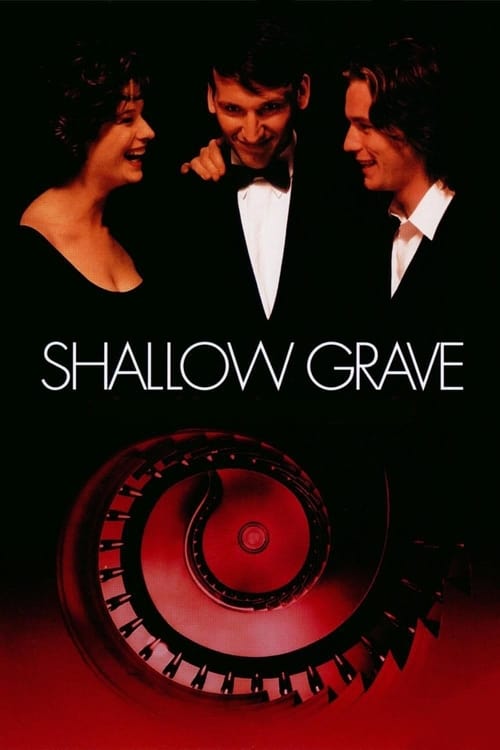
Shallow Grave
1994 · Directed by Danny Boyle
Woke Score
CriticCritic Score
Audience
Ultra Based
Critics rated this 65 points above its woke score. Among Ultra Based films, this critic score ranks #654 of 1469.
Representation Casting
Score: 0/100
The film features one female protagonist among three leads, but this is unremarkable casting within the narrative rather than conscious representation. No diversity consciousness is evident.
LGBTQ+ Themes
Score: 0/100
No LGBTQ+ themes, characters, or representation are present in the film. Sexuality is not addressed as a narrative element.
Feminist Agenda
Score: 0/100
Juliet is a protagonist who participates equally in moral compromise, but the film contains no feminist agenda or commentary on gender relations. She is treated as morally equivalent to the male characters.
Racial Consciousness
Score: 0/100
The film demonstrates no racial consciousness or engagement with race as a thematic concern. The cast is predominantly white and this appears unremarked upon.
Climate Crusade
Score: 0/100
Climate change or environmental themes are entirely absent from the film's narrative and thematic concerns.
Eat the Rich
Score: 15/100
The film explores how money corrupts friendship and morality, showing wealth as a corrosive force. However, this is not anti-capitalist critique in a modern sense but rather a moral examination of greed without systemic analysis.
Body Positivity
Score: 0/100
Body positivity as a contemporary progressive concern is entirely absent from the film. Bodies are presented without commentary on appearance or diversity.
Neurodivergence
Score: 0/100
No representation of neurodivergent characters or engagement with neurodiversity as a thematic concern appears in the film.
Revisionist History
Score: 0/100
The film is set in contemporary 1994 and contains no historical narrative or revisionist historical engagement.
Lecture Energy
Score: 0/100
The film deliberately eschews moral instruction. It observes human corruption with clinical detachment rather than explaining or judging behavior through expository dialogue.


Synopsis
When David, Juliet, and Alex find their new roommate dead with a large sum of money, they agree to hide the body and keep the cash. However, this newfound fortune gradually corrodes their friendship.
Consciousness Assessment
Shallow Grave is a 1994 British crime thriller that operates almost entirely outside the vocabulary of contemporary progressive sensibilities. Danny Boyle's directorial debut is concerned with greed, selfishness, and moral corruption, themes he explicitly wanted to explore without what he termed "the moral baggage that British films carry around all the time." The film features one woman among three protagonists, but Juliet is neither elevated for this distinction nor condemned for failing to be virtuous. She exists as an equal participant in moral compromise, which is precisely what the film finds interesting about her. This is not progressive representation in any modern sense; it is simply indifference to identity categories as organizing principles.
The film's post-Thatcherite context matters here. It is examining economic individualism and the way money corrodes human bonds, themes that were politically engaged but not in ways that align with 2020s progressive frameworks. There is no discussion of systemic oppression, no interrogation of class structures as moral failures requiring redress, no celebration of marginalized identities. The violence and criminal behavior are presented as consequences of greed rather than as symptoms of injustice. The cast is predominantly white and male, reflecting both Edinburgh's demographic reality and the film's deliberate unconcern with representation as a political project.
What remains striking about Shallow Grave is its amorality. The film refuses to position any character as a moral exemplar or victim. It does not ask us to sympathize with the protagonists so much as to observe their deterioration with clinical interest. This refusal to moralize is precisely what makes it so alien to contemporary cultural frameworks. It belongs to a moment when a film could explore human corruption without needing to contextualize that corruption within larger systems of power, identity, or justice. That moment has passed.
Analysis generated by our Consciousness Algorithm
Critic Reviews
“This, the debut feature from acclaimed TV director Danny Boyle, is the best British thriller for years, a chilling and claustrophobic heart-stopper centring on a moral dilemma destined to fuel many a dinner party conversation.”
“In his big-screen directing debut, British film maker Danny Boyle demonstrates wit, intelligence and economy of style.”
“Shallow Grave is persistently cynical and uningratiating, a tale of nasty, greedy, stupid people who don’t realise that the finders-keepers rule doesn’t apply to a suitcase full of cash whose criminal owners will not merely want it back but want to create the specific circumstances in which Juliet, David and Alex will be unable to testify against them in a court of law.”
“Director Danny Boyle and screenwriter John Hodge (who is a physician!) keep the action spurting forward, but their approach is oblique. We seem to be catching the odds and ends of scenes; it's as if the filmmakers wanted to make a movie in which all the expected high points were skimped.”
Consciousness Markers
The film features one female protagonist among three leads, but this is unremarkable casting within the narrative rather than conscious representation. No diversity consciousness is evident.
No LGBTQ+ themes, characters, or representation are present in the film. Sexuality is not addressed as a narrative element.
Juliet is a protagonist who participates equally in moral compromise, but the film contains no feminist agenda or commentary on gender relations. She is treated as morally equivalent to the male characters.
The film demonstrates no racial consciousness or engagement with race as a thematic concern. The cast is predominantly white and this appears unremarked upon.
Climate change or environmental themes are entirely absent from the film's narrative and thematic concerns.
The film explores how money corrupts friendship and morality, showing wealth as a corrosive force. However, this is not anti-capitalist critique in a modern sense but rather a moral examination of greed without systemic analysis.
Body positivity as a contemporary progressive concern is entirely absent from the film. Bodies are presented without commentary on appearance or diversity.
No representation of neurodivergent characters or engagement with neurodiversity as a thematic concern appears in the film.
The film is set in contemporary 1994 and contains no historical narrative or revisionist historical engagement.
The film deliberately eschews moral instruction. It observes human corruption with clinical detachment rather than explaining or judging behavior through expository dialogue.