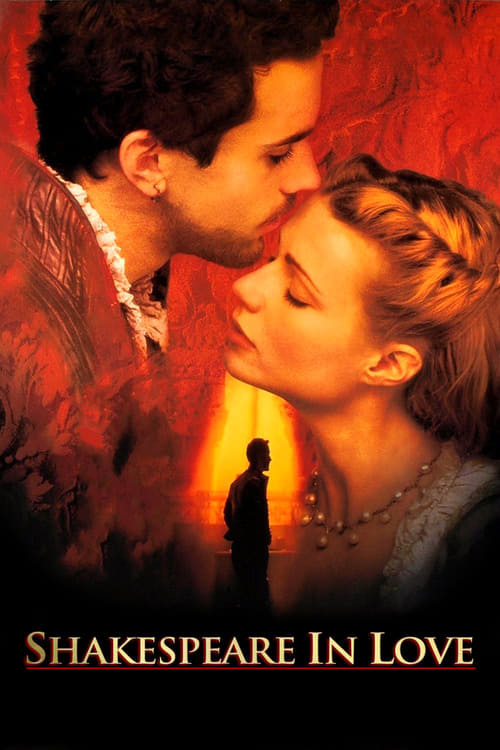
Shakespeare in Love
1998 · Directed by John Madden
Woke Score
CriticCritic Score
Audience
Ultra Based
Critics rated this 79 points above its woke score. Among Ultra Based films, this critic score ranks #197 of 1469.
Representation Casting
Score: 15/100
The ensemble cast includes actors of color and strong supporting players, but this reflects mainstream casting practices of the era rather than programmatic diversity. Representation is incidental to the narrative rather than intentional.
LGBTQ+ Themes
Score: 8/100
Cross-dressing is present via Viola's disguise, but this is treated as a practical plot device for romantic access rather than any exploration of gender identity or sexuality. No LGBTQ+ themes are evident.
Feminist Agenda
Score: 35/100
Viola's desire to act despite social restrictions shows individual aspiration, but the film frames this as romantic complication rather than systemic critique. There is minimal interrogation of women's exclusion from theater or patriarchal structures.
Racial Consciousness
Score: 0/100
No racial dimension or consciousness is present in the film. The historical setting and romantic focus preclude any engagement with racial themes.
Climate Crusade
Score: 0/100
No environmental or climate-related themes appear in the film. The period setting and romantic focus make such concerns entirely absent.
Eat the Rich
Score: 5/100
While Shakespeare's financial struggles are mentioned, there is no critique of capitalism or class systems. Economic concerns serve the plot rather than any ideological stance.
Body Positivity
Score: 0/100
Body positivity is not a concern of the film. All characters conform to conventional aesthetic standards without commentary or challenge.
Neurodivergence
Score: 0/100
No neurodivergent characters or themes appear. The film contains no representation or exploration of disability or neurodivergence.
Revisionist History
Score: 10/100
While the entire premise is fictional, it is not revisionist history in the modern activist sense. The film imagines Shakespeare's private life without attempting to challenge conventional historical narratives or power structures.
Lecture Energy
Score: 5/100
The film maintains a light romantic tone throughout and avoids preachy moralizing. Any thematic content emerges organically from the narrative rather than through explicit messaging.


Synopsis
Young William Shakespeare is forced to stage his latest comedy, 'Romeo and Ethel, the Pirate's Daughter', before it's even written. When lovely noblewoman Viola de Lesseps auditions for a role, they fall into forbidden love — and Shakespeare's play finds a new life (and title). As their relationship intensifies, the comedy soon transforms into tragedy.
Consciousness Assessment
Shakespeare in Love arrived in 1998 as a whimsical historical fantasy, a period romance that imagined the young playwright's creative awakening through an illicit affair with Viola de Lesseps, a noblewoman compelled to masquerade as a man in order to participate in theater. The film's central conceit involves a woman transgressing rigid social boundaries through disguise, which carries a faint echo of proto-feminist consciousness, though the narrative frames this transgression primarily as romantic complication rather than social critique. Viola's determination to act exists as a plot device to justify her presence in Shakespeare's life, not as a serious examination of women's exclusion from the theatrical profession.
The film distinguishes itself from its contemporaries through its ensemble of capable performers and its self-aware theatrical sensibility, yet it remains at its core a romantic fantasy untethered from any engagement with systemic inequality or progressive social consciousness. The cross-dressing element, while present, does not signal any meaningful engagement with gender identity or sexuality in the modern sense. We are observing a woman in a disguise necessitated by circumstance, not an exploration of gender as performative or fluid. The narrative's treatment of Viola's aspiration reads as charming individual ambition rather than critique of institutional gatekeeping.
What remains most striking is a film that predates contemporary cultural preoccupations entirely. It contains no environmental consciousness, no interrogation of class structures, no exploration of neurodivergence or disability, no explicit racial dimension, and no preachy impulse. For all its literary pretension and period trappings, Shakespeare in Love remains essentially apolitical in the modern sense, content to exist as escapist entertainment. Its later Academy Award success in 1999 has become a historical footnote, overshadowed by contemporary recognition that the film's apparent sophistication masks a fundamental conservatism in its actual social vision.
Analysis generated by our Consciousness Algorithm
Critic Reviews
“I was carried along by the wit, the energy and a surprising sweetness.”
“With most historical films the informed viewer scrutinizes in order to cluck at errors. (There are books full of such cluckings.) With Shakespeare in Love, the more one knows, the more one can enjoy the liberties taken. [Jan. 4, 1999]”
“The richest and most satisfying romantic movie of the year. It's really about two great loves at once -- the love of life and of art -- and the way that Shakespeare, like no writer before him, transformed the one into the other.”
“It soon becomes evident just how inane a film this is.”
Consciousness Markers
The ensemble cast includes actors of color and strong supporting players, but this reflects mainstream casting practices of the era rather than programmatic diversity. Representation is incidental to the narrative rather than intentional.
Cross-dressing is present via Viola's disguise, but this is treated as a practical plot device for romantic access rather than any exploration of gender identity or sexuality. No LGBTQ+ themes are evident.
Viola's desire to act despite social restrictions shows individual aspiration, but the film frames this as romantic complication rather than systemic critique. There is minimal interrogation of women's exclusion from theater or patriarchal structures.
No racial dimension or consciousness is present in the film. The historical setting and romantic focus preclude any engagement with racial themes.
No environmental or climate-related themes appear in the film. The period setting and romantic focus make such concerns entirely absent.
While Shakespeare's financial struggles are mentioned, there is no critique of capitalism or class systems. Economic concerns serve the plot rather than any ideological stance.
Body positivity is not a concern of the film. All characters conform to conventional aesthetic standards without commentary or challenge.
No neurodivergent characters or themes appear. The film contains no representation or exploration of disability or neurodivergence.
While the entire premise is fictional, it is not revisionist history in the modern activist sense. The film imagines Shakespeare's private life without attempting to challenge conventional historical narratives or power structures.
The film maintains a light romantic tone throughout and avoids preachy moralizing. Any thematic content emerges organically from the narrative rather than through explicit messaging.