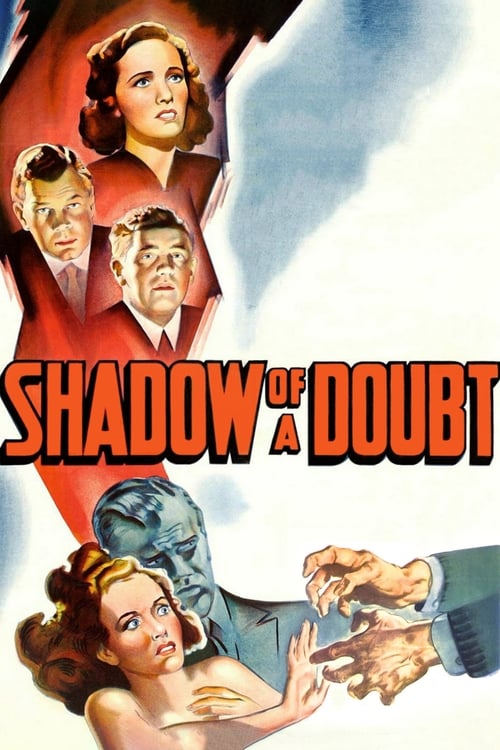
Shadow of a Doubt
1943 · Directed by Alfred Hitchcock
Woke Score
CriticCritic Score
Audience
Ultra Based
Critics rated this 90 points above its woke score. Among Ultra Based films, this critic score ranks #78 of 1469.
Representation Casting
Score: 20/100
Teresa Wright leads as the protagonist, but this reflects standard casting practices rather than progressive representation consciousness. The cast is entirely white and reflects 1943 Hollywood demographics without any diversity framework.
LGBTQ+ Themes
Score: 0/100
No LGBTQ+ themes, characters, or content present in the film.
Feminist Agenda
Score: 15/100
While Charlie exhibits agency in investigating her uncle, the film does not engage with feminist themes or commentary. Her capability emerges naturally from the plot rather than from ideological positioning.
Racial Consciousness
Score: 0/100
The film contains no engagement with racial themes or consciousness. It depicts a white small-town setting without acknowledging or exploring racial dynamics.
Climate Crusade
Score: 0/100
No environmental or climate-related themes appear in the film.
Eat the Rich
Score: 0/100
While the opening includes scenes of urban poverty, this serves as atmospheric context rather than ideological critique. No anti-capitalist messaging or consciousness is present.
Body Positivity
Score: 0/100
No body positivity themes or commentary appear in the film.
Neurodivergence
Score: 0/100
The film contains no representation of or discussion regarding neurodivergence.
Revisionist History
Score: 0/100
Set in contemporary 1943 small-town California, the film does not engage in historical revisionism or reinterpretation of past events.
Lecture Energy
Score: 5/100
The film is driven by suspense and plot development rather than preachy messaging. Moral complexity emerges through narrative rather than explicit exposition or lecturing.


Synopsis
In sleepy Santa Rosa, restless young Charlie's world brightens when her sophisticated Uncle Charlie arrives for a long visit. But as his behavior grows increasingly strange, she begins to suspect that her beloved uncle may be hiding a terrible secret—and that danger has quietly entered her home.
Consciousness Assessment
Shadow of a Doubt stands as a masterwork of suspense and moral ambiguity, yet it remains fundamentally uncontaminated by the progressive sensibilities that would come to define contemporary cinema. Hitchcock's 1943 thriller examines the darkness lurking beneath American small-town life through a narrative of personal betrayal rather than systemic critique. Young Charlie's discovery that her beloved Uncle Charlie may be a serial killer generates psychological terror and emotional devastation, but the film treats this as a universal human tragedy rather than a vehicle for commentary on social structures or identity politics.
The film's protagonist, played with compelling intensity by Teresa Wright, drives the narrative through her own agency and intuition. She is neither a symbol of progressive representation nor an avatar of feminist awakening, but simply a young woman caught in a thriller's machinery. The supporting cast, the production design, the narrative focus, all reflect the concerns of 1940s Hollywood rather than the cultural anxieties of the 2020s. There is no lecture energy, no consciousness-raising, no attempt to align the story with contemporary social justice frameworks.
What emerges instead is a work of pure cinematic craft concerned with suspense, moral complexity, and the gap between appearance and reality. The film's exploration of corruption and violence operates at a level of human universality that predates and transcends the categorical imperatives of modern cultural consciousness. It is a superb film, but it is not a film animated by progressive sensibilities in the contemporary sense.
Analysis generated by our Consciousness Algorithm
Critic Reviews
“Hitchcock's discovery of darkness within the heart of small-town America remains one of his most harrowing films, a peek behind the facade of security that reveals loneliness, despair, and death.”
“No one would ever accuse Alfred Hitchcock's Shadow of a Doubt of being plausible, but it is framed so distinctively in the Hitchcock style that it plays firmly and never breaks out of the story. ”
“You've got to hand it to Alfred Hitchcock: when he sows the fearful seeds of mistrust in one of his motion pictures he can raise more goose pimples to the square inch of a customer's flesh than any other director of thrillers in Hollywood. ”
“It's very well worked out in terms of character and it has a sustained grip, but it certainly isn't as much fun as several of his other films.”
Consciousness Markers
Teresa Wright leads as the protagonist, but this reflects standard casting practices rather than progressive representation consciousness. The cast is entirely white and reflects 1943 Hollywood demographics without any diversity framework.
No LGBTQ+ themes, characters, or content present in the film.
While Charlie exhibits agency in investigating her uncle, the film does not engage with feminist themes or commentary. Her capability emerges naturally from the plot rather than from ideological positioning.
The film contains no engagement with racial themes or consciousness. It depicts a white small-town setting without acknowledging or exploring racial dynamics.
No environmental or climate-related themes appear in the film.
While the opening includes scenes of urban poverty, this serves as atmospheric context rather than ideological critique. No anti-capitalist messaging or consciousness is present.
No body positivity themes or commentary appear in the film.
The film contains no representation of or discussion regarding neurodivergence.
Set in contemporary 1943 small-town California, the film does not engage in historical revisionism or reinterpretation of past events.
The film is driven by suspense and plot development rather than preachy messaging. Moral complexity emerges through narrative rather than explicit exposition or lecturing.