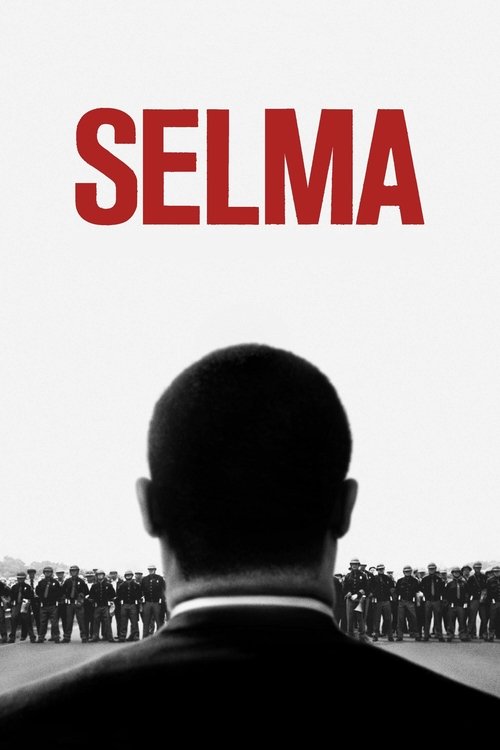
Selma
2014 · Directed by Ava DuVernay
Woke Score
CriticCritic Score
Audience
Woke
Critics rated this 11 points above its woke score. Among Woke films, this critic score ranks #37 of 88.
Representation Casting
Score: 85/100
The cast is predominantly Black with leading and supporting roles occupied by Black actors. Directed by a Black woman. The film actively centers Black characters and experiences as the primary focus rather than peripheral.
LGBTQ+ Themes
Score: 0/100
No LGBTQ+ themes, representation, or storylines are present in the film.
Feminist Agenda
Score: 45/100
While the film includes female activists like Coretta Scott King and Diane Nash, scholarly analysis suggests their roles remain secondary to King's leadership. The director is a Black woman, but the narrative structure does not fully elevate women's contributions to the movement.
Racial Consciousness
Score: 90/100
The film is fundamentally about systemic racism, voter suppression, and Black resistance to segregation. It explicitly depicts racial violence and centers Black agency and leadership throughout.
Climate Crusade
Score: 0/100
No climate change themes, environmental consciousness, or ecological concerns are present in this historical civil rights drama.
Eat the Rich
Score: 0/100
The film does not engage with anti-capitalist themes or critique of economic systems. Its focus is on voting rights and racial justice rather than economic exploitation.
Body Positivity
Score: 0/100
No body positivity themes, representation of diverse body types, or commentary on beauty standards appear in the film.
Neurodivergence
Score: 0/100
No neurodivergent representation or themes related to disability or neurodiversity are present in the narrative.
Revisionist History
Score: 35/100
The film takes some interpretive liberties with historical events and timeline compression, though this is standard for historical dramas rather than revisionist history in the contemporary sense.
Lecture Energy
Score: 40/100
While the film contains speeches and moments of explicit racial commentary, it generally integrates these into dramatic action rather than stopping to lecture. However, some scenes prioritize message clarity over naturalistic dialogue.


Synopsis
"Selma," as in Alabama, the place where segregation in the South was at its worst, leading to a march that ended in violence, forcing a famous statement by President Lyndon B. Johnson that ultimately led to the signing of the Voting Rights Act.
Consciousness Assessment
Selma presents a masterclass in contemporary historical consciousness, a film that understands itself to be speaking to the present moment through the lens of the past. Ava DuVernay's direction ensures that the Selma to Montgomery marches function not merely as historical recreation but as a lens through which to examine systemic racism and voter suppression. The casting is deliberately diverse and predominantly Black, with David Oyelowo's portrayal of Dr. King emphasizing his doubts and vulnerabilities rather than presenting him as an unassailable monument. The film does not shy away from depicting the visceral violence of segregation, nor does it flinch from centering Black resistance and agency.
However, the film's progressive credentials are somewhat undermined by its treatment of female activists. While Carmen Ejogo portrays Coretta Scott King with dignity and the film acknowledges female organizers like Diane Nash and Amelia Boynton, scholarly analysis suggests these roles remain somewhat peripheral to the narrative architecture. The film had an opportunity to fully elevate women's contributions to the movement but instead positions them largely in supporting roles to King's leadership. This represents a curious contradiction for a film directed by a Black woman during a moment when the Academy was being criticized for its lack of diversity in major categories.
The film's racial consciousness is unambiguous and its commitment to depicting systemic injustice is sincere. Yet it remains essentially a historical drama rather than a work of contemporary cultural interrogation. It tells us about 1965, not about 2014 or 2024. This distinction matters when assessing the degree to which it participates in the specific cultural moment that defines progressive sensibilities in the modern era. Selma is important cinema about civil rights, but it is not particularly invested in the other markers of contemporary social consciousness.
Analysis generated by our Consciousness Algorithm
Critic Reviews
“Selma is one of the best American films of the year — and indeed perhaps the best — precisely because it does not simply show what Dr. King did for America in his day; it also wonders explicitly what we have left undone for America in ours.”
“Selma is vital correspondence, filmmaking lived on the streets where brutal facts were ignored then reported, and now snatched back from history to sustain a spirit few films can or will possess. It is stunning humanistic cinema on a mainstream scale... It has inventiveness, urgency, humor, and most of all emotion that draws effortless parallels rather than leaving its lesson up on the screen.”
“David Oyelowo has never given a better performance. He seems to penetrate into King’s soul and camps out there for two hours. He’s tremendous, of course, when electrifying his congregation at the podium, but a sense of fatigue is even more paramount.”
“Sequences depicting the Selma marches – the first of which led to violent police attacks that were seen on national TV and helped change the mood of the country – are fairly understated, when a more visceral approach might have given the film more emotional heft.”
Consciousness Markers
The cast is predominantly Black with leading and supporting roles occupied by Black actors. Directed by a Black woman. The film actively centers Black characters and experiences as the primary focus rather than peripheral.
No LGBTQ+ themes, representation, or storylines are present in the film.
While the film includes female activists like Coretta Scott King and Diane Nash, scholarly analysis suggests their roles remain secondary to King's leadership. The director is a Black woman, but the narrative structure does not fully elevate women's contributions to the movement.
The film is fundamentally about systemic racism, voter suppression, and Black resistance to segregation. It explicitly depicts racial violence and centers Black agency and leadership throughout.
No climate change themes, environmental consciousness, or ecological concerns are present in this historical civil rights drama.
The film does not engage with anti-capitalist themes or critique of economic systems. Its focus is on voting rights and racial justice rather than economic exploitation.
No body positivity themes, representation of diverse body types, or commentary on beauty standards appear in the film.
No neurodivergent representation or themes related to disability or neurodiversity are present in the narrative.
The film takes some interpretive liberties with historical events and timeline compression, though this is standard for historical dramas rather than revisionist history in the contemporary sense.
While the film contains speeches and moments of explicit racial commentary, it generally integrates these into dramatic action rather than stopping to lecture. However, some scenes prioritize message clarity over naturalistic dialogue.