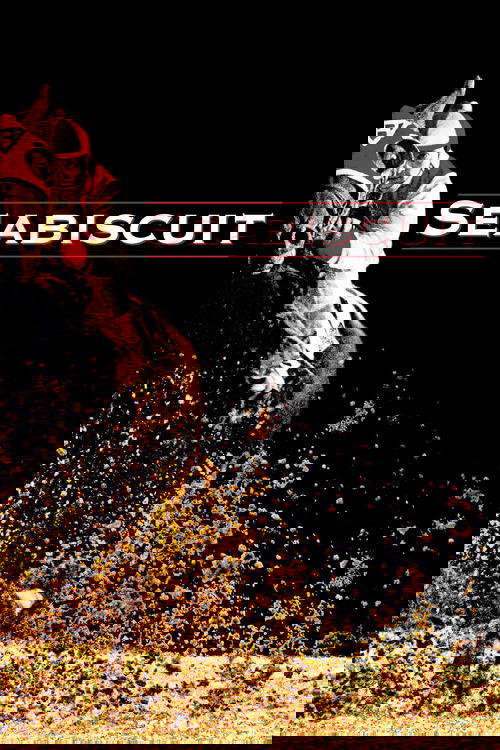
Seabiscuit
2003 · Directed by Gary Ross
Woke Score
CriticCritic Score
Audience
Ultra Based
Critics rated this 70 points above its woke score. Among Ultra Based films, this critic score ranks #564 of 1469.
Representation Casting
Score: 5/100
The film includes Elizabeth Banks in a supporting role, providing minimal gender representation in an otherwise male-centered narrative. No meaningful diversity in the primary cast.
LGBTQ+ Themes
Score: 0/100
No LGBTQ+ themes, characters, or subtext present in the film.
Feminist Agenda
Score: 0/100
While Elizabeth Banks appears in the film, her character operates within conventional domestic and romantic frameworks with no feminist agenda or examination of gender dynamics.
Racial Consciousness
Score: 0/100
The film does not engage with racial issues despite being set during the Depression, when racial inequality was severe. No examination of race or racial structures.
Climate Crusade
Score: 0/100
No climate-related themes or messaging present in the film.
Eat the Rich
Score: 0/100
Despite being set during the Great Depression, the film does not critique capitalism or the structures that created economic crisis. The narrative celebrates individual triumph within existing systems.
Body Positivity
Score: 0/100
No body positivity themes or commentary on body image present in the film.
Neurodivergence
Score: 0/100
No representation of or engagement with neurodivergence in the film.
Revisionist History
Score: 0/100
The film presents a straightforward historical narrative without revisionist intent or modern reinterpretation of historical events.
Lecture Energy
Score: 0/100
The film does not lecture audiences about social issues or contemporary progressive values. It tells its story in conventional narrative fashion.


Synopsis
True story of the undersized Depression-era racehorse whose victories lifted not only the spirits of the team behind it but also those of their nation.
Consciousness Assessment
Seabiscuit is a film that exists in a historical pocket before the current constellation of progressive cultural markers became dominant in mainstream cinema. The story centers on three men, a horse, and the simple narrative of overcoming odds during the Great Depression. Director Gary Ross crafts a competent period drama that celebrates American resilience and the redemptive power of belief, but it does so through a lens of uncomplicated, old-fashioned storytelling. The cast is predominantly white, and the film makes no visible effort to examine or interrogate the social structures of its Depression-era setting beyond the immediate narrative of its central figures.
The film's sole concession to modern sensibilities is the presence of Elizabeth Banks in a supporting role, though her character exists primarily within conventional domestic and romantic frameworks. There is no engagement with racial consciousness despite the Depression's disproportionate impact on Black Americans, no examination of gender dynamics beyond period-appropriate sentimentality, and no critique of the capitalist structures that created the economic catastrophe the film uses as backdrop. The narrative focuses instead on the triumph of individual will and the spiritual restoration that athletic victory can provide to a nation in crisis.
One observes in Seabiscuit a film entirely comfortable with its historical moment, asking no questions of itself and making no statements about contemporary social awareness. It is earnest, well-executed, and utterly indifferent to the modern progressive vocabulary that would later come to define cultural discourse in American cinema. For this reason, it scores low on markers of social consciousness, not because it is reactionary, but because it simply does not attempt to engage with them at all.
Analysis generated by our Consciousness Algorithm
Critic Reviews
“Seabiscuit revives the sweeping pleasures of movies that address and respect the mass audience, raising the common denominator instead of pandering to it. This crowd-pleaser rouses honest and engulfing cheers. ”
“A thrilling, beautifully crafted, fact-based horse story that's not merely the summer's finest movie, but may well be the one to catch come Academy Awards time. ”
“A grand ride. Sleek, beautiful and packed with emotion, not too flashy but full of heart, this is a movie worthy of its unlikely yet glorious subject: Depression-era America's best-loved racehorse and the two races that made him a legend. ”
“I found much of it as emotionally rigged as a crooked horse race. ”
Consciousness Markers
The film includes Elizabeth Banks in a supporting role, providing minimal gender representation in an otherwise male-centered narrative. No meaningful diversity in the primary cast.
No LGBTQ+ themes, characters, or subtext present in the film.
While Elizabeth Banks appears in the film, her character operates within conventional domestic and romantic frameworks with no feminist agenda or examination of gender dynamics.
The film does not engage with racial issues despite being set during the Depression, when racial inequality was severe. No examination of race or racial structures.
No climate-related themes or messaging present in the film.
Despite being set during the Great Depression, the film does not critique capitalism or the structures that created economic crisis. The narrative celebrates individual triumph within existing systems.
No body positivity themes or commentary on body image present in the film.
No representation of or engagement with neurodivergence in the film.
The film presents a straightforward historical narrative without revisionist intent or modern reinterpretation of historical events.
The film does not lecture audiences about social issues or contemporary progressive values. It tells its story in conventional narrative fashion.