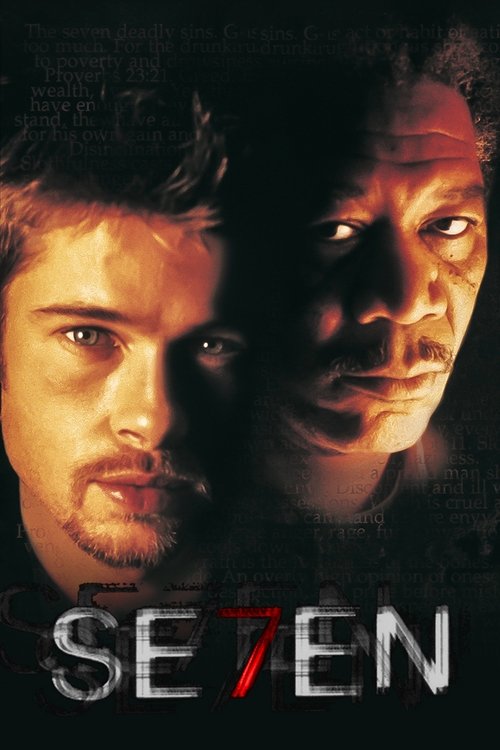
Se7en
1995 · Directed by David Fincher
Woke Score
CriticCritic Score
Audience
Ultra Based
Critics rated this 57 points above its woke score. Among Ultra Based films, this critic score ranks #776 of 1469.
Representation Casting
Score: 15/100
Morgan Freeman plays a senior detective with dignity and authority. However, the film treats this as narratively natural without contemporary diversity consciousness or commentary.
LGBTQ+ Themes
Score: 0/100
No LGBTQ+ themes, characters, or representation of any kind.
Feminist Agenda
Score: 5/100
Gwyneth Paltrow's character is primarily a plot device and motivation. She has minimal agency or development, reflecting 1990s thriller conventions.
Racial Consciousness
Score: 10/100
Freeman's character is competent and central, but the film contains no explicit racial consciousness, commentary, or awareness of contemporary racial dynamics.
Climate Crusade
Score: 0/100
Climate themes are entirely absent from this serial killer procedural.
Eat the Rich
Score: 5/100
The killer's motivations are philosophical and religious rather than economic. There is no critique of capitalism or wealth disparity.
Body Positivity
Score: 0/100
Body positivity themes are not present in this crime thriller.
Neurodivergence
Score: 0/100
The serial killer is depicted as pathological and evil, not as neurodivergent in any contemporary sense.
Revisionist History
Score: 0/100
No historical revisionism or reframing is present in this contemporary thriller.
Lecture Energy
Score: 10/100
Somerset's monologues are character-driven and reflective rather than preachy. The film avoids explicit moral lecturing or consciousness-raising.


Synopsis
Two homicide detectives are on a desperate hunt for a serial killer whose crimes are based on the "seven deadly sins" in this dark and haunting film that takes viewers from the tortured remains of one victim to the next. The seasoned Det. Somerset researches each sin in an effort to get inside the killer's mind, while his novice partner, Mills, scoffs at his efforts to unravel the case.
Consciousness Assessment
Se7en arrives from a historical moment when a serial killer procedural could simply exist as a serial killer procedural, untethered from the imperatives of contemporary cultural consciousness. David Fincher's 1995 thriller is fundamentally a work of craft and mood, concerned with the mechanics of investigation and the philosophical bankruptcy of its antagonist's worldview. Morgan Freeman plays Detective Somerset as a weary, principled man of intellect, and the film treats this characterization as narratively organic rather than as a statement about representation. Brad Pitt's Mills functions as the film's emotional center, his youthful idealism corroded by the case's horrors. The film offers no lectures, no crusades, no consciousness-raising agendas. It is, in other words, almost aggressively indifferent to the social frameworks that would later define a certain strain of cinema.
What remains striking is how little the film concerns itself with anything beyond its immediate narrative. The rain-soaked city is a character unto itself, a space of moral decay where sins accumulate without redemption. Gwyneth Paltrow's wife exists primarily as motivation rather than as a fully realized presence, a choice that feels more reflective of 1990s thriller conventions than of any particular ideological position. The killer's monologues about the seven deadly sins contain a twisted moralism, but the film positions these as the ravings of a pathological mind, not as wisdom worth entertaining.
By the standards of modern cultural assessment, Se7en is essentially inert. It contains no climate advocacy, no queer representation, no body positivity messaging, no neurodivergent representation played with contemporary sensitivity, no revisionist historical framing. The film's darkness is aesthetic and philosophical rather than political. For those seeking evidence of progressive sensibilities in their entertainment, this remains barren ground. For those seeking a masterwork of thriller cinema, the assessment remains unchanged by any woke accounting.
Analysis generated by our Consciousness Algorithm
Critic Reviews
“This weirdly off-kilter suspenser goes well beyond the usual police procedural or killer-on-a-rampage yarn due to a fine script, striking craftsmanship and a masterful performance by Morgan Freeman.”
“It's intriguing, appalling, savvy, nasty, grossly unsettling -- you may not like what you see, but you'll definitely be affected by the sight.”
“A dark, grisly, horrifying and intelligent thriller.”
“Not even bags of body parts, a bitten-off tongue or a man forced to cut off a pound of his own flesh keep it from being dull. ”
Consciousness Markers
Morgan Freeman plays a senior detective with dignity and authority. However, the film treats this as narratively natural without contemporary diversity consciousness or commentary.
No LGBTQ+ themes, characters, or representation of any kind.
Gwyneth Paltrow's character is primarily a plot device and motivation. She has minimal agency or development, reflecting 1990s thriller conventions.
Freeman's character is competent and central, but the film contains no explicit racial consciousness, commentary, or awareness of contemporary racial dynamics.
Climate themes are entirely absent from this serial killer procedural.
The killer's motivations are philosophical and religious rather than economic. There is no critique of capitalism or wealth disparity.
Body positivity themes are not present in this crime thriller.
The serial killer is depicted as pathological and evil, not as neurodivergent in any contemporary sense.
No historical revisionism or reframing is present in this contemporary thriller.
Somerset's monologues are character-driven and reflective rather than preachy. The film avoids explicit moral lecturing or consciousness-raising.