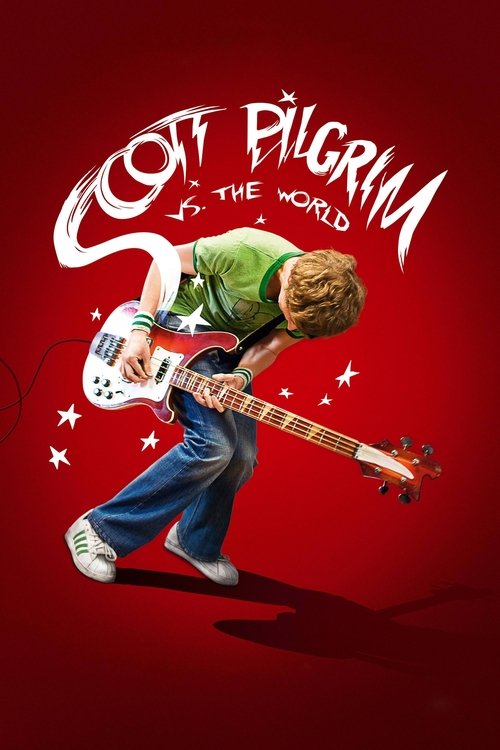
Scott Pilgrim vs. the World
2010 · Directed by Edgar Wright
Woke Score
CriticCritic Score
Audience
Based
Critics rated this 47 points above its woke score. Among Based films, this critic score ranks #167 of 345.
Representation Casting
Score: 25/100
The cast includes Asian and queer-coded characters, but they primarily function as supporting players in the Scott-centric narrative rather than receiving meaningful character development or thematic focus.
LGBTQ+ Themes
Score: 35/100
Kieran Culkin's Wallace Wells is an openly gay character with a boyfriend, but his sexuality is largely played for comedic effect without substantive exploration of LGBTQ+ themes or representation.
Feminist Agenda
Score: 20/100
While Ramona Flowers demonstrates agency and complexity, the narrative fundamentally measures her worth through the male protagonist's romantic journey, with no critique of male-centered desire or power dynamics in relationships.
Racial Consciousness
Score: 15/100
Ellen Wong's Knives Chau is an Asian character, but the film employs stereotypical nerdy Asian girl tropes without critical examination or meaningful exploration of racial dynamics.
Climate Crusade
Score: 0/100
No evidence of climate themes or environmental consciousness in the film.
Eat the Rich
Score: 10/100
The characters remain apolitical throughout; there is no systemic critique of capitalism, wealth inequality, or institutional power structures despite the video game aesthetic.
Body Positivity
Score: 0/100
No evidence of body diversity representation or body positivity messaging; the film features conventionally attractive actors without commentary on appearance.
Neurodivergence
Score: 0/100
No explicit representation, discussion, or thematic engagement with neurodivergence.
Revisionist History
Score: 0/100
The film is set in contemporary Toronto and contains no historical revisionism or reframing of past events.
Lecture Energy
Score: 15/100
While the film contains thematic depth about growing up and relationships, its comedic and self-aware tone prevents it from adopting a preachy or preachy approach to its themes.


Synopsis
As bass guitarist for a garage-rock band, Scott Pilgrim has never had trouble getting a girlfriend; usually, the problem is getting rid of them. But when Ramona Flowers skates into his heart, he finds she has the most troublesome baggage of all: an army of ex-boyfriends who will stop at nothing to eliminate him from her list of suitors.
Consciousness Assessment
Scott Pilgrim vs. the World arrives as a peculiar artifact of pre-woke cinema, a moment when cultural consciousness had not yet calcified into its current forms. The film assembles a notably diverse supporting cast: Ellen Wong as Knives Chau, Kieran Culkin as the flamboyantly gay Wallace Wells, and various other characters drawn from Toronto's artistic underground. Yet diversity of casting does not constitute progressive sensibility, and this film treats its minority characters primarily as comic foils orbiting the white male protagonist's emotional journey. Ramona Flowers, while possessing genuine agency and complexity through Mary Elizabeth Winstead's performance, exists within a narrative that ultimately measures her value through Scott's romantic development. The film's refusal to critique male desire or examine power dynamics in courtship marks it as fundamentally pre-2015 in its assumptions about romance.
The surrounding cultural markers yield little of note. Wallace Wells functions as a gay character whose sexuality is played for laughs rather than explored with any depth. Knives Chau, despite being a well-drawn character, falls into the nerdy Asian girlfriend archetype without any critical examination of how she's positioned. There is no climate consciousness, no anti-capitalist ideology, no discussion of neurodivergence or body diversity. The film's comic-book aesthetic might suggest systemic critique, but it remains apolitical throughout, concerned entirely with personal transformation through romantic success.
What remains is a technically accomplished piece of genre pastiche that serves as a time capsule of early 2010s sensibilities. The film's cult following has only grown in retrospect, yet this status owes nothing to progressive social consciousness. Instead, it reflects the affection audiences hold for a work that prioritized visual inventiveness and character charm over ideological positioning. By contemporary standards, the film reads as innocent of modern cultural preoccupations, neither offensive nor particularly aware.
Analysis generated by our Consciousness Algorithm
Critic Reviews
“Michael Cera elevates deadpan to an art, starring as a slacker turned action hero in this wildly inventive comedy that's one of the most vivid and spirited adaptations of a comic book since Spider-Man--and one of the hippest since Ghost World. ”
“Its speedy, funny, happy-sad spirit is so infectious that the movie makes you feel at home in its world even if the landscape is, at first glance, unfamiliar.”
“Handily beats back the evils of boredom. ”
“With Scott Pilgrim, Wright leaps over the line from chattery cleverness to all-out self-consciousness. ”
Consciousness Markers
The cast includes Asian and queer-coded characters, but they primarily function as supporting players in the Scott-centric narrative rather than receiving meaningful character development or thematic focus.
Kieran Culkin's Wallace Wells is an openly gay character with a boyfriend, but his sexuality is largely played for comedic effect without substantive exploration of LGBTQ+ themes or representation.
While Ramona Flowers demonstrates agency and complexity, the narrative fundamentally measures her worth through the male protagonist's romantic journey, with no critique of male-centered desire or power dynamics in relationships.
Ellen Wong's Knives Chau is an Asian character, but the film employs stereotypical nerdy Asian girl tropes without critical examination or meaningful exploration of racial dynamics.
No evidence of climate themes or environmental consciousness in the film.
The characters remain apolitical throughout; there is no systemic critique of capitalism, wealth inequality, or institutional power structures despite the video game aesthetic.
No evidence of body diversity representation or body positivity messaging; the film features conventionally attractive actors without commentary on appearance.
No explicit representation, discussion, or thematic engagement with neurodivergence.
The film is set in contemporary Toronto and contains no historical revisionism or reframing of past events.
While the film contains thematic depth about growing up and relationships, its comedic and self-aware tone prevents it from adopting a preachy or preachy approach to its themes.