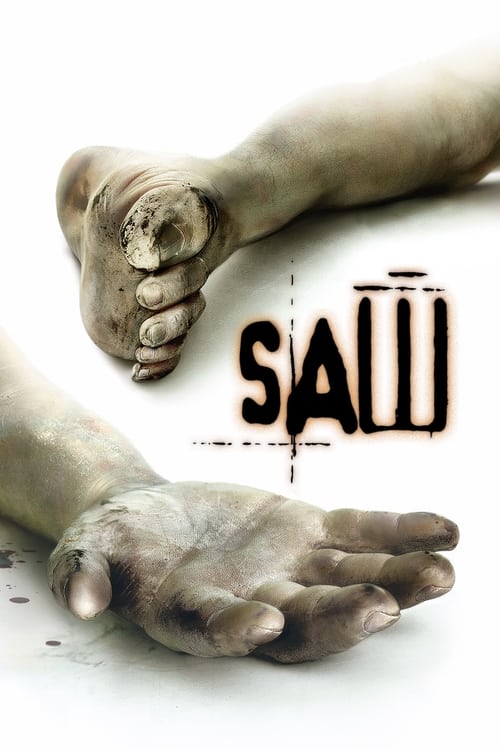
Saw
2004 · Directed by James Wan
Woke Score
CriticCritic Score
Audience
Ultra Based
Critics rated this 42 points above its woke score. Among Ultra Based films, this critic score ranks #1247 of 1469.
Representation Casting
Score: 0/100
While the cast includes actors of color such as Danny Glover and Ken Leung, their roles are minimal and underdeveloped. Their inclusion appears incidental rather than the result of deliberate representation efforts.
LGBTQ+ Themes
Score: 0/100
No LGBTQ+ themes, representation, or subtext present in the narrative or character development.
Feminist Agenda
Score: 0/100
Despite featuring Monica Potter, the film centers on male characters and contains no feminist themes or social commentary regarding gender.
Racial Consciousness
Score: 0/100
The film exhibits no racial themes, consciousness, or commentary on racial issues.
Climate Crusade
Score: 0/100
No environmental or climate-related themes appear in the film.
Eat the Rich
Score: 5/100
Jigsaw's philosophy critiques how people waste their lives and fail to appreciate existence, which tangentially touches on materialism, though it is not presented as coherent anti-capitalist messaging.
Body Positivity
Score: 0/100
No body positivity themes or representation present in the film.
Neurodivergence
Score: 0/100
While Jigsaw has a brain tumor affecting his psychology, this is presented as pathology and motivation for villainy, not as neurodivergence representation.
Revisionist History
Score: 0/100
The film contains no historical elements or revisionist engagement with historical events.
Lecture Energy
Score: 10/100
Jigsaw's character is defined entirely by preachy moral lectures delivered through recorded messages and the structure of his games. The film functions as an extended vehicle for the killer's philosophy about appreciating life through suffering.


Synopsis
Two men wake up to find themselves shackled in a grimy, abandoned bathroom. As they struggle to comprehend their predicament, they discover a disturbing tape left behind by the sadistic mastermind known as Jigsaw. With a chilling voice and cryptic instructions, Jigsaw informs them that they must partake in a gruesome game in order to secure their freedom.
Consciousness Assessment
Saw presents itself as a morality play dressed in the garments of torture horror, a distinction that requires careful parsing. James Wan's directorial debut concerns two men imprisoned in a bathroom by a serial killer who believes he is teaching them to value their lives through suffering. The film's primary ideological commitment is to this killer's philosophy: that ordinary people are complacent and deserve pain as pedagogy. This is delivered with the relentless earnestness of a man convinced he has discovered profound truth.
The film features a reasonably diverse cast, though the supporting actors of color receive minimal development and serve primarily as set dressing around the central male narrative. There is no meaningful engagement with identity, representation, or social consciousness. The sole marker of cultural awareness present is the unceasing moralizing that constitutes Jigsaw's character, his recorded monologues functioning as extended lectures on the proper appreciation of existence. This is thematic to the villain, not progressive messaging.
What emerges is a film fundamentally unconcerned with the cultural preoccupations of the 2020s. It is a product of 2004, interested in serial killer psychology, plot mechanics, and the visceral impact of confined suffering. One must conclude that Saw scored low on this index not because it is bad, but because it is, in the specific sense we measure, essentially indifferent to progressive social consciousness. It is a film about a killer's ideology, not a film with one.
Analysis generated by our Consciousness Algorithm
Critic Reviews
“May be the best independent horror film to have come out since "The Blair Witch Project." It's certainly better than "Blair Witch", and more fun, more gruesome, and more macabre. In a very delightful way. ”
“The filmmakers piece it together with almost clockwork perfection and deliver it with masterful misdirection, creating the most ingenious, eccentric and brazenly jaundiced psycho-thriller to come along in years. ”
“As good an all-out, non-camp horror movie as we’ve had lately.”
“Sicko horror film from Australia, whose sadism is topped only by its absurdity.”
Consciousness Markers
While the cast includes actors of color such as Danny Glover and Ken Leung, their roles are minimal and underdeveloped. Their inclusion appears incidental rather than the result of deliberate representation efforts.
No LGBTQ+ themes, representation, or subtext present in the narrative or character development.
Despite featuring Monica Potter, the film centers on male characters and contains no feminist themes or social commentary regarding gender.
The film exhibits no racial themes, consciousness, or commentary on racial issues.
No environmental or climate-related themes appear in the film.
Jigsaw's philosophy critiques how people waste their lives and fail to appreciate existence, which tangentially touches on materialism, though it is not presented as coherent anti-capitalist messaging.
No body positivity themes or representation present in the film.
While Jigsaw has a brain tumor affecting his psychology, this is presented as pathology and motivation for villainy, not as neurodivergence representation.
The film contains no historical elements or revisionist engagement with historical events.
Jigsaw's character is defined entirely by preachy moral lectures delivered through recorded messages and the structure of his games. The film functions as an extended vehicle for the killer's philosophy about appreciating life through suffering.