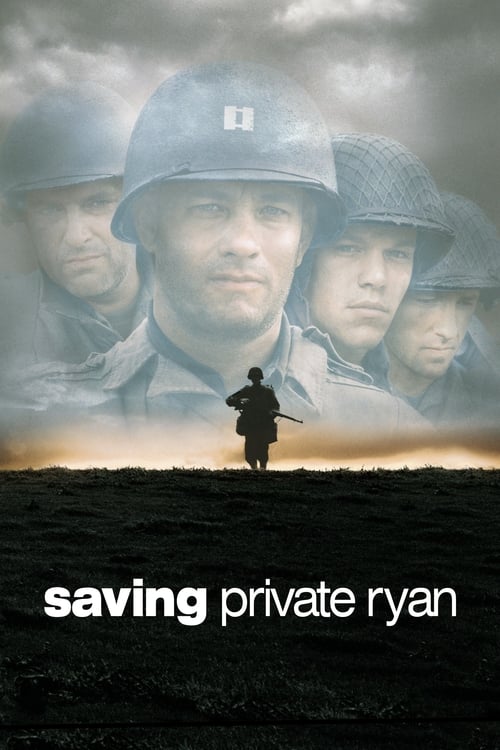
Saving Private Ryan
1998 · Directed by Steven Spielberg
Woke Score
CriticCritic Score
Audience
Ultra Based
Critics rated this 87 points above its woke score. Among Ultra Based films, this critic score ranks #114 of 1469.
Representation Casting
Score: 5/100
The cast is overwhelmingly white and male, reflecting historical military demographics of 1944. There is no progressive casting strategy or contemporary diversity consideration evident.
LGBTQ+ Themes
Score: 0/100
No LGBTQ+ themes, representation, or subtext are present in the film. The narrative contains no engagement with sexual orientation or gender identity.
Feminist Agenda
Score: 0/100
The film contains no feminist messaging or critique of patriarchy. It is set in an all-male military unit with no significant female characters or feminist agenda.
Racial Consciousness
Score: 0/100
There is no interrogation of systemic racism, racial dynamics, or critical examination of American racial structures. The film does not engage with race as a thematic concern.
Climate Crusade
Score: 0/100
Climate consciousness is entirely absent from this historical war narrative. The film contains no environmental messaging or climate-related themes.
Eat the Rich
Score: 0/100
The film contains no anti-capitalist messaging or critique of economic systems. Its concerns are military and historical, not economic or ideological.
Body Positivity
Score: 0/100
Body positivity messaging is absent. The film depicts soldiers as trained military personnel without engagement with contemporary body image consciousness.
Neurodivergence
Score: 7/100
One character displays anxiety and psychological fragility that receives sympathetic treatment, and some soldiers show signs of trauma or stress responses. However, this is not coded as neurodivergence but as normal human responses to extreme circumstances.
Revisionist History
Score: 0/100
While the film takes narrative liberties with historical events, it does not engage in progressive historical revisionism or reframing of historical narratives through modern social justice frameworks.
Lecture Energy
Score: 0/100
The film contains no preachy messaging, moral instruction, or lecture-like delivery of contemporary social values. It trusts the audience to draw their own conclusions.


Synopsis
As U.S. troops storm the beaches of Normandy, three brothers lie dead on the battlefield, with a fourth trapped behind enemy lines. Ranger captain John Miller and seven men are tasked with penetrating German-held territory and bringing the boy home.
Consciousness Assessment
Saving Private Ryan is a 1998 war epic directed by Steven Spielberg about a military mission to retrieve Private James Ryan after the D-Day landings. The film was a massive critical and commercial success, becoming the highest-grossing film in the United States that year. It is widely regarded as one of the greatest war films ever made, praised for its technical proficiency and realistic depiction of combat. From a contemporary cultural perspective, this film scores remarkably low on progressive sensibilities. It predates the modern social justice movement by well over a decade, and its concerns are entirely historical and humanistic rather than contemporary cultural. The cast is overwhelmingly white and male, reflecting the historical reality of American military units in 1944, but this is not presented as a progressive statement. There is no interrogation of systemic racism, no LGBTQ+ representation, no climate consciousness, no body positivity messaging, and no neurodiverse coding of characters. The film's only modest markers of cultural awareness emerge from Spielberg's general humanist sensibilities: the depiction of soldiers as complex, frightened men complicates traditional masculine heroism, and the film's anti-war message is implicit in its unflinching portrayal of violence's brutality. The film's narrative is fundamentally apolitical by modern standards. It concerns itself with duty, sacrifice, and the moral weight of command decisions. These are timeless themes, not contemporary progressive messaging. Spielberg was not attempting to satisfy modern diversity quotas or insert contemporary social commentary. He was making a historical war film that happened to be made by a thoughtful director with humanist concerns. This distinction matters enormously for purposes of cultural assessment.
Analysis generated by our Consciousness Algorithm
Critic Reviews
“A war film that, entirely aware of its genre's conventions, transcends them as it transcends the simplistic moralities that inform its predecessors, to take the high, morally haunting ground.”
“Spectacular, wrenching masterpiece that unflinchingly documents the random horror, the grisly spectacle and the ugliness of war.”
“Nothing that suggests an independent vision, unless you count seeing more limbs blown off than usual.”
Consciousness Markers
The cast is overwhelmingly white and male, reflecting historical military demographics of 1944. There is no progressive casting strategy or contemporary diversity consideration evident.
No LGBTQ+ themes, representation, or subtext are present in the film. The narrative contains no engagement with sexual orientation or gender identity.
The film contains no feminist messaging or critique of patriarchy. It is set in an all-male military unit with no significant female characters or feminist agenda.
There is no interrogation of systemic racism, racial dynamics, or critical examination of American racial structures. The film does not engage with race as a thematic concern.
Climate consciousness is entirely absent from this historical war narrative. The film contains no environmental messaging or climate-related themes.
The film contains no anti-capitalist messaging or critique of economic systems. Its concerns are military and historical, not economic or ideological.
Body positivity messaging is absent. The film depicts soldiers as trained military personnel without engagement with contemporary body image consciousness.
One character displays anxiety and psychological fragility that receives sympathetic treatment, and some soldiers show signs of trauma or stress responses. However, this is not coded as neurodivergence but as normal human responses to extreme circumstances.
While the film takes narrative liberties with historical events, it does not engage in progressive historical revisionism or reframing of historical narratives through modern social justice frameworks.
The film contains no preachy messaging, moral instruction, or lecture-like delivery of contemporary social values. It trusts the audience to draw their own conclusions.