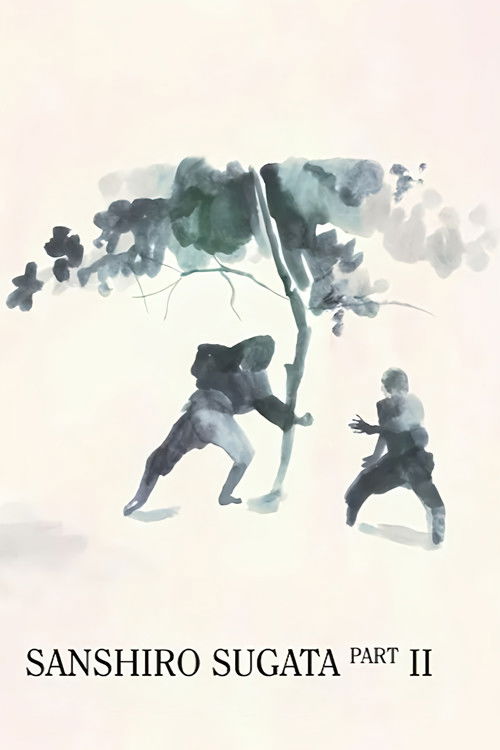
Sanshiro Sugata, Part Two
1945 · Directed by Akira Kurosawa
Woke Score
CriticCritic Score
Ultra Based
Critics rated this 56 points above its woke score. Among Ultra Based films, this critic score ranks #920 of 1469.
Representation Casting
Score: 0/100
The cast reflects 1940s Japanese cinema norms with no apparent attention to demographic diversity or inclusive representation. All roles are assigned based on character function within a traditional narrative.
LGBTQ+ Themes
Score: 0/100
No LGBTQ+ themes, characters, or subtext are present in the film. The narrative is entirely heteronormative and makes no engagement with sexual identity.
Feminist Agenda
Score: 0/100
Female characters exist peripherally in service to the male protagonist's journey. There is no examination of gender relations, women's agency, or feminist critique.
Racial Consciousness
Score: 5/100
A brief encounter with an American prizefighter introduces minimal cross-cultural tension, but this serves the martial philosophy narrative rather than any explicit racial or cultural consciousness.
Climate Crusade
Score: 0/100
Climate and environmental themes are entirely absent from this martial arts drama.
Eat the Rich
Score: 0/100
The film does not critique capitalism or economic systems. Its concerns are spiritual and martial rather than economic.
Body Positivity
Score: 0/100
The film celebrates athletic male bodies within a martial arts context, which is traditional rather than progressive body politics.
Neurodivergence
Score: 0/100
No representation of neurodivergent characters or themes appears in the film.
Revisionist History
Score: 0/100
This is not a historical film. It contains no revisionist reinterpretation of historical events.
Lecture Energy
Score: 0/100
The film trusts its audience to understand its themes through narrative and visual storytelling rather than explicit preachy commentary.

Synopsis
A few years after his breakthrough, Sanshiro resumes his path to judo mastery—testing his discipline against an American prizefighter and later facing vengeful karate brothers. As rival schools and public spectacle push him toward violence, he must reconcile strength with restraint and the true spirit of his art.
Consciousness Assessment
Sanshiro Sugata, Part Two arrives in May 1945, mere months before Japan's surrender, as a meditation on martial discipline and restraint. Kurosawa's film concerns itself entirely with the spiritual refinement of its protagonist through judo competition, examining the tension between the allure of spectacle and violence on one hand, and genuine mastery on the other. The narrative presents a fundamentally traditional worldview in which strength of character matters above all else, and the film's moral framework is one of classical virtue rather than any recognizable contemporary social consciousness. The female characters exist in the margins, their roles purely functional to the male protagonist's journey. There is no evidence of any engagement with representation, identity politics, or systemic critique. This is cinema of another era entirely, concerned with timeless questions of discipline and honor rather than the specific sensibilities that would emerge decades later. The film's depiction of an American prizefighter introduces a minor cross-cultural element, but it serves the narrative's exploration of martial philosophy rather than any progressive statement about American-Japanese relations or cultural exchange. By the standards of modern progressive filmmaking, this is essentially a blank slate, which is precisely what we should expect from a 1945 judo picture made during the final days of Imperial Japan.
Analysis generated by our Consciousness Algorithm
Critic Reviews
“Sanshiro Sugata Part II is still a less-than-subtle propaganda feature, but at the same time it shows Kurosawa's own journey in becoming better at his craft.”
“Even though by every measure this is a weaker film, there are moments that shine through I can dig into.”
“Sanshiro Sugata Part II is not a great film, partly because of the fairly dull propaganda scenes but also because Kurosawa clearly had little enthusiasm for it.”
Consciousness Markers
The cast reflects 1940s Japanese cinema norms with no apparent attention to demographic diversity or inclusive representation. All roles are assigned based on character function within a traditional narrative.
No LGBTQ+ themes, characters, or subtext are present in the film. The narrative is entirely heteronormative and makes no engagement with sexual identity.
Female characters exist peripherally in service to the male protagonist's journey. There is no examination of gender relations, women's agency, or feminist critique.
A brief encounter with an American prizefighter introduces minimal cross-cultural tension, but this serves the martial philosophy narrative rather than any explicit racial or cultural consciousness.
Climate and environmental themes are entirely absent from this martial arts drama.
The film does not critique capitalism or economic systems. Its concerns are spiritual and martial rather than economic.
The film celebrates athletic male bodies within a martial arts context, which is traditional rather than progressive body politics.
No representation of neurodivergent characters or themes appears in the film.
This is not a historical film. It contains no revisionist reinterpretation of historical events.
The film trusts its audience to understand its themes through narrative and visual storytelling rather than explicit preachy commentary.