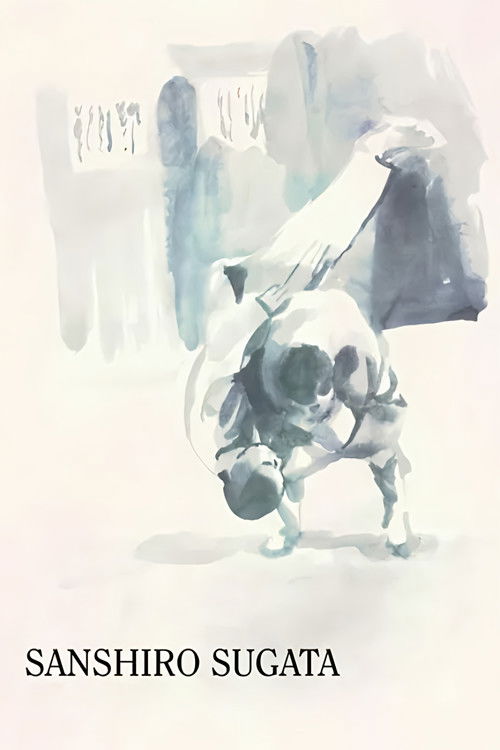
Sanshiro Sugata
1943 · Directed by Akira Kurosawa
Ultra Based
Consciousness Score: 0%
Representation Casting
Score: 0/100
The cast reflects the film's 1943 Japanese production context with no apparent effort toward diverse representation. Casting appears based entirely on conventional industry practice of the era.
LGBTQ+ Themes
Score: 0/100
No LGBTQ+ themes, characters, or subtext are present. The narrative centers entirely on heterosexual romance and male mentorship.
Feminist Agenda
Score: 0/100
Female characters are minimal and subservient to the male narrative. The protagonist's love interest exists as romantic reward rather than as an agent with her own arc or significance.
Racial Consciousness
Score: 0/100
The film contains no interrogation of racial or ethnic hierarchies. It is set in Japan and features Japanese characters without commentary on race or cultural identity.
Climate Crusade
Score: 0/100
Environmental or climate themes are entirely absent from this martial arts drama set in the Meiji period.
Eat the Rich
Score: 0/100
The film makes no critique of capitalism or economic inequality. Its concerns are philosophical and martial rather than economic or political.
Body Positivity
Score: 0/100
No body positivity messaging is present. The film treats the body as an instrument for martial discipline and does not engage with contemporary body image discourse.
Neurodivergence
Score: 0/100
Neurodivergence is not represented or discussed. The film contains no characters or themes related to autism, ADHD, mental health, or disability.
Revisionist History
Score: 0/100
The film presents the Meiji period as historical backdrop without revisionist intent. There is no attempt to reframe historical events or challenge conventional historical narratives.
Lecture Energy
Score: 0/100
While the film contains philosophical elements about discipline and martial virtue, it does not lecture the audience about moral or social lessons in a preachy manner.

Synopsis
A hotheaded youth in 1880s Meiji Japan apprentices to judo master Shōgorō Yano, trading brute jujutsu bravado for discipline and humility. As Sanshirō matures, he proves judo's spirit against old-guard challengers—including a deadly duel—while falling for his vanquished opponent's daughter. Based on the novel by Tsuneo Tomita, son of Tomita Tsunejirō, the earliest disciple of judo.
Consciousness Assessment
Sanshiro Sugata represents a curious artifact of wartime Japanese cinema, a film that predates the contemporary cultural moment by eight decades. Kurosawa's directorial debut concerns itself with martial discipline, masculine transformation, and the tension between traditional and modern Japan during the Meiji period. The film is earnest in its examination of how physical practice shapes character, a theme that would resonate throughout Kurosawa's career. By the standards of 1943, this is conventional storytelling: a young man learns humility through combat, falls in love with an appropriate woman, and discovers his place within a hierarchical social order.
The film contains no markers of modern progressive consciousness. Female characters exist primarily as romantic interest and family members, their agency minimal and their narrative function decorative. There is no interrogation of gender roles, no exploration of economic inequality, no environmental themes, no discussion of neurodivergence or disability, and no deliberate representation casting designed to signal inclusion. The film treats its historical setting as a straightforward backdrop rather than an opportunity for revisionist commentary on colonialism, imperialism, or the systems that structured Meiji Japan.
What we encounter instead is a film genuinely interested in philosophy, discipline, and the spiritual dimensions of martial practice. This is not wokeness, nor is it pretending to be. It is a work of its time, made during Japan's militarization, and it reflects the values and blind spots of that era. To score it as though it were engaging with 2020s cultural discourse would be to fundamentally misunderstand the nature of cultural periodization.
Analysis generated by our Consciousness Algorithm
Consciousness Markers
The cast reflects the film's 1943 Japanese production context with no apparent effort toward diverse representation. Casting appears based entirely on conventional industry practice of the era.
No LGBTQ+ themes, characters, or subtext are present. The narrative centers entirely on heterosexual romance and male mentorship.
Female characters are minimal and subservient to the male narrative. The protagonist's love interest exists as romantic reward rather than as an agent with her own arc or significance.
The film contains no interrogation of racial or ethnic hierarchies. It is set in Japan and features Japanese characters without commentary on race or cultural identity.
Environmental or climate themes are entirely absent from this martial arts drama set in the Meiji period.
The film makes no critique of capitalism or economic inequality. Its concerns are philosophical and martial rather than economic or political.
No body positivity messaging is present. The film treats the body as an instrument for martial discipline and does not engage with contemporary body image discourse.
Neurodivergence is not represented or discussed. The film contains no characters or themes related to autism, ADHD, mental health, or disability.
The film presents the Meiji period as historical backdrop without revisionist intent. There is no attempt to reframe historical events or challenge conventional historical narratives.
While the film contains philosophical elements about discipline and martial virtue, it does not lecture the audience about moral or social lessons in a preachy manner.