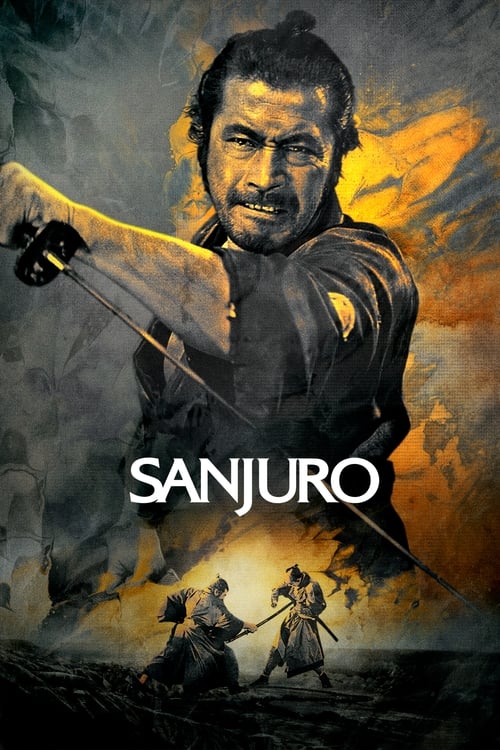
Sanjuro
1962 · Directed by Akira Kurosawa
Woke Score
CriticCritic Score
Audience
Ultra Based
Critics rated this 83 points above its woke score. Among Ultra Based films, this critic score ranks #307 of 1469.
Representation Casting
Score: 0/100
The film features an entirely Japanese cast in a period Japanese setting, which reflects historical accuracy rather than progressive casting choices. No deliberate diversity or cross-cultural representation is evident.
LGBTQ+ Themes
Score: 0/100
No LGBTQ+ themes, characters, or subtext appear in the film. The narrative focuses exclusively on male warrior relationships within traditional feudal hierarchies.
Feminist Agenda
Score: 0/100
Female characters appear peripherally without significant agency or narrative function. The film operates within patriarchal samurai structures without questioning or examining gender power dynamics.
Racial Consciousness
Score: 0/100
No racial consciousness or commentary on racial systems exists in the film. Race as a social construct is not engaged with in any form.
Climate Crusade
Score: 0/100
Climate themes are entirely absent from the narrative. The film contains no environmental consciousness or messaging about ecological concerns.
Eat the Rich
Score: 0/100
While the film satirizes rigid hierarchies, it does not express anti-capitalist sentiment or critique wealth inequality through contemporary language or frameworks.
Body Positivity
Score: 0/100
No body positivity messaging or celebration of diverse body types appears in the film. The narrative does not engage with this modern concern.
Neurodivergence
Score: 0/100
Neurodivergence is neither represented nor discussed in the film. No characters are coded as neurodivergent, nor is the concept relevant to the narrative.
Revisionist History
Score: 0/100
The film presents samurai culture within conventional historical frameworks of the period. No revisionist reframing of historical events or figures occurs.
Lecture Energy
Score: 0/100
The film entertains through satire and character-driven comedy without preachy lecturing about social issues. No explicit moralizing about modern social consciousness occurs.


Synopsis
Toshiro Mifune swaggers and snarls to brilliant comic effect in Kurosawa's tightly paced, beautifully composed "Sanjuro." In this companion piece and sequel to "Yojimbo," jaded samurai Sanjuro helps an idealistic group of young warriors weed out their clan's evil influences, and in the process turns their image of a proper samurai on its ear.
Consciousness Assessment
Sanjuro is a 1962 samurai film released during an era when the cultural frameworks we use to analyze contemporary social consciousness had not yet been formed. Kurosawa's picture concerns itself with the honor codes of feudal Japan and the comic subversion of rigid hierarchical expectations, themes that possess genuine artistic merit but lack any coherence with modern progressive sensibilities. The narrative centers on Mifune's cynical protagonist dismantling the pretensions of a young warrior clan, a subversive gesture within its own context but one that operates entirely outside the vocabulary of contemporary cultural awareness.
The film presents a world of exclusively male characters navigating male-centered concerns of duty, loyalty, and martial honor. Women appear in the cast list but remain peripheral figures without agency or narrative weight, reflecting the conventions of 1960s Japanese cinema rather than any conscious choice regarding representation. The ensemble cast is Japanese, which requires no particular progressive positioning in a film set in feudal Japan produced by a Japanese studio, yet it also means the film engages in no cross-cultural casting or deliberate diversification.
Sanjuro remains a work of formal mastery and clever satire of samurai mythology, but it is fundamentally a product of its historical moment. The film contains no engagement with race as a social construct, no examination of gender systems, no climate consciousness, no capitalist critique expressed through contemporary language, no celebration of neurodivergence, and no reframing of history through a modern lens. It is a film about samurai, made by a master craftsman, operating entirely within the aesthetic and ideological parameters of early 1960s Japanese popular cinema. To score it higher would be to confuse artistic quality with cultural awareness, a conflation we must resist.
Analysis generated by our Consciousness Algorithm
Critic Reviews
“The thrilling sequel-return of Mifune's hip samurai from Yojimbo. [01 Nov 2002, p.C9]”
“Cool and witty action cinema of the highest order. [26 Jun 2014, p.50]”
“This is fun but, compared with Kurosawa’s other 60s efforts, relatively slight.”
Consciousness Markers
The film features an entirely Japanese cast in a period Japanese setting, which reflects historical accuracy rather than progressive casting choices. No deliberate diversity or cross-cultural representation is evident.
No LGBTQ+ themes, characters, or subtext appear in the film. The narrative focuses exclusively on male warrior relationships within traditional feudal hierarchies.
Female characters appear peripherally without significant agency or narrative function. The film operates within patriarchal samurai structures without questioning or examining gender power dynamics.
No racial consciousness or commentary on racial systems exists in the film. Race as a social construct is not engaged with in any form.
Climate themes are entirely absent from the narrative. The film contains no environmental consciousness or messaging about ecological concerns.
While the film satirizes rigid hierarchies, it does not express anti-capitalist sentiment or critique wealth inequality through contemporary language or frameworks.
No body positivity messaging or celebration of diverse body types appears in the film. The narrative does not engage with this modern concern.
Neurodivergence is neither represented nor discussed in the film. No characters are coded as neurodivergent, nor is the concept relevant to the narrative.
The film presents samurai culture within conventional historical frameworks of the period. No revisionist reframing of historical events or figures occurs.
The film entertains through satire and character-driven comedy without preachy lecturing about social issues. No explicit moralizing about modern social consciousness occurs.