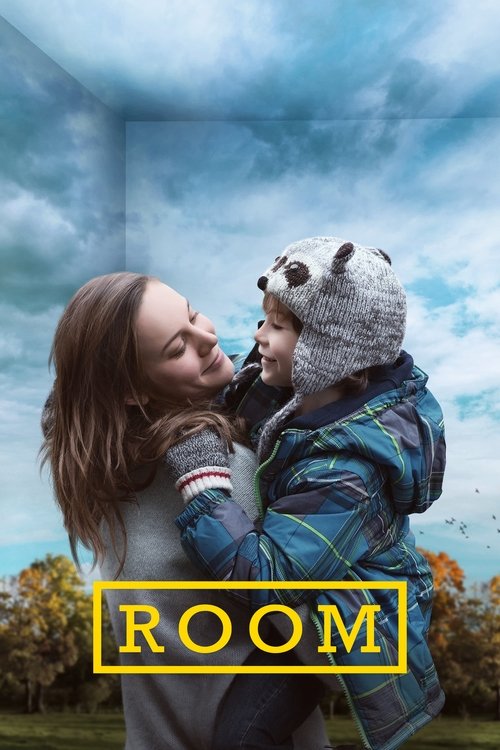
Room
2015 · Directed by Lenny Abrahamson
Woke Score
CriticCritic Score
Ultra Based
Critics rated this 56 points above its woke score. Among Ultra Based films, this critic score ranks #792 of 1469.
Representation Casting
Score: 0/100
The cast is predominantly white with no apparent effort toward diverse representation or intentional casting for inclusion purposes.
LGBTQ+ Themes
Score: 0/100
No LGBTQ+ themes, characters, or subtext are present in the film.
Feminist Agenda
Score: 25/100
The mother character demonstrates agency and resilience in her recovery, though this arises organically from the plot rather than serving as explicit feminist commentary. The narrative does not position her as a symbol of female empowerment.
Racial Consciousness
Score: 0/100
No racial themes, commentary, or consciousness-raising regarding race or ethnicity appears in the film.
Climate Crusade
Score: 0/100
Climate change and environmental concerns are entirely absent from the narrative.
Eat the Rich
Score: 0/100
No critique of capitalism, wealth inequality, or systemic economic injustice is present in the film.
Body Positivity
Score: 0/100
Body positivity messaging and fat representation are not elements of this film.
Neurodivergence
Score: 15/100
The child's trauma responses could be interpreted as depicting neurodivergent behavior, though the film does not explicitly frame or educate about neurodivergence.
Revisionist History
Score: 0/100
The film contains no revisionist historical narratives or reframing of historical events.
Lecture Energy
Score: 0/100
The film avoids preachy exposition or moments where characters explain social issues to the audience. It trusts viewers to understand the emotional and psychological dimensions of the story.


Synopsis
Held captive for 7 years in an enclosed space, a woman and her young son finally gain their freedom, allowing the boy to experience the outside world for the first time.
Consciousness Assessment
Room presents itself as a serious examination of trauma and psychological recovery, a worthy endeavor that the film executes with considerable craft and emotional precision. Brie Larson's performance captures the fractured psychology of a woman rebuilding her life, while young Jacob Tremblay conveys the wonder and terror of a child encountering the world for the first time. Director Lenny Abrahamson demonstrates restraint in his handling of sensitive material, allowing the narrative to unfold through the characters' experiences rather than imposing authorial commentary.
The film's engagement with contemporary social consciousness remains minimal and incidental. While the story inherently involves a survivor of sexual violence and captivity, the narrative does not position itself as a statement about systemic oppression or institutional failure. The mother's resilience reads as character development rather than feminist declaration. The cast reflects mainstream Hollywood demographics without apparent intentionality toward representation. There is no attempt to deconstruct power systems or to educate viewers about social injustice through expository dialogue.
What emerges is a film committed to emotional authenticity over ideological positioning. This restraint, whether intentional or circumstantial, places Room in the category of serious drama that respects its audience's intelligence by showing rather than telling. The modest score reflects the film's genuine indifference to the cultural markers that define contemporary progressive sensibility, not a deficiency in craft or moral seriousness.
Analysis generated by our Consciousness Algorithm
Critic Reviews
“For a film about looking for a sign, looking for solace, Room quite brazenly offers neither. It isn't an easy film, but the world's already got plenty of easy and easily digestible films.”
“Winner of the John Cassavetes Award for Best Feature Under $500K at the 2006 Independent Spirit Awards, Henry's film is beautifully shot and extraordinarily well acted by Williams.”
“The plot of the indie feature Room is, shall we say, sketchy. But that's a minor annoyance thanks to a gutsy performance by Cyndi Williams and vibrating cinematography by P.J. Raval.”
“Williams does a fine job with her role. I was pulling for her throughout her dreary journey. It's too bad it didn't get anywhere.”
Consciousness Markers
The cast is predominantly white with no apparent effort toward diverse representation or intentional casting for inclusion purposes.
No LGBTQ+ themes, characters, or subtext are present in the film.
The mother character demonstrates agency and resilience in her recovery, though this arises organically from the plot rather than serving as explicit feminist commentary. The narrative does not position her as a symbol of female empowerment.
No racial themes, commentary, or consciousness-raising regarding race or ethnicity appears in the film.
Climate change and environmental concerns are entirely absent from the narrative.
No critique of capitalism, wealth inequality, or systemic economic injustice is present in the film.
Body positivity messaging and fat representation are not elements of this film.
The child's trauma responses could be interpreted as depicting neurodivergent behavior, though the film does not explicitly frame or educate about neurodivergence.
The film contains no revisionist historical narratives or reframing of historical events.
The film avoids preachy exposition or moments where characters explain social issues to the audience. It trusts viewers to understand the emotional and psychological dimensions of the story.