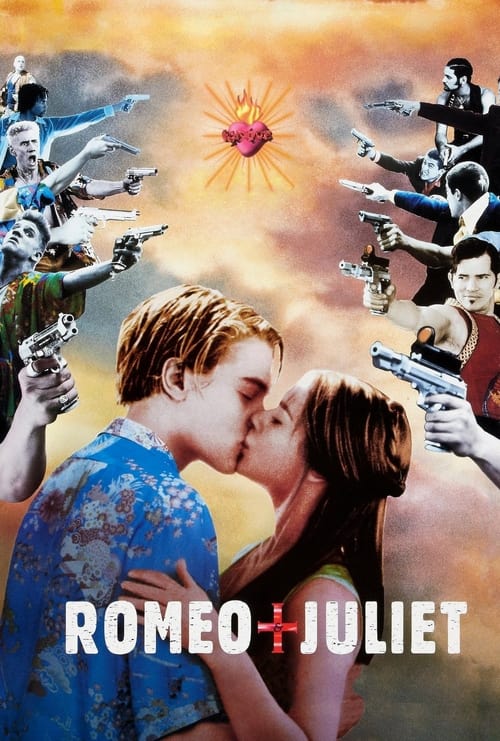
Romeo + Juliet
1996 · Directed by Baz Luhrmann
Woke Score
CriticCritic Score
Audience
Ultra Based
Critics rated this 33 points above its woke score. Among Ultra Based films, this critic score ranks #1332 of 1469.
Representation Casting
Score: 15/100
The cast includes actors of various ethnic backgrounds, but this reflects 1990s Hollywood demographics rather than deliberate progressive casting choices. No specific commentary on representation is present in the film.
LGBTQ+ Themes
Score: 0/100
No LGBTQ+ themes, characters, or representation appear in the film. The narrative focuses entirely on heterosexual romance.
Feminist Agenda
Score: 10/100
Juliet possesses agency within the narrative and speaks Shakespeare's lines with conviction, but her arc remains bound to traditional romantic tragedy and male-centered family conflict. No progressive reckoning with gender dynamics is present.
Racial Consciousness
Score: 0/100
Despite casting diversity, the film contains no engagement with racial themes, histories, or consciousness. Race is simply present in the cast but not addressed by the narrative.
Climate Crusade
Score: 0/100
No climate-related themes or environmental consciousness appears in this adaptation of Shakespeare's tragedy.
Eat the Rich
Score: 0/100
While the film depicts urban violence and decay in Verona Beach, there is no anti-capitalist critique or engagement with economic systems. The violence is presented as abstract rather than systemic.
Body Positivity
Score: 0/100
The film contains no engagement with body positivity, body diversity, or commentary on physical appearance beyond conventional Hollywood aesthetics.
Neurodivergence
Score: 0/100
No neurodivergent characters or themes appear in this adaptation.
Revisionist History
Score: 0/100
The film is an adaptation of Shakespeare's play, not a historical narrative. No revisionist engagement with historical events or narratives is present.
Lecture Energy
Score: 25/100
The film's visual style and anachronistic elements suggest commentary on modern society and violence, but this is conveyed through aesthetic excess rather than explicit preachiness. The lecture energy is present in the directorial vision but not in dialogue.


Synopsis
In director Baz Luhrmann's contemporary take on William Shakespeare's classic tragedy, the Montagues and Capulets have moved their ongoing feud to the sweltering suburb of Verona Beach, where Romeo and Juliet fall in love and secretly wed. Though the film is visually modern, the bard's dialogue remains.
Consciousness Assessment
Baz Luhrmann's 1996 "Romeo + Juliet" is a film that mistakes the visual trappings of modernity for actual contemporary consciousness. By transplanting Shakespeare's text into a garish Verona Beach where the Montagues and Capulets conduct their blood feud with firearms and neon-soaked theatricality, Luhrmann creates a work that is visually audacious but ideologically inert. The film's casting includes actors of various ethnic backgrounds, yet this appears to be simply the natural result of late-1990s Hollywood demographics rather than any deliberate engagement with questions of representation. Claire Danes' Juliet possesses agency within the confines of the narrative, but she remains fundamentally a tragic figure whose destiny is determined by male-centered conflict and family obligation, not by any progressive reckoning with gender dynamics.
The film's social consciousness, such as it exists, extends primarily to aesthetic matters. The hyperkinetic visual style, the anachronistic use of contemporary music and fashion, and the gun violence that permeates every frame are presented as symptoms of a sick society, yet the film offers no analysis of the systems that produce this pathology. The Montague-Capulet feud functions as an abstract metaphor for senseless violence, but there is no interrogation of capitalism, no engagement with racial hierarchies, and no awareness of any social consciousness beyond surface-level stylistic commentary. This is a film made for audiences who believe that depicting chaos is the same as critiquing it.
What remains striking about the film in retrospect is how thoroughly it embodies the pre-September 11th optimism of mid-1990s blockbuster filmmaking, when spectacle alone could substitute for substance. The production design, the cinematography, the performances all signal a director of considerable technical ambition, yet none of this serves any larger vision beyond the pure pleasure of stylistic excess. For a film made in 1996, this represents exactly what we might expect: a work that engages with Shakespeare's text but not with the cultural questions that would come to dominate cinema a decade hence.
Analysis generated by our Consciousness Algorithm
Critic Reviews
“It’s well-staged, well-acted, all the right people die in the end. It comes down to, well, Romeo and Juliet, really, and Douglas Booth and Hailee Steinfeld prove capable in the title roles.”
“Carlei’s film is not particularly imaginative in terms of context, but it offers proof that this material never tarnishes, that with the right sort of movie magic, even a traditional telling can be thrilling.”
“Despite the filmmakers’ best attempts, the latest screen adaptation of Shakespeare’s tragic love story Romeo & Juliet lands with a dull thud.”
“Let’s blame Fellowes before Shakespeare – one of them built this house, the other has just walked right through it in his filthiest garden clogs.”
Consciousness Markers
The cast includes actors of various ethnic backgrounds, but this reflects 1990s Hollywood demographics rather than deliberate progressive casting choices. No specific commentary on representation is present in the film.
No LGBTQ+ themes, characters, or representation appear in the film. The narrative focuses entirely on heterosexual romance.
Juliet possesses agency within the narrative and speaks Shakespeare's lines with conviction, but her arc remains bound to traditional romantic tragedy and male-centered family conflict. No progressive reckoning with gender dynamics is present.
Despite casting diversity, the film contains no engagement with racial themes, histories, or consciousness. Race is simply present in the cast but not addressed by the narrative.
No climate-related themes or environmental consciousness appears in this adaptation of Shakespeare's tragedy.
While the film depicts urban violence and decay in Verona Beach, there is no anti-capitalist critique or engagement with economic systems. The violence is presented as abstract rather than systemic.
The film contains no engagement with body positivity, body diversity, or commentary on physical appearance beyond conventional Hollywood aesthetics.
No neurodivergent characters or themes appear in this adaptation.
The film is an adaptation of Shakespeare's play, not a historical narrative. No revisionist engagement with historical events or narratives is present.
The film's visual style and anachronistic elements suggest commentary on modern society and violence, but this is conveyed through aesthetic excess rather than explicit preachiness. The lecture energy is present in the directorial vision but not in dialogue.