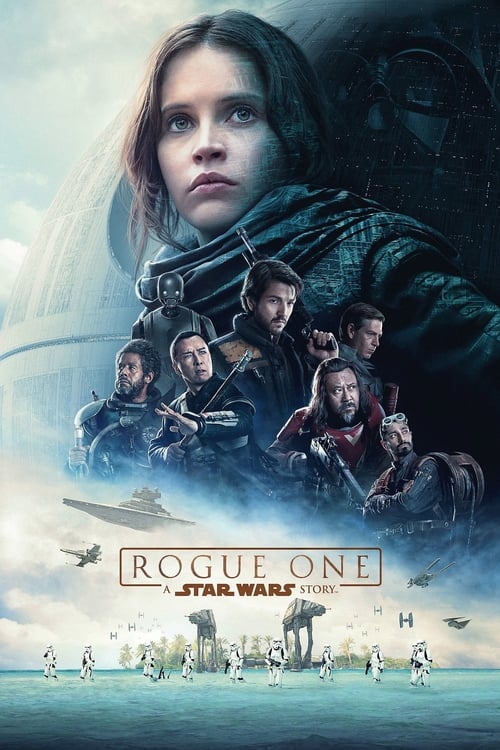
Rogue One: A Star Wars Story
2016 · Directed by Gareth Edwards
Woke Score
CriticCritic Score
Audience
Based
Critics rated this 27 points above its woke score. Among Based films, this critic score ranks #199 of 345.
Representation Casting
Score: 68/100
International ensemble cast with visible diversity in ethnicity and gender, led by a capable female protagonist. However, the casting functions primarily as aesthetic rather than thematic choice.
LGBTQ+ Themes
Score: 0/100
No LGBTQ+ themes, characters, or representation present in the narrative.
Feminist Agenda
Score: 40/100
Jyn Erso serves as a competent female lead with agency and tactical skills, but the character development remains relatively thin and she does not challenge patriarchal structures within the narrative.
Racial Consciousness
Score: 35/100
Diverse casting of Asian and Latino actors, but the film does not explicitly engage with racial themes or commentary. Representation exists without consciousness.
Climate Crusade
Score: 0/100
No climate-related themes or environmental consciousness present in the film.
Eat the Rich
Score: 45/100
The film presents resistance against authoritarian oppression, which carries implicit anti-establishment sentiment, but does not engage with capitalist systems or economic critique.
Body Positivity
Score: 10/100
Cast members display conventional action-film physiques. No meaningful engagement with body diversity or positivity messaging.
Neurodivergence
Score: 0/100
No representation or thematic engagement with neurodivergence or disability.
Revisionist History
Score: 0/100
The film operates within the established Star Wars mythology without attempting to revise historical narratives or challenge canonical interpretations.
Lecture Energy
Score: 25/100
The film maintains entertainment value and does not feel preachy, though its anti-authoritarian themes carry subtle ideological content that occasionally threatens to become overwrought.


Synopsis
A rogue band of resistance fighters unite for a mission to steal the Death Star plans and bring a new hope to the galaxy.
Consciousness Assessment
Rogue One arrives as a peculiar artifact of the mid-2010s moment when studio filmmaking began its tentative courtship with ensemble diversity without necessarily interrogating the underlying structures it reinforced. The film deploys a genuinely international cast with visible intentionality: Felicity Jones fronts the narrative as Jyn Erso, a woman with agency and tactical competence; Donnie Yen and Jiang Wen anchor the action sequences; Diego Luna and Riz Ahmed provide romantic tension and moral complexity. Yet this representation functions primarily as aesthetic window dressing on what remains a conventional heist narrative. The film presents its diverse characters not as a statement about whose stories matter, but rather as a practical solution to global marketing requirements.
What proves more intriguing, and more genuinely aligned with contemporary progressive sensibilities, is the film's implicit anti-authoritarian stance. The entire plot hinges on a resistance movement opposing a totalitarian regime, with particular emphasis on the moral compromises such resistance requires. Characters commit suicide bombings, execute prisoners, and manipulate one another in service of the larger cause. This moral murkiness, this refusal to present the Rebel Alliance as purely heroic, represents genuine ideological content beyond mere casting choices. Yet the film ultimately reaffirms rather than challenges the mythology it inhabits.
The film's limitations become apparent in its handling of gender, disability, and systemic critique. Jyn Erso, competent as she is, remains relatively flat compared to the ensemble's supporting players. No LGBTQ+ themes emerge. No meaningful engagement with climate or economic systems occurs. The film exists as a midpoint between older action cinema and contemporary progressive aesthetics, achieving neither the pure adventurism of earlier Star Wars entries nor the deliberate social consciousness of more committed contemporary genre work. It is, perhaps, the most 2016 film imaginable: diverse without being transformative, political without being challenging, entertaining without being memorable.
Analysis generated by our Consciousness Algorithm
Critic Reviews
“It stands alone as the best "Star Wars" entry since 1980's "The Empire Strikes Back." Yes, it's that good.”
“Rogue One might trade heavily in nostalgia but it's bold enough to take risks, and will leave you stirred, fired up and raring for more. Now, if only there was a follow-up we could go away and watch immediately… ”
“Perhaps the darkest, most action-packed Star Wars instalment, director Gareth Edwards’ standalone adventure establishes its own rhythm, balancing fan demands with grand, poetic moments unlike anything this cinematic galaxy has previously achieved.”
“It’s a downer. It’s morally tangled. The characters are as depressed as the scenario, and Michael Giacchino’s music can’t make it better.”
Consciousness Markers
International ensemble cast with visible diversity in ethnicity and gender, led by a capable female protagonist. However, the casting functions primarily as aesthetic rather than thematic choice.
No LGBTQ+ themes, characters, or representation present in the narrative.
Jyn Erso serves as a competent female lead with agency and tactical skills, but the character development remains relatively thin and she does not challenge patriarchal structures within the narrative.
Diverse casting of Asian and Latino actors, but the film does not explicitly engage with racial themes or commentary. Representation exists without consciousness.
No climate-related themes or environmental consciousness present in the film.
The film presents resistance against authoritarian oppression, which carries implicit anti-establishment sentiment, but does not engage with capitalist systems or economic critique.
Cast members display conventional action-film physiques. No meaningful engagement with body diversity or positivity messaging.
No representation or thematic engagement with neurodivergence or disability.
The film operates within the established Star Wars mythology without attempting to revise historical narratives or challenge canonical interpretations.
The film maintains entertainment value and does not feel preachy, though its anti-authoritarian themes carry subtle ideological content that occasionally threatens to become overwrought.