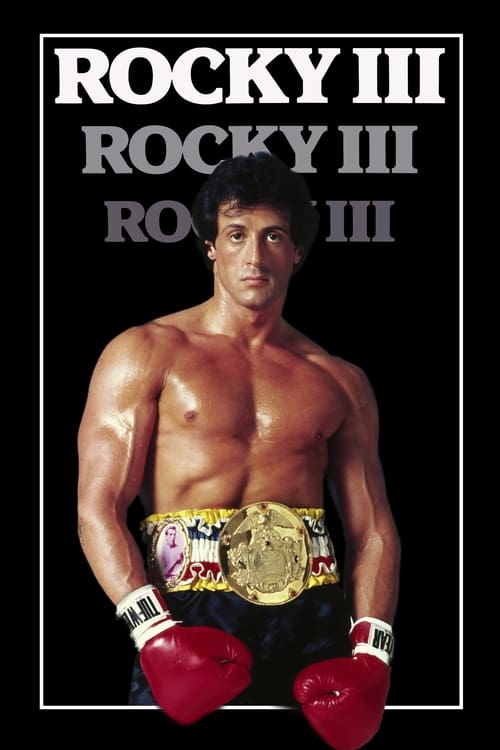
Rocky III
1982 · Directed by Sylvester Stallone
Woke Score
CriticCritic Score
Audience
Ultra Based
Critics rated this 53 points above its woke score. Among Ultra Based films, this critic score ranks #1009 of 1469.
Representation Casting
Score: 5/100
The cast includes Black actors in significant roles (Mr. T, Carl Weathers), but their presence reflects 1980s color-blind casting rather than deliberate representation. Characters exist within the story without commentary on their racial identity.
LGBTQ+ Themes
Score: 0/100
No LGBTQ+ themes, characters, or representation of any kind. The film is entirely heteronormative in its romantic and social dynamics.
Feminist Agenda
Score: 8/100
Adrian is a supportive wife whose arc involves encouraging her husband and managing domestic concerns. She has no independent agency or character development separate from Rocky's journey.
Racial Consciousness
Score: 3/100
The film contains no examination of racial dynamics, systemic racism, or racial identity. Clubber Lang's race is incidental to his role as antagonist.
Climate Crusade
Score: 0/100
No environmental themes, climate consciousness, or eco-awareness of any kind present in the narrative.
Eat the Rich
Score: 5/100
The film celebrates boxing as a path to wealth and status. There is mild critique of Apollo Creed's commercialism, but this is narrative convenience rather than systemic critique.
Body Positivity
Score: 2/100
The film celebrates athletic masculine bodies and the boxing physique as ideal. There is no inclusive representation of body types or challenge to conventional beauty standards.
Neurodivergence
Score: 0/100
No characters coded as neurodivergent, no representation of cognitive or developmental differences, no engagement with disability.
Revisionist History
Score: 0/100
The film is a fictional sports narrative with no historical claims to revise or reinterpret.
Lecture Energy
Score: 2/100
The film contains minimal dialogue about social issues. Its dramatic beats concern personal redemption and athletic achievement rather than social consciousness or political messaging.


Synopsis
Following Rocky Balboa's intense battle with his most powerful adversary yet – the ferocious Clubber Lang – Rocky joins forces with former rival Apollo Creed in an effort to get back his fighting spirit.
Consciousness Assessment
Rocky III operates as a pure sports entertainment spectacle, concerned primarily with boxing choreography and the spiritual redemption of its protagonist. The film exists in a pre-woke register entirely, treating its characters as functional elements of a narrative rather than as vehicles for social commentary. Mr. T's Clubber Lang is simply the villain of the piece, a menacing but ultimately one-dimensional antagonist whose race is incidental to his role as heavyweight champion. There is no conscious engagement with racial dynamics, no examination of representation, and no apparent awareness that such examination might be necessary or desirable.
The film's gender politics are those of early 1980s action cinema. Adrian exists primarily as moral support and domestic anchor, her agency confined to the home and her concern for Rocky's wellbeing. She is a loving wife, not a character with independent aspirations or consciousness. The female characters serve their narrative function without pretense to deeper social significance. This is not progressive cinema, but neither is it attempting to be anything other than what it is: a straightforward sequel in a successful franchise, concerned with spectacle over substance.
Rocky III in 2024 appears as a film entirely innocent of the cultural anxieties that define contemporary cinema. It contains no lecture, no self-conscious diversity initiatives, no examination of systemic structures. It is a sports film about a boxer who regains his fighting spirit through friendship and training montages. The film's lack of progressive sensibility is simply the default position of its era.
Analysis generated by our Consciousness Algorithm
Critic Reviews
“Rocky III looks good -- a lean film with a bit of muscle. Stallone makes it eminently watchable. And that's probably more than we should have expected. [28 May 1982, p.C1]”
“It's as much fun as ever, a ground-meat-and-potatoes movie, with guys beating hell out of each other to a disco beat. Stallone pulls no punches; the familiar refrain features the Rocky I score, along with its characters and moral simplicity.”
“As audience movie-making in its purest form, the film is a delight, but it's also so obviously based on Stallone's own personal struggle with success that the mind boggles as to what Rocky can possibly do next.”
“Rocky III, unlike its twin predecessors, is a charmlessly manipulative movie. The magic is kaput. [28 May 1982]”
Consciousness Markers
The cast includes Black actors in significant roles (Mr. T, Carl Weathers), but their presence reflects 1980s color-blind casting rather than deliberate representation. Characters exist within the story without commentary on their racial identity.
No LGBTQ+ themes, characters, or representation of any kind. The film is entirely heteronormative in its romantic and social dynamics.
Adrian is a supportive wife whose arc involves encouraging her husband and managing domestic concerns. She has no independent agency or character development separate from Rocky's journey.
The film contains no examination of racial dynamics, systemic racism, or racial identity. Clubber Lang's race is incidental to his role as antagonist.
No environmental themes, climate consciousness, or eco-awareness of any kind present in the narrative.
The film celebrates boxing as a path to wealth and status. There is mild critique of Apollo Creed's commercialism, but this is narrative convenience rather than systemic critique.
The film celebrates athletic masculine bodies and the boxing physique as ideal. There is no inclusive representation of body types or challenge to conventional beauty standards.
No characters coded as neurodivergent, no representation of cognitive or developmental differences, no engagement with disability.
The film is a fictional sports narrative with no historical claims to revise or reinterpret.
The film contains minimal dialogue about social issues. Its dramatic beats concern personal redemption and athletic achievement rather than social consciousness or political messaging.