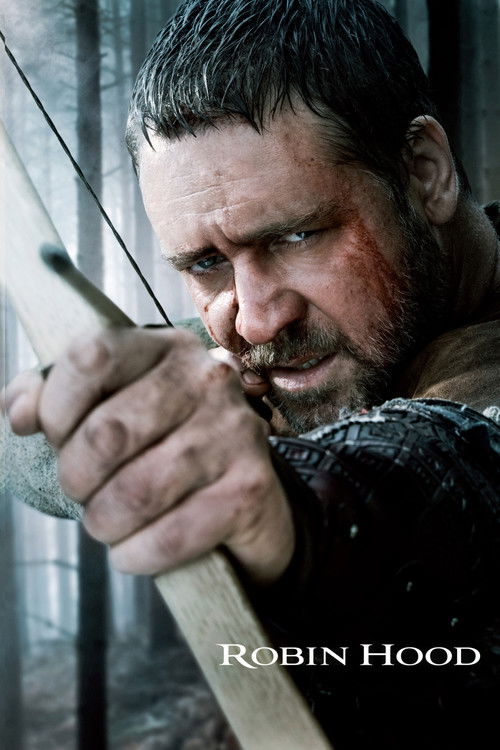
Robin Hood
2010 · Directed by Ridley Scott
Woke Score
CriticCritic Score
Audience
Ultra Based
Critics rated this 45 points above its woke score. Among Ultra Based films, this critic score ranks #1085 of 1469.
Representation Casting
Score: 20/100
Cate Blanchett provides some gender diversity in casting, and her Marion is positioned as a capable archer and warrior rather than purely decorative. However, she remains a supporting character in a male-dominated narrative focused on Russell Crowe's Robin.
LGBTQ+ Themes
Score: 0/100
No LGBTQ+ themes, characters, or subtext appear in the film. The narrative is entirely heterosexual and concerned with medieval warfare and politics.
Feminist Agenda
Score: 15/100
Marion's character explicitly rejects the damsel-in-distress role and participates in combat, representing a mild conscious effort toward female agency. However, she remains romantically and narratively subordinate to the male protagonist.
Racial Consciousness
Score: 0/100
The film contains no apparent engagement with racial consciousness, representation of marginalized communities, or commentary on racial dynamics. It exists as a straightforward historical action narrative.
Climate Crusade
Score: 0/100
No environmental themes, climate consciousness, or ecological commentary appear in the film. The narrative is entirely focused on medieval political conflict and action sequences.
Eat the Rich
Score: 5/100
While Robin's legend involves robbing the rich, the film presents this as personal rebellion against a corrupt king rather than systemic critique of capitalism or wealth inequality. Any anti-establishment message is incidental to the action narrative.
Body Positivity
Score: 0/100
The film contains no body positivity messaging, commentary on physical diversity, or engagement with contemporary discourse around body representation.
Neurodivergence
Score: 0/100
No representation of neurodivergent characters, conditions, or themes appear in the film.
Revisionist History
Score: 0/100
While the film reimagines the Robin Hood legend, it does so within traditional historical fiction frameworks rather than attempting revisionist reinterpretation of historical events or narratives through a contemporary social lens.
Lecture Energy
Score: 0/100
The film maintains the entertainment focus of action-adventure cinema and contains no preachy elements, speeches about social justice, or overt messaging designed to educate audiences about progressive causes.


Synopsis
When soldier Robin happens upon the dying Robert of Loxley, he promises to return the man's sword to his family in Nottingham. There, he assumes Robert's identity; romances his widow, Marion; and draws the ire of the town's sheriff and King John's henchman, Godfrey.
Consciousness Assessment
Ridley Scott's "Robin Hood" presents itself as a gritty, grounded reimagining of medieval folklore, a project that requires an entirely different set of analytical tools than those designed for contemporary social commentary. The film's sole concession to modern sensibilities arrives in the form of Cate Blanchett's Marion Loxley, a widow who explicitly rejects the damsel-in-distress archetype and participates in battle scenes with her bow. This represents a modest effort toward female agency within the genre conventions of 2010, though Marion remains subordinate to the narrative's central male figure and romantic arc. The film does not interrogate class structures in any progressive sense; rather, it simply dramatizes medieval conflict as spectacle, with Russell Crowe's Robin functioning as a traditional action hero whose opposition to authority stems from personal grievance rather than any ideological commitment.
The production offers no engagement with racial consciousness, LGBTQ+ representation, environmental themes, or any other contemporary marker of progressive sensibility. The film exists in a purely historical register, concerned with swordplay, siege warfare, and the logistics of medieval politics. King John and his henchmen function as generic villains in the traditional action-adventure mode. Blanchett's casting as a capable archer represents the extent of the film's cultural awareness, a gesture made at a moment when female action heroes were becoming increasingly common in Hollywood, yet hardly a radical statement even for 2010.
The film's fundamental commitment is to spectacle and historical narrative, not to social consciousness. We are watching a craftsman execute a genre piece with technical proficiency, not a filmmaker grappling with contemporary progressive concerns. Its modest score reflects not moral failure but rather the straightforward absence of engagement with the cultural markers that define modern progressive sensibility.
Analysis generated by our Consciousness Algorithm
Critic Reviews
“Every era gets the Robin Hood it needs…Now director Ridley Scott and writer Brian Helgeland have given us an intelligent, layered story suited to our grim, patience-trying times.”
“Head and shoulders above the sort of lightheaded epics Hollywood typically offers during the summer season.”
“The entire cast is superb. Crowe's an ideal Robin Hood-born to play the role-he's fully in command but human to the core. He owns it.”
“Ridley Scott’s Robin Hood is a pompous, interminable hash.”
Consciousness Markers
Cate Blanchett provides some gender diversity in casting, and her Marion is positioned as a capable archer and warrior rather than purely decorative. However, she remains a supporting character in a male-dominated narrative focused on Russell Crowe's Robin.
No LGBTQ+ themes, characters, or subtext appear in the film. The narrative is entirely heterosexual and concerned with medieval warfare and politics.
Marion's character explicitly rejects the damsel-in-distress role and participates in combat, representing a mild conscious effort toward female agency. However, she remains romantically and narratively subordinate to the male protagonist.
The film contains no apparent engagement with racial consciousness, representation of marginalized communities, or commentary on racial dynamics. It exists as a straightforward historical action narrative.
No environmental themes, climate consciousness, or ecological commentary appear in the film. The narrative is entirely focused on medieval political conflict and action sequences.
While Robin's legend involves robbing the rich, the film presents this as personal rebellion against a corrupt king rather than systemic critique of capitalism or wealth inequality. Any anti-establishment message is incidental to the action narrative.
The film contains no body positivity messaging, commentary on physical diversity, or engagement with contemporary discourse around body representation.
No representation of neurodivergent characters, conditions, or themes appear in the film.
While the film reimagines the Robin Hood legend, it does so within traditional historical fiction frameworks rather than attempting revisionist reinterpretation of historical events or narratives through a contemporary social lens.
The film maintains the entertainment focus of action-adventure cinema and contains no preachy elements, speeches about social justice, or overt messaging designed to educate audiences about progressive causes.