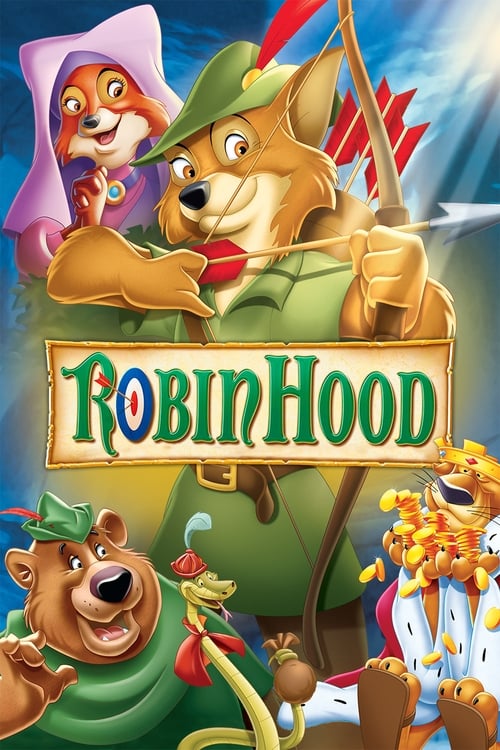
Robin Hood
1973 · Directed by Wolfgang Reitherman
Woke Score
CriticCritic Score
Audience
Ultra Based
Critics rated this 49 points above its woke score. Among Ultra Based films, this critic score ranks #1096 of 1469.
Representation Casting
Score: 5/100
Cast is entirely male except for a single female character (Maid Marian) with minimal agency. Reflects 1970s animation standards rather than any conscious representation strategy.
LGBTQ+ Themes
Score: 0/100
No LGBTQ+ themes, representation, or subtext of any kind. The film is a straightforward heteronormative adventure narrative.
Feminist Agenda
Score: 2/100
Maid Marian exists primarily as a love interest. She displays no agency and does not participate in the central conflict. The film does not engage with feminist themes.
Racial Consciousness
Score: 0/100
The film is set in a fantasy medieval England populated entirely by anthropomorphic animals. Race and racial consciousness are not addressed or present.
Climate Crusade
Score: 0/100
No environmental or climate themes appear in this medieval adventure tale. The film contains no messaging about ecological concerns.
Eat the Rich
Score: 15/100
The plot involves redistributing wealth from corrupt nobility to peasants, but this derives from medieval legend rather than deliberate ideological positioning. The film shows no consciousness of its own economic messaging.
Body Positivity
Score: 0/100
Body positivity is not a concern in this 1973 animated film. Characters are drawn in conventional cartoon style without commentary on bodies or appearance.
Neurodivergence
Score: 0/100
No engagement with neurodivergence, mental health, or disability representation. These frameworks did not inform children's entertainment in 1973.
Revisionist History
Score: 5/100
The film adapts the Robin Hood legend with creative liberties (animal characters, specific plot details) but does not engage in revisionist history as a conscious ideological project. It is simply an adaptation.
Lecture Energy
Score: 0/100
The film tells its story without preachy messaging or lectures about morality or justice. It entertains rather than instructs.


Synopsis
With King Richard off to the Crusades, Prince John and his slithering minion, Sir Hiss, set about taxing Nottingham's citizens with support from the corrupt sheriff - and staunch opposition by the wily Robin Hood and his band of merry men.
Consciousness Assessment
Disney's 1973 "Robin Hood" occupies a curious position in the cultural landscape, animated decades before the frameworks we now use to analyze progressive sensibilities became standardized. The film presents a straightforward adventure narrative in which a fox redistributes wealth from corrupt nobility to impoverished peasants. This premise might superficially suggest anti-capitalist sympathies, yet the film itself shows no consciousness of this reading. It is simply a children's story about robbing from the rich, told with earnest charm and anthropomorphic animals voiced by character actors of the era.
The casting consists entirely of men and animals rendered as male, with the exception of Maid Marian, who appears as a love interest rather than a character with agency or arc. She exists primarily to be rescued and to admire Robin Hood. This reflects the gender dynamics of early 1970s children's entertainment, which we might now recognize as limiting, but which the film does not present as a subject of reflection. The narrative contains no LGBTQ+ themes, no engagement with racial consciousness, no examination of disability or neurodivergence, and no climate messaging. The entire enterprise is innocent of what we might call modern cultural awareness.
What modest progressive elements exist are entirely incidental. The story happens to center on economic redistribution and the corruption of authority, but these emerge from medieval legend rather than from any deliberate ideological positioning. The film lectures no one. It simply tells its tale with animation that was, for its time, accomplished and charming. To score it as a 2020s cultural artifact would be a category error. It is a product of its moment, neither consciously progressive nor consciously resistant to progressivism. It simply exists as a children's film from an era when such classifications held no meaning.
Analysis generated by our Consciousness Algorithm
Critic Reviews
“Every era gets the Robin Hood it needs…Now director Ridley Scott and writer Brian Helgeland have given us an intelligent, layered story suited to our grim, patience-trying times.”
“Head and shoulders above the sort of lightheaded epics Hollywood typically offers during the summer season.”
“The entire cast is superb. Crowe's an ideal Robin Hood-born to play the role-he's fully in command but human to the core. He owns it.”
“Ridley Scott’s Robin Hood is a pompous, interminable hash.”
Consciousness Markers
Cast is entirely male except for a single female character (Maid Marian) with minimal agency. Reflects 1970s animation standards rather than any conscious representation strategy.
No LGBTQ+ themes, representation, or subtext of any kind. The film is a straightforward heteronormative adventure narrative.
Maid Marian exists primarily as a love interest. She displays no agency and does not participate in the central conflict. The film does not engage with feminist themes.
The film is set in a fantasy medieval England populated entirely by anthropomorphic animals. Race and racial consciousness are not addressed or present.
No environmental or climate themes appear in this medieval adventure tale. The film contains no messaging about ecological concerns.
The plot involves redistributing wealth from corrupt nobility to peasants, but this derives from medieval legend rather than deliberate ideological positioning. The film shows no consciousness of its own economic messaging.
Body positivity is not a concern in this 1973 animated film. Characters are drawn in conventional cartoon style without commentary on bodies or appearance.
No engagement with neurodivergence, mental health, or disability representation. These frameworks did not inform children's entertainment in 1973.
The film adapts the Robin Hood legend with creative liberties (animal characters, specific plot details) but does not engage in revisionist history as a conscious ideological project. It is simply an adaptation.
The film tells its story without preachy messaging or lectures about morality or justice. It entertains rather than instructs.