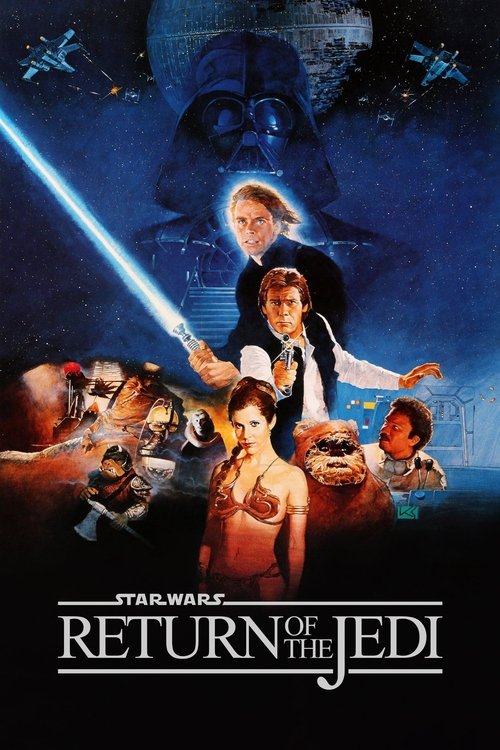
Return of the Jedi
1983 · Directed by Richard Marquand
Woke Score
CriticCritic Score
Ultra Based
Critics rated this 74 points above its woke score. Among Ultra Based films, this critic score ranks #429 of 1469.
Representation Casting
Score: 5/100
The cast is predominantly white with minimal diversity. Billy Dee Williams appears in a supporting role with limited narrative significance.
LGBTQ+ Themes
Score: 0/100
No LGBTQ+ characters, themes, or subtext present. The film contains no engagement with sexual orientation or gender identity.
Feminist Agenda
Score: 12/100
Princess Leia is sidelined narratively and most famously depicted in the slave Leia costume designed for male titillation rather than female agency or empowerment.
Racial Consciousness
Score: 3/100
The film contains no thematic exploration of racial issues. Character representation exists without commentary or consciousness regarding race.
Climate Crusade
Score: 0/100
No environmental themes, climate messaging, or ecological consciousness present in the narrative.
Eat the Rich
Score: 0/100
The film presents a straightforward good-versus-evil narrative with no critique of economic systems or capitalist structures.
Body Positivity
Score: 2/100
All main characters embody conventional attractiveness standards. No deliberate representation of body diversity or body-positive messaging.
Neurodivergence
Score: 0/100
No neurodivergent characters are represented or discussed. The film contains no engagement with disability or cognitive difference.
Revisionist History
Score: 0/100
As a fantasy space opera set in a fictional universe, the film contains no historical narrative to revise or reframe.
Lecture Energy
Score: 8/100
The film contains some philosophical dialogue about morality and the nature of good and evil, but this emerges organically from character interaction rather than as preachy sermon.


Synopsis
Luke Skywalker leads a mission to rescue his friend Han Solo from the clutches of Jabba the Hutt, the Emperor prepares to crush the Rebellion with a more powerful Death Star, and the Rebel fleet mounts a massive attack on the space station. Luke Skywalker confronts Darth Vader in a final climactic duel before the evil Emperor.
Consciousness Assessment
Return of the Jedi occupies a curious historical position, having been released in 1983 at a moment when contemporary progressive sensibilities had not yet calcified into the specific cultural markers we now recognize. The film is a product of its era, evincing no particular interest in representation, diversity of casting, or gender dynamics as conscious artistic choices. Princess Leia remains the token female presence, her agency frequently compromised by the narrative, and her most memorable costume is designed primarily for male appreciation rather than female empowerment.
The cast is predominantly white, with Billy Dee Williams occupying a supporting role that, while dignified, lacks the narrative weight afforded to his male co-stars. There is no suggestion of LGBTQ+ representation, no environmental messaging, no economic critique, and no neurodivergent characters. The film's philosophical content concerning the nature of good and evil emerges organically from the story rather than being imposed as pedagogical sermon.
What we have instead is a straightforward adventure narrative with no pretense toward cultural consciousness. The Ewoks, now frequently cited in retrospective criticism as problematic representation, were designed primarily as merchandising opportunities and comic relief. By the standards of 2020s progressive sensibility, this film is remarkably innocent of any engagement whatsoever.
Analysis generated by our Consciousness Algorithm
Critic Reviews
“Return of the Jedi is a childlike delight. It's the best video game around. And for the professional moviegoers, it is particularly enjoyable to watch every facet of filmmaking at its best.”
“Besides being good entertainment, Jedi resonates on a deeper, metaphoric level -- the characters are more human, the images more Freudian, and the drama more internal and psychological.”
“Return of the Jedi is both a familiar movie and a new one. It concludes the stories of the major human characters in the saga, particularly Skywalker, Han Solo, Princess Leia and Darth Vader.”
“To be sure, the film abounds in action. Some new peril besets Luke Skywalker, Han Solo or the Princess Leia almost too regularly every 10 minutes. But there's a kind of desperation about it, a feeling that Lucas and co-writer Lawrence Kasdan are simply trying to figure out what they can do next to amuse the kiddies.”
Consciousness Markers
The cast is predominantly white with minimal diversity. Billy Dee Williams appears in a supporting role with limited narrative significance.
No LGBTQ+ characters, themes, or subtext present. The film contains no engagement with sexual orientation or gender identity.
Princess Leia is sidelined narratively and most famously depicted in the slave Leia costume designed for male titillation rather than female agency or empowerment.
The film contains no thematic exploration of racial issues. Character representation exists without commentary or consciousness regarding race.
No environmental themes, climate messaging, or ecological consciousness present in the narrative.
The film presents a straightforward good-versus-evil narrative with no critique of economic systems or capitalist structures.
All main characters embody conventional attractiveness standards. No deliberate representation of body diversity or body-positive messaging.
No neurodivergent characters are represented or discussed. The film contains no engagement with disability or cognitive difference.
As a fantasy space opera set in a fictional universe, the film contains no historical narrative to revise or reframe.
The film contains some philosophical dialogue about morality and the nature of good and evil, but this emerges organically from character interaction rather than as preachy sermon.