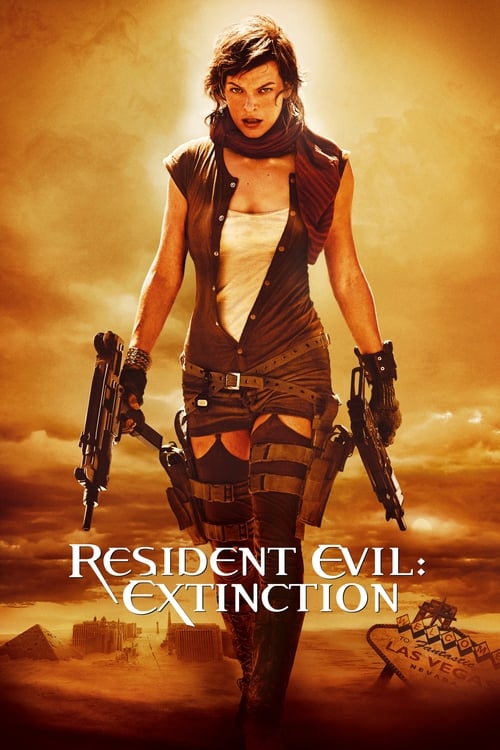
Resident Evil: Extinction
2007 · Directed by Russell Mulcahy
Woke Score
CriticCritic Score
Audience
Ultra Based
Critics rated this 33 points above its woke score. Among Ultra Based films, this critic score ranks #1329 of 1469.
Representation Casting
Score: 35/100
The film features Milla Jovovich as the lead action hero and includes Ashanti in a supporting role, representing some gender and racial diversity in the ensemble cast. However, this reflects mid-2000s action cinema norms rather than deliberate progressive casting.
LGBTQ+ Themes
Score: 0/100
No LGBTQ+ themes, characters, or subtext are present in the film. The narrative focuses entirely on survival and action without any exploration of sexual orientation or gender identity.
Feminist Agenda
Score: 20/100
While Alice is a female action lead, the film does not engage with feminist themes or commentary. Her agency derives from the action genre conventions of the 2000s rather than from any explicit examination of gender dynamics or women's empowerment.
Racial Consciousness
Score: 0/100
The film contains no exploration of racial themes, racial consciousness, or commentary on systemic racism. The diverse cast exists within the narrative without any thematic engagement with race or identity.
Climate Crusade
Score: 0/100
Despite the Nevada desert setting, the film presents no climate consciousness, environmental commentary, or concern for ecological collapse. The landscape serves purely as a backdrop for zombie action.
Eat the Rich
Score: 15/100
The Umbrella Corporation functions as the antagonist and is portrayed as an evil corporate entity, but this reflects generic action-movie villainy rather than systematic anti-capitalist critique. The film does not examine capitalism or economic systems.
Body Positivity
Score: 0/100
No body positivity messaging is present. The film follows conventional action cinema aesthetics without commentary on body diversity, appearance standards, or acceptance of different body types.
Neurodivergence
Score: 0/100
The film contains no representation of neurodivergent characters or any exploration of neurodiversity. Character disabilities or neurological differences are not depicted or discussed.
Revisionist History
Score: 0/100
Being a science fiction zombie film set in a fictional future, there is no historical revisionism. The narrative does not reinterpret historical events or challenge established historical narratives.
Lecture Energy
Score: 5/100
The film is primarily action-driven and entertainment-focused, avoiding preachy messaging. Minimal dialogue exists to deliver any kind of moral instruction or lecture to the audience.


Synopsis
Years after the Racoon City catastrophe, survivors travel across the Nevada desert, hoping to make it to Alaska. Alice joins the caravan and their fight against hordes of zombies and the evil Umbrella Corp.
Consciousness Assessment
Resident Evil: Extinction arrives in 2007 as a largely straightforward action-horror sequel, content to deliver zombie carnage across a desert landscape without pretending to be anything else. Milla Jovovich's Alice remains the focal point, a female protagonist whose existence in the lead role reflects the action cinema of the era rather than any deliberate engagement with progressive values. The film simply does what action franchises did in the mid-2000s: it features a strong lead, assembles a diverse ensemble to be picked off by monsters, and moves from set piece to set piece with minimal philosophical interruption.
The Umbrella Corporation persists as the villain, though the film treats corporate malfeasance as a plot device rather than a site for systemic critique. We are meant to dislike them for releasing zombies and pursuing nefarious experiments, the sort of generic movie-evil that has no real teeth. The Nevada desert setting, while visually distinctive, serves purely as geography for the action to unfold. There is no environmental consciousness here, no meditation on what has been lost or what we owe to the planet. The wasteland is simply where the survivors happen to be.
What emerges most clearly is that this is a film fundamentally uninterested in the cultural conversations that would define the 2020s. It belongs entirely to its moment, a 2007 action franchise entry that happens to star a woman and includes actors of color, but asks nothing of itself beyond competent entertainment. One might describe this as refreshing or as evidence of the film's modest artistic ambitions. Either way, it registers as a mild 18 on the contemporary scale of cultural consciousness, a film that would not survive scrutiny from those seeking evidence of progressive sensibility.
Analysis generated by our Consciousness Algorithm
Critic Reviews
“This is wall-to-wall mayhem that dashes from one stylish, splattery, nonsensical set-piece to the next, while the star attacks her silly role with the carnivorous brio of an ocelot clawing a side of ham.”
“Equal parts "Mad Max" and "Day of the Dead," this third and supposedly final entry in the Resident Evil franchise is no less derivative than its predecessors but moves along at a brisk clip.”
“Unfortunately, the new pic never really achieves maximum velocity as a full-throttle action-adventure opus, despite game efforts by returning star Milla Jovovich, still a lithe and lethal dynamo when it comes to butt-kicking, zombie-slicing derring-do.”
“Shoot ’em up, run ’em over, blast ’em with flame-throwers, who cares? These creatures are only there to go splat.”
Consciousness Markers
The film features Milla Jovovich as the lead action hero and includes Ashanti in a supporting role, representing some gender and racial diversity in the ensemble cast. However, this reflects mid-2000s action cinema norms rather than deliberate progressive casting.
No LGBTQ+ themes, characters, or subtext are present in the film. The narrative focuses entirely on survival and action without any exploration of sexual orientation or gender identity.
While Alice is a female action lead, the film does not engage with feminist themes or commentary. Her agency derives from the action genre conventions of the 2000s rather than from any explicit examination of gender dynamics or women's empowerment.
The film contains no exploration of racial themes, racial consciousness, or commentary on systemic racism. The diverse cast exists within the narrative without any thematic engagement with race or identity.
Despite the Nevada desert setting, the film presents no climate consciousness, environmental commentary, or concern for ecological collapse. The landscape serves purely as a backdrop for zombie action.
The Umbrella Corporation functions as the antagonist and is portrayed as an evil corporate entity, but this reflects generic action-movie villainy rather than systematic anti-capitalist critique. The film does not examine capitalism or economic systems.
No body positivity messaging is present. The film follows conventional action cinema aesthetics without commentary on body diversity, appearance standards, or acceptance of different body types.
The film contains no representation of neurodivergent characters or any exploration of neurodiversity. Character disabilities or neurological differences are not depicted or discussed.
Being a science fiction zombie film set in a fictional future, there is no historical revisionism. The narrative does not reinterpret historical events or challenge established historical narratives.
The film is primarily action-driven and entertainment-focused, avoiding preachy messaging. Minimal dialogue exists to deliver any kind of moral instruction or lecture to the audience.