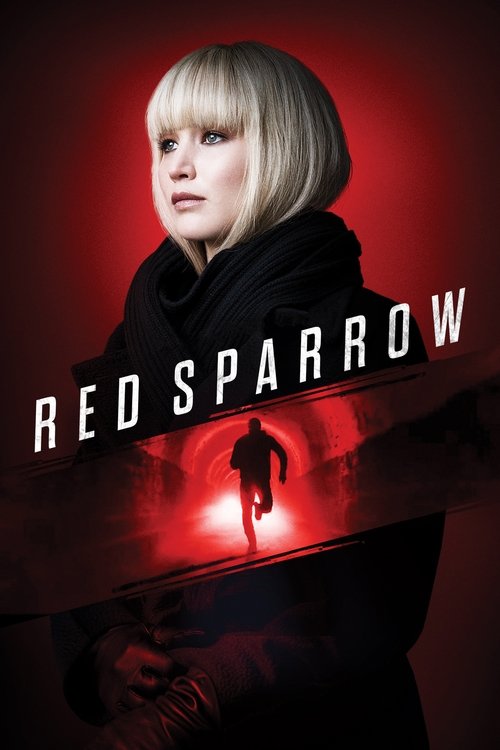
Red Sparrow
2018 · Directed by Francis Lawrence
Woke Score
CriticCritic Score
Audience
Based
Critics rated this 31 points above its woke score. Among Based films, this critic score ranks #279 of 345.
Representation Casting
Score: 50/100
Jennifer Lawrence carries the film as the protagonist and lead agent, positioning a woman in the central role of a spy thriller. However, the supporting cast is predominantly male, and the film does not explicitly address representation beyond this baseline casting choice.
LGBTQ+ Themes
Score: 0/100
No LGBTQ+ themes, characters, or representation are present in the film. The narrative is entirely heteronormative.
Feminist Agenda
Score: 35/100
The film presents a female protagonist who gains power and agency, but frames her path through exploitation and the weaponization of her sexuality. While there are moments suggesting reclaimed agency, the overall message is deeply ambivalent about whether this constitutes genuine liberation or merely a new form of subjugation.
Racial Consciousness
Score: 0/100
The film contains no meaningful engagement with racial themes, racial justice, or racial representation beyond the standard casting of a predominantly white ensemble.
Climate Crusade
Score: 0/100
Climate change or environmental concerns play no role whatsoever in the narrative or thematic content of this Cold War spy thriller.
Eat the Rich
Score: 0/100
The film presents geopolitics as a matter of national interest rather than economic systems, and contains no critique of capitalism or the wealthy. Economic structures are not interrogated.
Body Positivity
Score: 0/100
While the film features extensive nudity, this is not deployed in service of body positivity. Rather, the female body is presented as an instrument of espionage, which is a different proposition entirely.
Neurodivergence
Score: 0/100
No characters are portrayed as neurodivergent, and the film contains no representation of autism, ADHD, dyslexia, or other neurodivergent conditions.
Revisionist History
Score: 0/100
The film operates within conventional Cold War historical framings and does not attempt to revise or recontextualize historical narratives from a progressive perspective.
Lecture Energy
Score: 15/100
The film occasionally gestures toward thematic depth regarding female exploitation and agency, but these moments feel more like character motivation than explicit ideological messaging. There is minimal preachy content.


Synopsis
Prima ballerina Dominika Egorova faces a bleak and uncertain future after she suffers an injury that ends her career. She soon turns to Sparrow School, a secret intelligence service that trains exceptional young people to use their minds and bodies as weapons. Dominika emerges as the most dangerous Sparrow after completing the sadistic training process. As she comes to terms with her new abilities, she meets a CIA agent who tries to convince her that he is the only person she can trust.
Consciousness Assessment
Red Sparrow attempts to navigate the complicated terrain of female agency and bodily autonomy within the context of espionage, though it does so with the subtlety of a blunt instrument. The film presents Jennifer Lawrence's Dominika as a woman forced into exploitation, then gradually reclaiming power through the very tools her oppressors have weaponized against her. This creates a surface-level progressive framing that the film mistakes for genuine ideological commitment. However, the extensive nude scenes and the framing of the female body as a primary instrument of statecraft muddy whatever feminist intentions might lurk beneath the surface. The film appears more interested in spectacle than in interrogating the systems that created Dominika's predicament.
The supporting cast is reliably strong, with Jeremy Irons and Charlotte Rampling providing gravitas to their roles as Russian intelligence operatives, but the film's commitment to Cold War realpolitik leaves little room for the kind of progressive social consciousness that might elevate its central premise. The script treats geopolitics as a morality-free zone where all actors operate according to national interest rather than personal ideology. This is not inherently problematic for a thriller, but it sits uneasily with the film's simultaneous insistence on Dominika's agency and victimization.
The film's moderate score reflects its contradictions. It presents a female protagonist in a position of professional authority within a male-dominated institution, yet that authority is built on the systematic exploitation of her sexuality. There is no interrogation of the systems that make this necessary, no suggestion that such exploitation might be unjust. Red Sparrow is ultimately a conventional spy thriller dressed in the language of female empowerment, which is to say it is not interested in the hard work of genuine social critique.
Analysis generated by our Consciousness Algorithm
Critic Reviews
“Red Sparrow is a thoroughly entertaining movie that stays fresh and interesting for all of its two-hours-plus running time. But what kicks it into a higher level is that it’s a terrific vehicle for Jennifer Lawrence, one of the few movie stars who deserves one, who is a film star in the classic sense.”
“Lawrence, in this movie, shows you what true screen stardom is all about. She cues each scene to a different mood, leaving the audience in a dangling state of discovery. We’re on her side, but more than that we’re in her head. Even when (of course) we’re being played.”
“People who crave a movie about a secret agent with her own sexual agency — and a mission to give male predators exactly what they deserve — are going to want front-row seats. And a sequel.”
“This dark, meandering and cliche-ridden bummer starring a trying-hard Jennifer Lawrence tries to reach for a cool and stylish look at contemporary spycraft but often falls victim to cartoon violence and a muddled story. The creators may call it erotic but it’s as erotic as a visit to the dentist.”
Consciousness Markers
Jennifer Lawrence carries the film as the protagonist and lead agent, positioning a woman in the central role of a spy thriller. However, the supporting cast is predominantly male, and the film does not explicitly address representation beyond this baseline casting choice.
No LGBTQ+ themes, characters, or representation are present in the film. The narrative is entirely heteronormative.
The film presents a female protagonist who gains power and agency, but frames her path through exploitation and the weaponization of her sexuality. While there are moments suggesting reclaimed agency, the overall message is deeply ambivalent about whether this constitutes genuine liberation or merely a new form of subjugation.
The film contains no meaningful engagement with racial themes, racial justice, or racial representation beyond the standard casting of a predominantly white ensemble.
Climate change or environmental concerns play no role whatsoever in the narrative or thematic content of this Cold War spy thriller.
The film presents geopolitics as a matter of national interest rather than economic systems, and contains no critique of capitalism or the wealthy. Economic structures are not interrogated.
While the film features extensive nudity, this is not deployed in service of body positivity. Rather, the female body is presented as an instrument of espionage, which is a different proposition entirely.
No characters are portrayed as neurodivergent, and the film contains no representation of autism, ADHD, dyslexia, or other neurodivergent conditions.
The film operates within conventional Cold War historical framings and does not attempt to revise or recontextualize historical narratives from a progressive perspective.
The film occasionally gestures toward thematic depth regarding female exploitation and agency, but these moments feel more like character motivation than explicit ideological messaging. There is minimal preachy content.