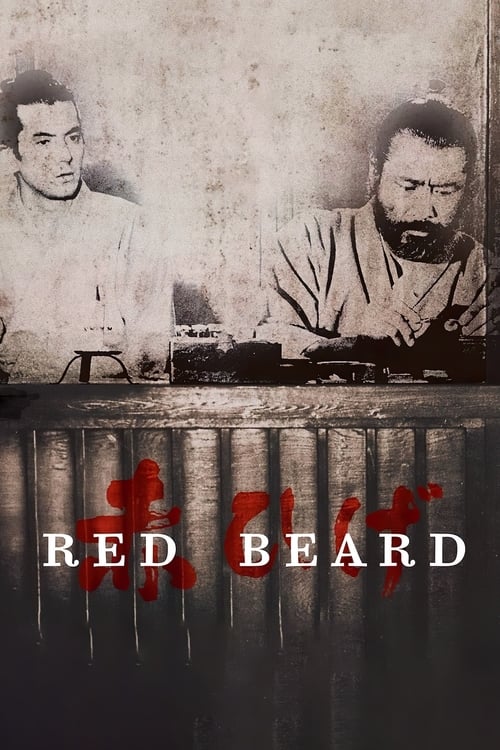
Red Beard
1965 · Directed by Akira Kurosawa
Woke Score
CriticCritic Score
Audience
Ultra Based
Critics rated this 88 points above its woke score. Among Ultra Based films, this critic score ranks #146 of 1469.
Representation Casting
Score: 0/100
The film features Japanese actors in a Japanese story set in 19th-century Japan. Casting reflects historical period and setting authentically rather than pursuing contemporary diversity initiatives.
LGBTQ+ Themes
Score: 0/100
No LGBTQ+ themes or characters appear in the film. The narrative focuses entirely on heterosexual relationships and the doctor-student mentor dynamic.
Feminist Agenda
Score: 5/100
The rescued prostitute character receives compassionate treatment and is portrayed as worthy of dignity and care, but the film makes no explicit feminist critique of patriarchy or gender systems. Her rescue is framed as moral necessity rather than social justice advocacy.
Racial Consciousness
Score: 0/100
The film contains no racial consciousness or commentary on race. It is set entirely within Japan with an all-Japanese cast, and race is not a thematic concern.
Climate Crusade
Score: 0/100
Climate themes are entirely absent from the film. The narrative concerns medical ethics and human compassion in a 19th-century rural setting.
Eat the Rich
Score: 0/100
While the film depicts economic hardship and the struggles of poor patients, it does not mount an explicit critique of capitalism or advocate for systemic economic change. The focus is individual moral responsibility.
Body Positivity
Score: 0/100
Body positivity themes do not appear. The film depicts bodies through a medical lens of illness, injury, and physical suffering, not through a contemporary body positivity framework.
Neurodivergence
Score: 0/100
No neurodivergence representation or themes appear in the film. Mental or neurological differences are not addressed in the narrative.
Revisionist History
Score: 0/100
The film does not engage in revisionist history. It presents a fictional story set in a historical period without reinterpreting historical events or figures.
Lecture Energy
Score: 0/100
While the film contains teaching moments between Red Beard and his student, it does not feel preachy or preachy about social issues. The instruction is organic to the mentor-student relationship and narrative flow.


Synopsis
Aspiring to an easy job as personal physician to a wealthy family, Noboru Yasumoto is disappointed when his first post after medical school takes him to a small country clinic under the gruff doctor Red Beard. Yasumoto rebels in numerous ways, but Red Beard proves a wise and patient teacher. He gradually introduces his student to the unglamorous side of the profession, ultimately assigning him to care for a prostitute rescued from a local brothel.
Consciousness Assessment
Red Beard stands as one of Akira Kurosawa's final masterpieces, a meditation on human compassion that predates contemporary social consciousness by several decades. The film chronicles the education of a young physician through his work in a rural clinic, where he encounters the poor, the sick, and the socially marginalized. Kurosawa treats these encounters with genuine dignity and moral seriousness, particularly in the film's extended sequence involving a woman rescued from sexual exploitation. Yet this is humanist cinema, not progressive activism. The film's concern for the dignity of the poor flows from a classical ethical tradition of human worth, not from modern frameworks of social justice.
The prostitute character receives compassionate treatment, which might seem to register on contemporary scales of awareness, but the film makes no claim to feminist consciousness. It simply depicts her suffering and rescue as a moral imperative for the good doctor. Similarly, the film's focus on class divisions between the ambitious young physician and the poor patients he serves reflects Kurosawa's lifelong concern with human dignity across social hierarchies, not an explicitly anti-capitalist position. The monochrome cinematography, the long takes, the patient observation of daily clinic work, these create a spiritual rather than ideological space. This is cinema about what it means to be human, not about what it means to be progressive.
We must be careful not to retrofit modern meanings onto films that predate the cultural moment that gave rise to contemporary social consciousness. Red Beard is a great film about compassion and moral development, but to score it highly on modern wokeness markers would be an act of historical projection. The film's power lies in its classical humanism, not in its alignment with 2020s cultural sensibilities.
Analysis generated by our Consciousness Algorithm
Critic Reviews
“I believe this film should be seen by every medical student. Like Kurosawa's masterpiece, "Ikiru" (1952), it fearlessly regards the meanings of life, and death.”
“The best of Kurosawa’s films are a challenge to look into our greatest fears and at our most terrible afflictions, whether personal or systemic, without turning away. Arguably the best Kurosawa film, Red Beard does not turn away.”
“Remember when ”ER” delivered keen social critiques wrapped in satisfying drama? If you miss that medicine, you need a dose of director Akira Kurosawa’s Red Beard, a three-hour soap opera about a 19th-century Japanese clinic. ”
“Red Beard is well meant and well made, no question about it. But it unfolds familiarly and, at 185 minutes, practically forever.”
Consciousness Markers
The film features Japanese actors in a Japanese story set in 19th-century Japan. Casting reflects historical period and setting authentically rather than pursuing contemporary diversity initiatives.
No LGBTQ+ themes or characters appear in the film. The narrative focuses entirely on heterosexual relationships and the doctor-student mentor dynamic.
The rescued prostitute character receives compassionate treatment and is portrayed as worthy of dignity and care, but the film makes no explicit feminist critique of patriarchy or gender systems. Her rescue is framed as moral necessity rather than social justice advocacy.
The film contains no racial consciousness or commentary on race. It is set entirely within Japan with an all-Japanese cast, and race is not a thematic concern.
Climate themes are entirely absent from the film. The narrative concerns medical ethics and human compassion in a 19th-century rural setting.
While the film depicts economic hardship and the struggles of poor patients, it does not mount an explicit critique of capitalism or advocate for systemic economic change. The focus is individual moral responsibility.
Body positivity themes do not appear. The film depicts bodies through a medical lens of illness, injury, and physical suffering, not through a contemporary body positivity framework.
No neurodivergence representation or themes appear in the film. Mental or neurological differences are not addressed in the narrative.
The film does not engage in revisionist history. It presents a fictional story set in a historical period without reinterpreting historical events or figures.
While the film contains teaching moments between Red Beard and his student, it does not feel preachy or preachy about social issues. The instruction is organic to the mentor-student relationship and narrative flow.