Rear Window
1954 · Directed by Alfred Hitchcock · $12.4M domestic
Woke Score
CriticCritic Score
Audience
Ultra Based
Critics rated this 98 points above its woke score. Among Ultra Based films, this critic score ranks #8 of 1469.
Representation Casting
Score: 5/100
The cast reflects 1950s Hollywood segregation and homogeneity without any apparent consideration for diverse representation. This reflects the era rather than any deliberate progressive casting.
LGBTQ+ Themes
Score: 0/100
There are no LGBTQ+ themes, characters, or subtext in the film. Heterosexual romance is the sole relationship dynamic explored.
Feminist Agenda
Score: 3/100
Grace Kelly's character functions primarily as romantic object and visual spectacle. Her agency is limited and her role reinforces traditional gender hierarchies of the 1950s.
Racial Consciousness
Score: 2/100
The film contains no racial commentary or consciousness. The segregated casting and characterization reflects the period without critique.
Climate Crusade
Score: 0/100
Climate issues are entirely absent from the film. Environmental consciousness was not part of the cultural discourse when this film was made.
Eat the Rich
Score: 0/100
There is no critique of capitalism or wealth inequality. The film does not engage with economic systems or class consciousness in any meaningful way.
Body Positivity
Score: 2/100
The protagonist's disability is treated as a plot device rather than with any affirmation of bodily difference. His wheelchair confinement is presented as limitation rather than acceptance.
Neurodivergence
Score: 0/100
There is no representation of or engagement with neurodivergence in any form.
Revisionist History
Score: 0/100
The film contains no historical revisionism or reinterpretation of past events through contemporary lenses.
Lecture Energy
Score: 0/100
The film does not lecture the audience about social issues or moral positions. Its themes emerge organically from narrative and formal choices.


Synopsis
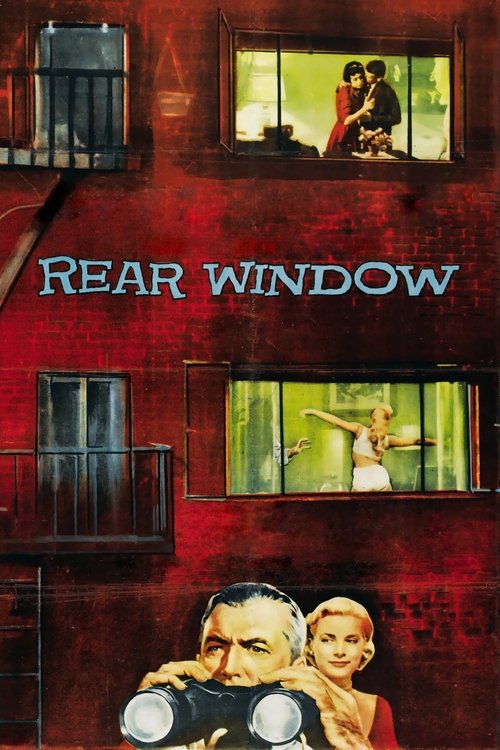
A wheelchair-bound photographer spies on his neighbors from his apartment window and becomes convinced one of them has committed murder.
Consciousness Assessment
Alfred Hitchcock's 1954 masterwork "Rear Window" remains a towering achievement in suspense filmmaking, though it must be understood as a product of its era rather than as an expression of modern progressive sensibilities. The film's central device, a protagonist confined to a wheelchair, functions purely as a narrative constraint rather than any meaningful engagement with disability representation. James Stewart's character is presented not as a person with genuine lived experience of disability, but rather as a passive observer whose immobility serves the plot mechanics. His condition is treated as a temporary inconvenience to be overcome rather than as an identity worthy of exploration or dignity. The romantic storyline with Grace Kelly reinforces period-appropriate gender dynamics in which the female character exists primarily as visual spectacle and romantic object, her agency subordinate to the male protagonist's desires and investigations.
The film's treatment of its ensemble cast reflects the racial and gender segregation of 1950s Hollywood without interrogation or critique. The supporting characters exist in clearly delineated social roles that go unquestioned by the narrative. What the film does possess is sophisticated exploration of voyeurism, surveillance, and the ethics of observation, but these themes emerge from Hitchcock's formal and philosophical preoccupations rather than from any conscious engagement with social justice frameworks. The film's power derives from its psychological complexity and technical virtuosity, not from progressive cultural awareness.
This is, in other words, a genuinely great film that belongs to a different moral universe than our own. We might appreciate its craftsmanship and narrative innovation without projecting contemporary values onto its creators. "Rear Window" asks us to become voyeurs alongside its protagonist, complicit in his ethical transgressions. That remains its most enduring and unsettling achievement. It simply has nothing to say about the modern cultural anxieties that animate contemporary progressive consciousness.
Analysis generated by our Consciousness Algorithm
Critic Reviews
“Rear Window lovingly invests in suspense all through the film, banking it in our memory, so that when the final payoff arrives, the whole film has been the thriller equivalent of foreplay.”
“Flawless, essential viewing that would earn more than its five stars if only Empire would allow it.”
“The film leaps off the screen with a thrilling immediacy.”
“There is never an instant, in fact, when Director Hitchcock is not in minute and masterly control of his material: script, camera, cutting, props, the handsome set constructed from his ideas, the stars he has Hitched to his vehicle.”
Consciousness Markers
The cast reflects 1950s Hollywood segregation and homogeneity without any apparent consideration for diverse representation. This reflects the era rather than any deliberate progressive casting.
There are no LGBTQ+ themes, characters, or subtext in the film. Heterosexual romance is the sole relationship dynamic explored.
Grace Kelly's character functions primarily as romantic object and visual spectacle. Her agency is limited and her role reinforces traditional gender hierarchies of the 1950s.
The film contains no racial commentary or consciousness. The segregated casting and characterization reflects the period without critique.
Climate issues are entirely absent from the film. Environmental consciousness was not part of the cultural discourse when this film was made.
There is no critique of capitalism or wealth inequality. The film does not engage with economic systems or class consciousness in any meaningful way.
The protagonist's disability is treated as a plot device rather than with any affirmation of bodily difference. His wheelchair confinement is presented as limitation rather than acceptance.
There is no representation of or engagement with neurodivergence in any form.
The film contains no historical revisionism or reinterpretation of past events through contemporary lenses.
The film does not lecture the audience about social issues or moral positions. Its themes emerge organically from narrative and formal choices.