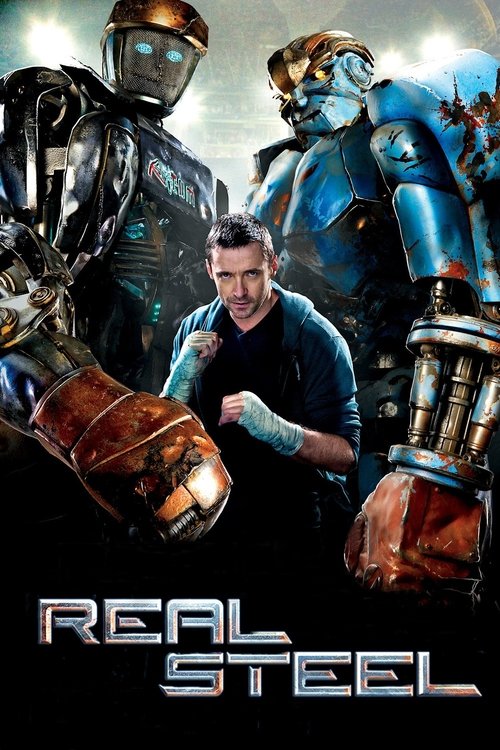
Real Steel
2011 · Directed by Shawn Levy
Woke Score
CriticCritic Score
Audience
Ultra Based
Critics rated this 52 points above its woke score. Among Ultra Based films, this critic score ranks #1020 of 1469.
Representation Casting
Score: 15/100
Anthony Mackie appears in the cast, but his presence feels incidental rather than part of intentional progressive casting choices. The narrative remains centered on Hugh Jackman's character.
LGBTQ+ Themes
Score: 0/100
No LGBTQ+ themes, characters, or representation present in the film.
Feminist Agenda
Score: 5/100
Evangeline Lilly appears as a romantic interest but occupies a peripheral role. The narrative centers on male father-son bonding and male-dominated boxing competition with no feminist themes.
Racial Consciousness
Score: 0/100
While diverse actors appear in the cast, there is no narrative engagement with racial themes or consciousness. Characters exist without racial commentary.
Climate Crusade
Score: 0/100
No environmental or climate-related themes present in the film.
Eat the Rich
Score: 0/100
The film celebrates entrepreneurial success and individual advancement through capitalist competition. The protagonist rises through economic striving via boxing competition.
Body Positivity
Score: 0/100
As a sports film focused on athletic excellence, it celebrates conventional athletic physicality without any body positivity messaging.
Neurodivergence
Score: 0/100
No representation of neurodivergent characters or themes in the narrative.
Revisionist History
Score: 0/100
The film is set in a fictional near-future world and does not engage with historical revision.
Lecture Energy
Score: 5/100
While the film contains emotional moments about reconciliation and father-son bonding, it does not lecture about social issues or attempt to educate the audience on contemporary concerns.


Synopsis
Charlie Kenton is a washed-up fighter who retired from the ring when robots took over the sport. After his robot is trashed, he reluctantly teams up with his estranged son to rebuild and train an unlikely contender.
Consciousness Assessment
Real Steel arrives as a cheerful artifact of pre-awakening Hollywood, a film so thoroughly uninterested in contemporary social consciousness that its neutrality reads as almost aggressive. The narrative concerns itself entirely with the relationship between a deadbeat father and the son he abandoned, structured as a conventional sports redemption arc that could have been filmed in any decade. Robot boxing serves as mere window dressing for what is fundamentally a story about masculine reconciliation through competition and economic striving. Hugh Jackman's Charlie Kenton epitomizes the entrepreneurial underdog, rising through capitalist competition rather than any structural critique of it.
The cast includes Anthony Mackie in a supporting role and Evangeline Lilly as a romantic interest, but their presence registers as incidental to the narrative machinery rather than any deliberate statement about representation. Women occupy peripheral positions, their characterization limited to functional roles in the male-centered plot. The film makes no gestures toward interrogating its own assumptions about gender, race, sexuality, or any matter of contemporary concern. It is simply indifferent to these categories.
What we have here is a straightforward entertainment product from 2011, made before the cultural reckoning that would define the subsequent decade. It contains no environmental messaging, no queer characters, no interrogation of disability, and no attempt to revise historical narratives. The emotional beats arrive through conventional melodrama rather than pedagogical intent. One watches it the way one might observe a specimen in amber: intact, untouched by the concerns of a later era, and oddly restful in its refusal to complicate itself.
Analysis generated by our Consciousness Algorithm
Critic Reviews
“Real Steel is directed by "Night at the Museum's" Shawn Levy, who makes good use of his specialized skill in blending people and computer-made imaginary things into one lively, emotionally satisfying story. ”
“There's a little "Kramer vs. Kramer" here, a dash of "Transformers" there, and it's all topped with big heap of "Rocky." But it's hard to argue with the results, because, at times, Real Steal is close to a knockout. ”
“Like "Moneyball," this is real movie making that packs a solid entertainment punch.”
“Real Steel is to action what the Anthony Weiner habit was to sex: It's so virtual, so distant from the thrill, that you wonder what the point is. Do you really want to pay to watch an actor playing a kid who in turn plays what amounts to a video game? ”
Consciousness Markers
Anthony Mackie appears in the cast, but his presence feels incidental rather than part of intentional progressive casting choices. The narrative remains centered on Hugh Jackman's character.
No LGBTQ+ themes, characters, or representation present in the film.
Evangeline Lilly appears as a romantic interest but occupies a peripheral role. The narrative centers on male father-son bonding and male-dominated boxing competition with no feminist themes.
While diverse actors appear in the cast, there is no narrative engagement with racial themes or consciousness. Characters exist without racial commentary.
No environmental or climate-related themes present in the film.
The film celebrates entrepreneurial success and individual advancement through capitalist competition. The protagonist rises through economic striving via boxing competition.
As a sports film focused on athletic excellence, it celebrates conventional athletic physicality without any body positivity messaging.
No representation of neurodivergent characters or themes in the narrative.
The film is set in a fictional near-future world and does not engage with historical revision.
While the film contains emotional moments about reconciliation and father-son bonding, it does not lecture about social issues or attempt to educate the audience on contemporary concerns.