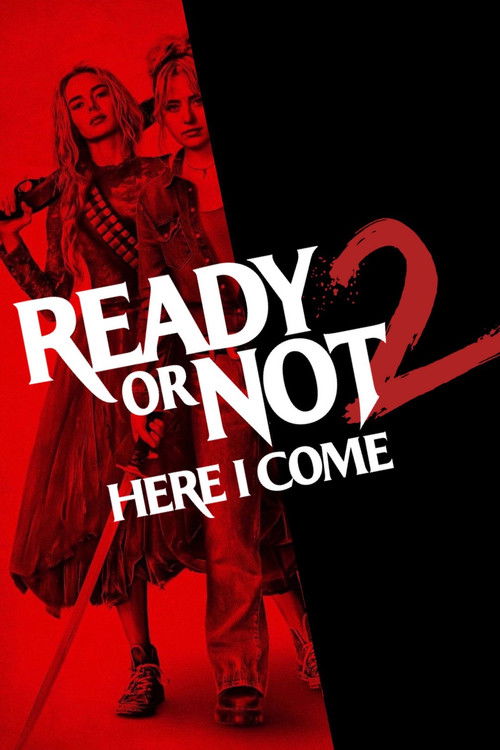
Ready or Not 2: Here I Come
2026 · Directed by Matt Bettinelli-Olpin · $20.2M domestic
Woke-Adjacent
Consciousness Score: 52%
Representation Casting
Score: 68/100
Two female leads (Weaving and Newton) in central action roles, with a supporting cast including Sarah Michelle Gellar and diverse ensemble members. Female protagonists are competent and central to the narrative.
LGBTQ+ Themes
Score: 15/100
No significant LGBTQ+ themes or representation evident in available materials. The film focuses on family conflict and survival competition without addressing queer identity or relationships.
Feminist Agenda
Score: 45/100
Female leads in action-oriented roles suggests feminist positioning, but the narrative centers on individual survival rather than systemic critique of gender oppression. Women are protagonists but within a framework that doesn't interrogate patriarchal power structures.
Racial Consciousness
Score: 20/100
Cast includes diverse actors, but no evidence of the film engaging with race as a thematic concern. Representation appears decorative rather than integrated into social commentary.
Climate Crusade
Score: 5/100
No climate-related themes present. The film's scope is confined to interpersonal and familial conflict within wealthy circles, with no environmental consciousness.
Eat the Rich
Score: 62/100
The core premise centers on competing ultra-wealthy families and a deadly game controlled by capitalist elites. However, critics note the sequel dilutes the first film's sharper capitalist critique, replacing analysis with spectacle.
Body Positivity
Score: 10/100
Horror-comedy genre conventions favor spectacle and violence over body positivity. No evidence of intentional body-positive messaging in a film centered on grotesque kills and physical peril.
Neurodivergence
Score: 5/100
No indication of neurodivergent representation or themes. The film does not appear to engage with disability or neurodiversity as narrative elements.
Revisionist History
Score: 0/100
Not applicable to this contemporary horror-comedy. The film is not concerned with historical narratives or revisionist interpretations of past events.
Lecture Energy
Score: 35/100
The film carries a moderate lecture energy through its class commentary framework, but this is undercut by the genre's commitment to entertainment over exposition. The underlying social critique remains implicit rather than explicit.
Synopsis
Moments after surviving an all-out attack from the Le Domas family, Grace discovers she's reached the next level of the nightmarish game — and this time with her estranged sister Faith at her side. Grace has one chance to survive, keep her sister alive, and claim the High Seat of the Council that controls the world. Four rival families are hunting her for the throne, and whoever wins rules it all.
Consciousness Assessment
Ready or Not 2 positions itself as a franchise willing to engage with capitalist critique, yet the sequel proves oddly timid in its convictions. Where the first film derived much of its commentary from the grotesquerie of wealthy excess, this installment seems content to simply amplify the spectacle without deepening the social analysis. The introduction of four rival families competing for control of a world-ruling council gestures toward something more systemic, but the film remains committed to the premise that the solution to oligarchy is individual survival rather than structural change. One watches two capable female protagonists navigate a deadly game designed by the rich, and there's satisfaction in their competence, yet the underlying message has calcified into something closer to "survive the system" than "dismantle it."
The casting of Samara Weaving alongside Kathryn Newton does provide a female-centered action narrative, and the film deserves credit for centering women as both hunters and hunted. However, this representation functions primarily as a marketing asset rather than as genuine interrogation of gender within hierarchical power structures. The supporting cast includes Sarah Michelle Gellar and Elijah Wood among others, suggesting a reasonably diverse ensemble, though critical reception focuses more on "outrageous" kills and "colorful villains" than on substantive exploration of social dynamics. The horror-comedy genre permits a certain slackness in thematic coherence, and Ready or Not 2 has taken full advantage of that permission.
The film sits caught between its franchise obligations and whatever impulse toward social commentary the original possessed. It is bloodier, busier, and more mythologically elaborate, yet these expansions feel like additions to spectacle rather than deepenings of critique. One leaves the theater entertained but unmoved, which may be precisely the point for a film that has decided the most radical act available to its characters is simply refusing to die.
Analysis generated by our Consciousness Algorithm
Consciousness Markers
Two female leads (Weaving and Newton) in central action roles, with a supporting cast including Sarah Michelle Gellar and diverse ensemble members. Female protagonists are competent and central to the narrative.
No significant LGBTQ+ themes or representation evident in available materials. The film focuses on family conflict and survival competition without addressing queer identity or relationships.
Female leads in action-oriented roles suggests feminist positioning, but the narrative centers on individual survival rather than systemic critique of gender oppression. Women are protagonists but within a framework that doesn't interrogate patriarchal power structures.
Cast includes diverse actors, but no evidence of the film engaging with race as a thematic concern. Representation appears decorative rather than integrated into social commentary.
No climate-related themes present. The film's scope is confined to interpersonal and familial conflict within wealthy circles, with no environmental consciousness.
The core premise centers on competing ultra-wealthy families and a deadly game controlled by capitalist elites. However, critics note the sequel dilutes the first film's sharper capitalist critique, replacing analysis with spectacle.
Horror-comedy genre conventions favor spectacle and violence over body positivity. No evidence of intentional body-positive messaging in a film centered on grotesque kills and physical peril.
No indication of neurodivergent representation or themes. The film does not appear to engage with disability or neurodiversity as narrative elements.
Not applicable to this contemporary horror-comedy. The film is not concerned with historical narratives or revisionist interpretations of past events.
The film carries a moderate lecture energy through its class commentary framework, but this is undercut by the genre's commitment to entertainment over exposition. The underlying social critique remains implicit rather than explicit.