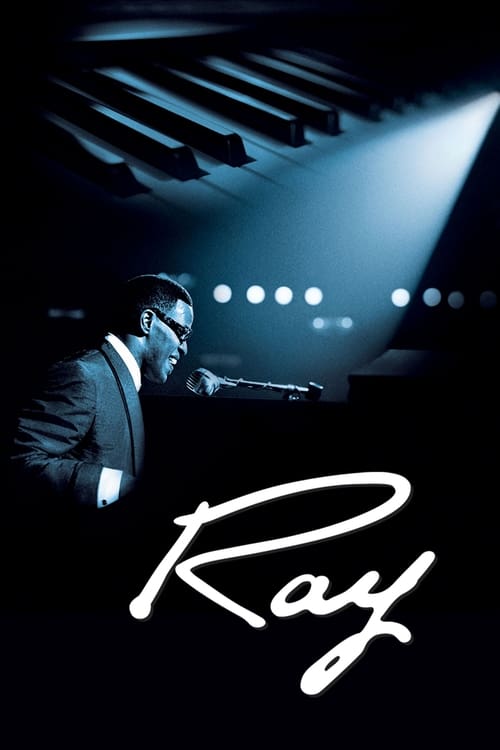
Ray
2004 · Directed by Taylor Hackford
Woke Score
CriticCritic Score
Audience
Ultra Based
Critics rated this 58 points above its woke score. Among Ultra Based films, this critic score ranks #533 of 1469.
Representation Casting
Score: 25/100
The film features a predominantly Black cast in significant roles, but this reflects historical accuracy to the story rather than contemporary casting activism. Representation is present but not foregrounded as a progressive statement.
LGBTQ+ Themes
Score: 0/100
No LGBTQ+ themes, characters, or narratives appear in the film.
Feminist Agenda
Score: 15/100
Female characters including Ray's mother are present and influential, but the film does not articulate a feminist agenda or critique patriarchal structures.
Racial Consciousness
Score: 20/100
The film depicts historical segregation and racial discrimination as part of Ray Charles's biography, but frames this as historical documentation rather than contemporary activist commentary.
Climate Crusade
Score: 0/100
No climate-related themes, messaging, or environmental consciousness appears in the film.
Eat the Rich
Score: 10/100
The film shows Ray's struggles with record labels and exploitation, but treats this as personal drama rather than systemic critique of capitalism or economic systems.
Body Positivity
Score: 0/100
No body positivity messaging or celebration of diverse body types appears in the film.
Neurodivergence
Score: 5/100
Ray's blindness is depicted but not engaged with through contemporary disability or neurodiversity discourse. His disability is framed as an obstacle to overcome rather than an identity to celebrate.
Revisionist History
Score: 0/100
The film tells Ray Charles's well-known life story without rewriting or challenging established historical narratives.
Lecture Energy
Score: 5/100
The film is a straightforward narrative biography without moralizing speeches or preachy lectures about contemporary social issues.


Synopsis
Born on a sharecropping plantation in Northern Florida, Ray Charles went blind at seven. Inspired by a fiercely independent mom who insisted he make his own way, He found his calling and his gift behind a piano keyboard. Touring across the Southern musical circuit, the soulful singer gained a reputation and then exploded with worldwide fame when he pioneered coupling gospel and country together.
Consciousness Assessment
Ray is a traditional biographical drama that chronicles the life and musical genius of Ray Charles without the apparatus of contemporary progressive consciousness that defines modern cultural sensibilities. The film depicts historical racism and segregation as part of its honest account of Charles's life, but this historical documentation should not be confused with the specific markers of 2020s activism cinema. Director Taylor Hackford approaches the material as a conventional prestige biopic, focused on the personal drama of artistic struggle and triumph rather than on systemic critique or preachy messaging about contemporary social issues.
The film's representation of its predominantly Black cast, including Kerry Washington and Regina King in significant roles, reflects the historical reality of the story rather than an articulated statement about casting politics. Jamie Foxx's acclaimed performance centers on Charles's musical innovation and personal resilience, not on his identity as a vehicle for progressive messaging. The movie treats his blindness as a challenge he adapts to and transcends through talent, a narrative framework that predates contemporary discourse around disability and neurodiversity.
This is a competent, respectful film from an earlier era of biographical cinema, when such movies aimed primarily at historical accuracy and emotional authenticity rather than at fulfilling contemporary expectations about representation and social consciousness. Ray is neither regressive nor progressive by modern standards. It is simply a film about a musical genius made before the cultural vocabulary we now use to discuss such matters became the default language of prestige filmmaking.
Analysis generated by our Consciousness Algorithm
Critic Reviews
“A fit tribute to an entertainer who, no matter what hate or hardship threw in his way or how many mistakes he made, we can't stop loving.”
“An extraordinary piece of biography.”
“The movie would be worth seeing simply for the sound of the music and the sight of Jamie Foxx performing it. That it looks deeper and gives us a sense of the man himself is what makes it special.”
“For too many minutes of its two and a half hours, Ray flips through its cinematic pages with a breathless and-then-this-happened urgency, offering up little in the way of personality (or truth) beyond Jamie Foxx's strong performance.”
Consciousness Markers
The film features a predominantly Black cast in significant roles, but this reflects historical accuracy to the story rather than contemporary casting activism. Representation is present but not foregrounded as a progressive statement.
No LGBTQ+ themes, characters, or narratives appear in the film.
Female characters including Ray's mother are present and influential, but the film does not articulate a feminist agenda or critique patriarchal structures.
The film depicts historical segregation and racial discrimination as part of Ray Charles's biography, but frames this as historical documentation rather than contemporary activist commentary.
No climate-related themes, messaging, or environmental consciousness appears in the film.
The film shows Ray's struggles with record labels and exploitation, but treats this as personal drama rather than systemic critique of capitalism or economic systems.
No body positivity messaging or celebration of diverse body types appears in the film.
Ray's blindness is depicted but not engaged with through contemporary disability or neurodiversity discourse. His disability is framed as an obstacle to overcome rather than an identity to celebrate.
The film tells Ray Charles's well-known life story without rewriting or challenging established historical narratives.
The film is a straightforward narrative biography without moralizing speeches or preachy lectures about contemporary social issues.