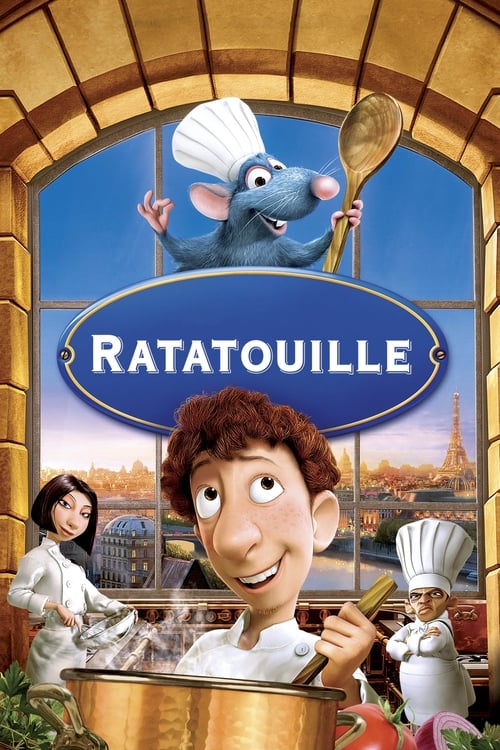
Ratatouille
2007 · Directed by Brad Bird
Woke Score
CriticCritic Score
Audience
Ultra Based
Critics rated this 88 points above its woke score. Among Ultra Based films, this critic score ranks #43 of 1469.
Representation Casting
Score: 25/100
The cast is predominantly white and male. Colette is the sole significant female character, presented as competent but not as a commentary on representation. No deliberate effort toward diverse casting is evident.
LGBTQ+ Themes
Score: 0/100
No LGBTQ themes, representation, or subtext. The film contains no queer characters or relationships of any kind.
Feminist Agenda
Score: 20/100
Colette is a capable professional chef, but her presence is not framed as feminist commentary. She is neither celebrated for breaking barriers nor burdened with contemporary gender analysis.
Racial Consciousness
Score: 5/100
The film is set in Paris and features no deliberate engagement with racial themes. Characters are presented without reference to racial identity or systemic inequality.
Climate Crusade
Score: 0/100
No environmental themes, climate consciousness, or ecological concern appears in the narrative.
Eat the Rich
Score: 15/100
While Skinner represents corporate soullessness and the restaurant faces financial pressure, the film does not mount a systematic critique of capitalism. The resolution affirms culinary excellence and business success.
Body Positivity
Score: 0/100
No particular engagement with body positivity or anti-diet messaging. Characters are designed for visual appeal and narrative clarity rather than contemporary body acceptance politics.
Neurodivergence
Score: 0/100
No representation of neurodivergence, mental health conditions, or neurodevelopmental differences.
Revisionist History
Score: 0/100
The film is a fantasy not grounded in historical events. No revisionist historical claims are made.
Lecture Energy
Score: 5/100
The film maintains a light comedic tone throughout. While Anton Ego delivers a speech about criticism, it functions as narrative climax rather than preachy messaging.


Synopsis
Remy, a rat living in Paris, possesses a palate far more refined than that of his fellow comrades. He dreams of becoming a chef, determined to create culinary masterpieces rather than scavenge for scraps. When fate deposits him in the sewers beneath one of Paris's most famous restaurants, he finds himself ideally placed to fulfill his dream. Forming an unusual alliance with a bumbling young kitchen worker, Remy begins a daring culinary double life. Together, they must outwit the scheming Head Chef Skinner, evade Remy's disapproving colony, and impress renowned food critic Anton Ego, who strikes fear in the hearts of chefs all throughout France.
Consciousness Assessment
Ratatouille is a film so thoroughly committed to the proposition that a rat can cook that it has no time for the progressive sensibilities that would come to dominate animated cinema in subsequent decades. Released in 2007, it occupies a peculiar temporal position: sufficiently recent to have been subjected to modern cultural scrutiny, yet sufficiently pre-woke in its conception that it remains largely innocent of the markers we have come to recognize. The narrative concerns itself almost exclusively with meritocracy, the triumph of culinary excellence over institutional mediocrity, and the notion that talent transcends species and social station. These are humanist themes, certainly, but they are not markers of modern progressive consciousness.
The film's representation of gender is functional but unremarkable. Colette Tatou, the female chef, exists in the kitchen as a capable professional; her presence is neither celebrated as a breakthrough nor complicated by contemporary feminist analysis. She is simply there, competent and unconcerned with the audience's approval of her competence. The film contains no LGBTQ representation of any discernible kind, no racial consciousness beyond the French setting, and no climate anxiety whatsoever. Its treatment of capitalism, while not entirely uncritical (the restaurant faces financial pressures, and the corporate villain Skinner represents a kind of soulless commercialism), lacks the contemporary obsession with systemic critique that now characterizes progressive cinema. The film does not attempt to lecture us about anything. It simply shows us a rat who cooks.
What we encounter instead is a work of craft and imagination that predates the cultural moment we are attempting to measure. To score Ratatouille on a scale designed for contemporary progressive sensibilities is to perform a kind of historical category error. The film succeeds entirely on its own terms and remains, in its way, more interesting for refusing to engage with the frameworks through which we now compulsively interpret art. It is a reminder that there exists cinema concerned solely with the excellence of its own execution.
Analysis generated by our Consciousness Algorithm
Critic Reviews
“Brad Bird and Pixar recapture the charm and winning imagination of classic Disney animation.”
“Ratatouille is delicious. In this satisfying, souffle-light tale of a plucky French rodent with a passion for cooking, the master chefs at Pixar have blended all the right ingredients -- abundant verbal and visual wit, genius slapstick timing, a soupcon of Gallic sophistication -- to produce a warm and irresistible concoction that's sure to appeal to everyone's inner Julia Child.”
“Bird clearly knows the great silent clowns: The slapstick he devises is balletic.”
“Has the sort of richness and dimension that are the hallmarks of master storytellers at work.”
Consciousness Markers
The cast is predominantly white and male. Colette is the sole significant female character, presented as competent but not as a commentary on representation. No deliberate effort toward diverse casting is evident.
No LGBTQ themes, representation, or subtext. The film contains no queer characters or relationships of any kind.
Colette is a capable professional chef, but her presence is not framed as feminist commentary. She is neither celebrated for breaking barriers nor burdened with contemporary gender analysis.
The film is set in Paris and features no deliberate engagement with racial themes. Characters are presented without reference to racial identity or systemic inequality.
No environmental themes, climate consciousness, or ecological concern appears in the narrative.
While Skinner represents corporate soullessness and the restaurant faces financial pressure, the film does not mount a systematic critique of capitalism. The resolution affirms culinary excellence and business success.
No particular engagement with body positivity or anti-diet messaging. Characters are designed for visual appeal and narrative clarity rather than contemporary body acceptance politics.
No representation of neurodivergence, mental health conditions, or neurodevelopmental differences.
The film is a fantasy not grounded in historical events. No revisionist historical claims are made.
The film maintains a light comedic tone throughout. While Anton Ego delivers a speech about criticism, it functions as narrative climax rather than preachy messaging.