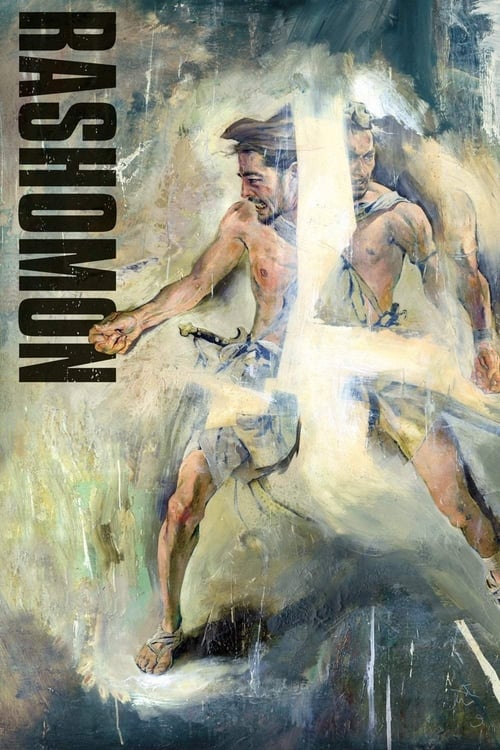
Rashomon
1950 · Directed by Akira Kurosawa
Woke Score
CriticCritic Score
Audience
Ultra Based
Critics rated this 94 points above its woke score. Among Ultra Based films, this critic score ranks #25 of 1469.
Representation Casting
Score: 5/100
Female character included in the narrative, but her presence is not motivated by conscious representation choices. She functions as one perspective among many rather than as a centered voice.
LGBTQ+ Themes
Score: 0/100
No LGBTQ+ themes present. The film depicts heterosexual conflict within a feudal setting with no queer representation or subtext.
Feminist Agenda
Score: 15/100
While the film includes a woman's account of sexual assault, it treats her perspective as one unreliable narrative among others rather than validating her experience or examining male violence as systemic.
Racial Consciousness
Score: 0/100
Not applicable. The film depicts Japanese characters in a Japanese historical setting without any racial commentary or interrogation of racial power dynamics.
Climate Crusade
Score: 0/100
Climate themes are entirely absent from this medieval crime narrative.
Eat the Rich
Score: 0/100
The film depicts a feudal society but makes no commentary on economic systems, inequality, or wealth distribution.
Body Positivity
Score: 0/100
Body positivity concerns are not relevant to this film's thematic or narrative concerns.
Neurodivergence
Score: 0/100
Neurodivergence is neither depicted nor discussed in this narrative about conflicting testimonies.
Revisionist History
Score: 5/100
The film is set in medieval Japan but does not attempt to reframe historical narratives or challenge dominant historical interpretations through a modern progressive lens.
Lecture Energy
Score: 5/100
The film's philosophical inquiry into truth and subjectivity carries preachy elements, but these emerge through narrative structure and visual language rather than explicit messaging or exposition.


Synopsis
Four people recount different versions of the story of a man's murder and the rape of his wife.
Consciousness Assessment
Rashomon stands as a masterwork of epistemological cinema, yet it remains unconcerned with the social consciousness frameworks that define contemporary progressive discourse. Kurosawa's meditation on subjective truth and the unreliability of narrative presents four conflicting accounts of a crime in medieval Japan, each self-serving and incomplete. The film's genius lies entirely in its formal innovation and philosophical rigor, not in any commitment to interrogating power structures or centering marginalized voices.
The treatment of sexual violence in Rashomon requires particular attention, as it might superficially appear to offer a woman's perspective. The female victim's account is indeed presented, but the film treats her testimony as merely one equally dubious version among others. This approach, while intellectually honest about the nature of truth, declines to validate her experience or frame the assault through a lens of male culpability. The film remains interested in epistemology, not in patriarchy.
As a pre-1960 film from Japan, Rashomon operates in a different moral and aesthetic universe than contemporary cinema. Its concerns are timeless but not progressive. It asks us to question certainty itself, which is philosophically valuable and entirely separate from the social consciousness frameworks we evaluate here. The film deserves its canonical status on purely cinematic grounds, but those grounds have nothing to do with the markers we apply to modern cultural products.
Analysis generated by our Consciousness Algorithm
Critic Reviews
“Today, nearly fifty years after it was made, Rashomon has lost none of its fascination or power. It's still a marvelous piece of cinema that asks unanswerable questions of great import. ”
“The wonder of Rashomon is that while the shadowplay of truth and memory is going on, we are absorbed by what we trust is an unfolding story. ”
“It was the film that introduced the world at large to master director Akira Kurosawa and his frequent, infinitely watchable star Toshiro Mifune.”
“This level of mastery is timeless, and although the movie is overly deliberate at times, when it takes off, it really flies.”
Consciousness Markers
Female character included in the narrative, but her presence is not motivated by conscious representation choices. She functions as one perspective among many rather than as a centered voice.
No LGBTQ+ themes present. The film depicts heterosexual conflict within a feudal setting with no queer representation or subtext.
While the film includes a woman's account of sexual assault, it treats her perspective as one unreliable narrative among others rather than validating her experience or examining male violence as systemic.
Not applicable. The film depicts Japanese characters in a Japanese historical setting without any racial commentary or interrogation of racial power dynamics.
Climate themes are entirely absent from this medieval crime narrative.
The film depicts a feudal society but makes no commentary on economic systems, inequality, or wealth distribution.
Body positivity concerns are not relevant to this film's thematic or narrative concerns.
Neurodivergence is neither depicted nor discussed in this narrative about conflicting testimonies.
The film is set in medieval Japan but does not attempt to reframe historical narratives or challenge dominant historical interpretations through a modern progressive lens.
The film's philosophical inquiry into truth and subjectivity carries preachy elements, but these emerge through narrative structure and visual language rather than explicit messaging or exposition.