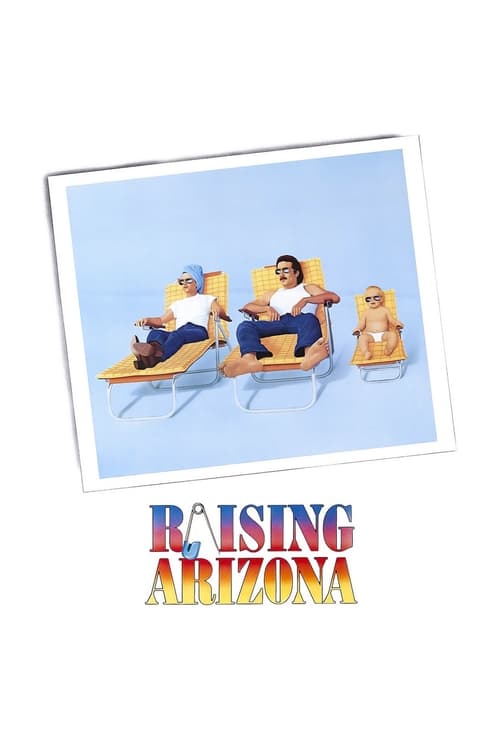
Raising Arizona
1987 · Directed by Joel Coen
Woke Score
CriticCritic Score
Audience
Ultra Based
Critics rated this 65 points above its woke score. Among Ultra Based films, this critic score ranks #658 of 1469.
Representation Casting
Score: 0/100
The cast is almost entirely white with no meaningful minority representation. No diverse casting choices are evident.
LGBTQ+ Themes
Score: 0/100
The film contains no LGBTQ+ themes, characters, or representation. The central relationship is heterosexual.
Feminist Agenda
Score: 0/100
Despite Holly Hunter playing a former cop, the film contains no feminist consciousness or commentary. Her character is presented without feminist framing.
Racial Consciousness
Score: 0/100
No racial consciousness, commentary on race, or engagement with racial themes. Race is not addressed in the narrative.
Climate Crusade
Score: 0/100
No climate themes or environmental consciousness. The film is a crime comedy with no engagement with ecological concerns.
Eat the Rich
Score: 15/100
The wealthy family is portrayed as somewhat ridiculous, and the crime involves stealing from them, but this is light satire of individuals rather than systematic critique of capitalism.
Body Positivity
Score: 0/100
No body positivity themes or commentary on diverse body types and acceptance. The film contains no relevant engagement with this marker.
Neurodivergence
Score: 0/100
No representation or thematic engagement with neurodivergence. Characters are presented without neurodivergent framing.
Revisionist History
Score: 0/100
A contemporary crime comedy with no historical claims or attempts at historical revisionism.
Lecture Energy
Score: 0/100
The film is a comedic romp with no preachy impulse or attempts to lecture audiences about social issues or progressive values.


Synopsis
When a childless couple—an ex-con and an ex-cop—take one of a wealthy family's quintuplets to raise as their own, their lives grow more complicated than anticipated.
Consciousness Assessment
Raising Arizona arrives as a stylish absurdist comedy from the Coen brothers, a film concerned primarily with the mechanics of its own narrative chaos rather than any engagement with contemporary social consciousness. The plot, which follows an ex-convict and ex-cop as they kidnap one of a wealthy family's quintuplets, functions as a vehicle for visual comedy and character oddity rather than social commentary. Nicolas Cage's manic performance and Holly Hunter's deadpan delivery propel a story that is fundamentally indifferent to questions of systemic inequality or progressive values.
The film's only tangential brush with any form of critique comes through its portrayal of the wealthy Arizona family, whose members are depicted as somewhat ridiculous and out-of-touch. Yet this remains light satire of individual character types rather than any systematic interrogation of capitalism or class. The wealthy are simply comic foils, not subjects of ideological dismantling. The criminal enterprise at the film's center is presented as a lark, a series of escalating mishaps born from personal desperation rather than any coherent political statement.
The Coen brothers' effort here is entirely unconcerned with the markers of modern progressive sensibility. There is no consideration given to representation, no engagement with questions of identity, no lectures about systemic injustice. It is, in the truest sense, a pre-cultural moment film, a work from an era when cinema had not yet learned to weaponize its narratives in service of social consciousness. One watches it now as a relic of a different sensibility.
Analysis generated by our Consciousness Algorithm
Critic Reviews
“It is a wacky, happy, daring, darkly comic tale of parenting outside the law. It celebrates the middle-of-the-road dreams of decidedly off-center folks. It's a bundle of joy.”
“What makes this hectic farce so fresh and funny is the sheer fertility of the writing, while the lives and times of Hi, Ed and friends are painted in splendidly seedy colours, turning Arizona into a mythical haven for a memorable gaggle of no-hopers, halfwits and has-beens. Starting from a point of delirious excess, the film leaps into dark and virtually uncharted territory to soar like a comet. ”
“The film's sense of family values will make your head hurt and the chase scenes will set your noggin spinning.”
“The big trouble with Raising Arizona is that the Coens overdrew their wild and crazy yarn, and overdo almost every gag and gimmick. [20 Mar 1987]”
Consciousness Markers
The cast is almost entirely white with no meaningful minority representation. No diverse casting choices are evident.
The film contains no LGBTQ+ themes, characters, or representation. The central relationship is heterosexual.
Despite Holly Hunter playing a former cop, the film contains no feminist consciousness or commentary. Her character is presented without feminist framing.
No racial consciousness, commentary on race, or engagement with racial themes. Race is not addressed in the narrative.
No climate themes or environmental consciousness. The film is a crime comedy with no engagement with ecological concerns.
The wealthy family is portrayed as somewhat ridiculous, and the crime involves stealing from them, but this is light satire of individuals rather than systematic critique of capitalism.
No body positivity themes or commentary on diverse body types and acceptance. The film contains no relevant engagement with this marker.
No representation or thematic engagement with neurodivergence. Characters are presented without neurodivergent framing.
A contemporary crime comedy with no historical claims or attempts at historical revisionism.
The film is a comedic romp with no preachy impulse or attempts to lecture audiences about social issues or progressive values.