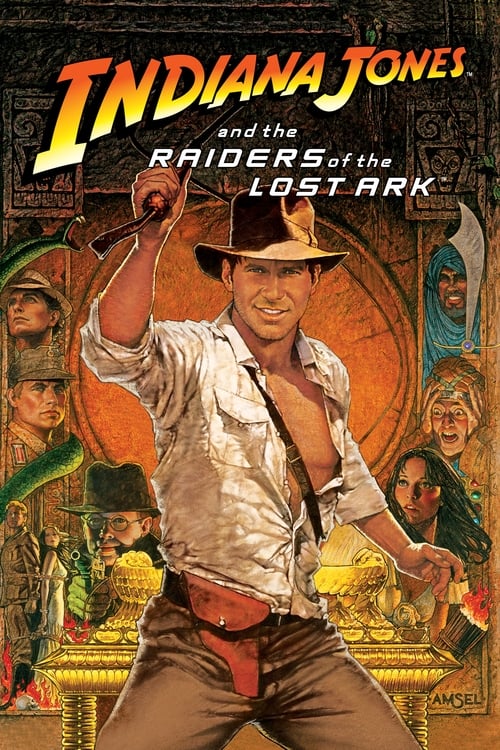
Raiders of the Lost Ark
1981 · Directed by Steven Spielberg
Woke Score
CriticCritic Score
Audience
Ultra Based
Critics rated this 82 points above its woke score. Among Ultra Based films, this critic score ranks #225 of 1469.
Representation Casting
Score: 15/100
The cast is predominantly white and male, typical of 1981 adventure films. Marion Ravenwood is a well-drawn female character, but the broader ensemble lacks diversity by modern standards.
LGBTQ+ Themes
Score: 0/100
There are no LGBTQ themes or representation in the film. The narrative is entirely heteronormative.
Feminist Agenda
Score: 25/100
Marion Ravenwood is a capable, independent woman with agency, which was relatively progressive for 1981. However, the film does not engage with feminist ideology or contemporary gender consciousness.
Racial Consciousness
Score: 5/100
The film treats non-Western characters and settings in the style of 1930s pulp adventure serials, with no modern racial consciousness or critique of colonial attitudes.
Climate Crusade
Score: 0/100
There is no engagement with climate issues or environmental consciousness in this adventure narrative.
Eat the Rich
Score: 0/100
The film contains no critique of capitalism or wealth inequality. The plot concerns the pursuit of a religious artifact, not economic systems.
Body Positivity
Score: 0/100
Body positivity is not a theme in this film. Character bodies are presented conventionally without commentary on appearance or diversity of body types.
Neurodivergence
Score: 0/100
There is no representation of neurodivergence or engagement with disability consciousness in the narrative.
Revisionist History
Score: 0/100
While the film uses Nazis as villains, this is not revisionist history but rather straightforward adventure fiction. The historical setting is backdrop, not subject to reinterpretation.
Lecture Energy
Score: 0/100
The film contains no preachy lectures about social issues or progressive values. It is pure adventure storytelling.


Synopsis
When Dr. Indiana Jones – the tweed-suited professor who just happens to be a celebrated archaeologist – is hired by the government to locate the legendary Ark of the Covenant, he finds himself up against the entire Nazi regime.
Consciousness Assessment
Raiders of the Lost Ark is a 1981 adventure film that exists in a pre-modern cultural consciousness. Spielberg and Lucas crafted this picture as an homage to 1930s serial entertainment, and it succeeds magnificently at that task. The film contains virtually no progressive messaging, no climate crusade, no anti-capitalist sentiment, and no preachy lectures about contemporary social issues. This is not a deficiency but rather a reflection of the film's stated aesthetic ambitions.
The female lead, Marion Ravenwood, is genuinely well-constructed for the era. She is a bar owner, a woman of agency and capability, and she remains in control of her narrative arc throughout. However, her competence and independence exist within a conventional adventure story framework rather than as part of any conscious progressive agenda. The supporting cast is predominantly white and male, which reflects both genre conventions and the historical moment of the film's production. The representation of non-Western characters and the cartoonish depiction of the Nazi regime follow the pulp adventure style of the 1930s serials being emulated, not contemporary cultural consciousness.
The film's minimal woke score reflects the straightforward reality that it predates the cultural markers we are measuring. Raiders of the Lost Ark is a superior adventure film, but it is not a vehicle for modern progressive sensibilities. It is, instead, a meticulously crafted artifact of pre-contemporary entertainment values.
Analysis generated by our Consciousness Algorithm
Critic Reviews
“Plays like an anthology of the best parts from all the Saturday matinee serials ever made.”
“One of the most deliriously funny, ingenious and stylish American adventure movies ever made.”
“Travels fast and straight down a linear plot, and the ceaseless rush quickly becomes monotonous.”
Consciousness Markers
The cast is predominantly white and male, typical of 1981 adventure films. Marion Ravenwood is a well-drawn female character, but the broader ensemble lacks diversity by modern standards.
There are no LGBTQ themes or representation in the film. The narrative is entirely heteronormative.
Marion Ravenwood is a capable, independent woman with agency, which was relatively progressive for 1981. However, the film does not engage with feminist ideology or contemporary gender consciousness.
The film treats non-Western characters and settings in the style of 1930s pulp adventure serials, with no modern racial consciousness or critique of colonial attitudes.
There is no engagement with climate issues or environmental consciousness in this adventure narrative.
The film contains no critique of capitalism or wealth inequality. The plot concerns the pursuit of a religious artifact, not economic systems.
Body positivity is not a theme in this film. Character bodies are presented conventionally without commentary on appearance or diversity of body types.
There is no representation of neurodivergence or engagement with disability consciousness in the narrative.
While the film uses Nazis as villains, this is not revisionist history but rather straightforward adventure fiction. The historical setting is backdrop, not subject to reinterpretation.
The film contains no preachy lectures about social issues or progressive values. It is pure adventure storytelling.