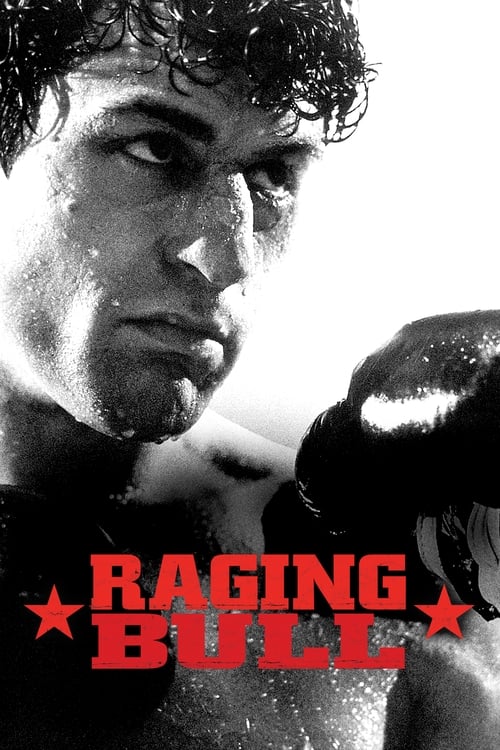
Raging Bull
1980 · Directed by Martin Scorsese
Woke Score
CriticCritic Score
Audience
Ultra Based
Critics rated this 86 points above its woke score. Among Ultra Based films, this critic score ranks #136 of 1469.
Representation Casting
Score: 5/100
The cast is predominantly white and male. Cathy Moriarty provides a female presence, but her character exists primarily as an object of the male protagonist's rage and jealousy rather than as a fully realized person.
LGBTQ+ Themes
Score: 0/100
There are no LGBTQ+ themes or representation in this film. The narrative is entirely heterosexual and focused on male-female conflict.
Feminist Agenda
Score: 2/100
The film presents a deeply misogynistic protagonist and makes no effort to critique or contextualize his violence against women. Female characters are depicted as objects of possession and suspicion.
Racial Consciousness
Score: 3/100
The film is set in a specific ethnic and working-class Italian-American context, but this is presented as cultural backdrop rather than as a subject for racial or ethnic analysis. Scorsese's later films engage more directly with questions of community and identity.
Climate Crusade
Score: 0/100
Climate change and environmental themes are entirely absent from this film about boxing and domestic violence.
Eat the Rich
Score: 5/100
The film depicts the boxing industry and working-class struggle, but does not offer systemic critique. The focus remains on individual psychology rather than institutional analysis.
Body Positivity
Score: 2/100
The film is preoccupied with the boxer's body as an instrument of violence and a site of degradation. De Niro's famous weight gain and loss serves the narrative of male self-destruction rather than any progressive vision of embodiment.
Neurodivergence
Score: 1/100
While LaMotta exhibits severe psychological disturbance and rage, the film does not engage with neurodivergence as a category of analysis. His behavior is presented as moral and characterological rather than neurological.
Revisionist History
Score: 2/100
The film is based on LaMotta's autobiography and presents his story as a historical document. It does not revise or reframe historical events through a progressive lens, instead maintaining fidelity to the source material's perspective.
Lecture Energy
Score: 1/100
Scorsese's approach is deliberately anti-preachy. The film trusts the viewer to draw conclusions without voiceover, explanation, or moral guidance. There is no lecture here, only observation.


Synopsis
The life of boxer Jake LaMotta, whose violence and temper that led him to the top in the ring destroyed his life outside of it.
Consciousness Assessment
Raging Bull is a work of considerable artistic achievement that functions almost as a case study in what progressive social consciousness was not doing in 1980. Scorsese's film is a remorseless portrait of male violence and degradation, presented in austere black-and-white cinematography that lends the brutality an almost abstract quality. The narrative makes no concessions to the audience's comfort. Jake LaMotta beats his wife, suspects her infidelity with paranoid rage, and treats women as extensions of his own neurosis. The film does not condemn this behavior through editorializing or redemptive arcs. It simply documents the wreckage.
What makes the film's cultural positioning so interesting from the perspective of modern sensibilities is its studied refusal to engage with any framework that might soften or contextualize the violence. There is no scene where LaMotta learns empathy. There is no moment of consciousness-raising. The film offers no victim's perspective, no validation of female suffering, no suggestion that his wife's experience matters in the grand narrative of his self-destruction. This is not progressive cinema. This is cinema that trusts the viewer to understand degradation without being told what to feel about it.
By contemporary standards, the film registers as almost aggressively indifferent to representation, diversity, or social commentary in the modern sense. It is entirely preoccupied with the interior landscape of male rage, rendered through an exclusively male gaze. The women in the film exist primarily as objects of possession and suspicion. Yet this very quality, this refusal to apologize or to perform progressive sentiment, constitutes its own kind of honesty. The film remains what it was in 1980: a work that prioritizes artistic vision over palatability.
Analysis generated by our Consciousness Algorithm
Critic Reviews
“The performances are riveting and the visuals are stunning. The boxing sequences are brutally realistic - there are no crappy Rocky theatrics here - and the humanity oozes out of every scene.”
“The most painful and heartrending portrait of jealousy in the cinema--an "Othello'' for our times.”
“Filmed in black-and-white and shockingly well acted by De Niro, Raging Bull suggests that if you are looking for the source of evil in the world, you don't have to look any further than yourself. It's inside you or it isn't. And it comes out or it doesn't. [19 Dec 1980]”
“Martin Scorsese's obsession with a dubious mystique of masculinity turns Raging Bull into a ponderous work of metaphysical cinematic bull.”
Consciousness Markers
The cast is predominantly white and male. Cathy Moriarty provides a female presence, but her character exists primarily as an object of the male protagonist's rage and jealousy rather than as a fully realized person.
There are no LGBTQ+ themes or representation in this film. The narrative is entirely heterosexual and focused on male-female conflict.
The film presents a deeply misogynistic protagonist and makes no effort to critique or contextualize his violence against women. Female characters are depicted as objects of possession and suspicion.
The film is set in a specific ethnic and working-class Italian-American context, but this is presented as cultural backdrop rather than as a subject for racial or ethnic analysis. Scorsese's later films engage more directly with questions of community and identity.
Climate change and environmental themes are entirely absent from this film about boxing and domestic violence.
The film depicts the boxing industry and working-class struggle, but does not offer systemic critique. The focus remains on individual psychology rather than institutional analysis.
The film is preoccupied with the boxer's body as an instrument of violence and a site of degradation. De Niro's famous weight gain and loss serves the narrative of male self-destruction rather than any progressive vision of embodiment.
While LaMotta exhibits severe psychological disturbance and rage, the film does not engage with neurodivergence as a category of analysis. His behavior is presented as moral and characterological rather than neurological.
The film is based on LaMotta's autobiography and presents his story as a historical document. It does not revise or reframe historical events through a progressive lens, instead maintaining fidelity to the source material's perspective.
Scorsese's approach is deliberately anti-preachy. The film trusts the viewer to draw conclusions without voiceover, explanation, or moral guidance. There is no lecture here, only observation.