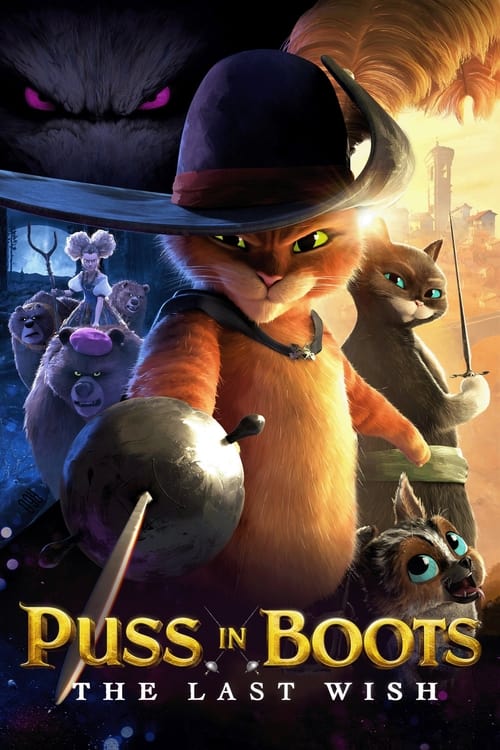
Puss in Boots: The Last Wish
2022 · Directed by Joel Crawford
Woke Score
CriticCritic Score
Audience
Ultra Based
Critics rated this 61 points above its woke score. Among Ultra Based films, this critic score ranks #519 of 1469.
Representation Casting
Score: 45/100
The film features a diverse voice cast including Latino, Hispanic, and LGBTQ+ actors like Harvey Guillen, but this diversity is incidental to the narrative rather than thematic. The characters' identities are not meaningfully explored through a lens of representation.
LGBTQ+ Themes
Score: 0/100
The film contains no LGBTQ+ themes, characters, or relationships. While Harvey Guillen voices a supporting character, the film does not explore or center any queer narratives or identities.
Feminist Agenda
Score: 15/100
Kitty Softpaws is a competent female character, but the film does not engage with feminist critique or themes. Female characters are present but not examined through a gendered lens.
Racial Consciousness
Score: 10/100
While the cast is diverse, the film shows no evidence of engaging with racial consciousness or addressing racial themes. The diversity appears to be casting choice rather than thematic exploration.
Climate Crusade
Score: 0/100
There is no climate-related content or environmental consciousness in this fairy-tale adventure film.
Eat the Rich
Score: 0/100
The film contains no anti-capitalist themes or critique of economic systems. It is a straightforward adventure narrative with no economic dimension.
Body Positivity
Score: 10/100
The film features characters of various body types in its cast, but does not explicitly engage with body positivity as a theme or make statements about body image.
Neurodivergence
Score: 0/100
The film contains no representation of or commentary on neurodivergence.
Revisionist History
Score: 0/100
As a fantasy adventure with no historical grounding, the film does not engage in revisionist history.
Lecture Energy
Score: 5/100
The film occasionally delivers moral lessons about accepting mortality and valuing relationships, but these emerge naturally from the narrative rather than as preachy lectures.


Synopsis
Puss in Boots discovers that his passion for adventure has taken its toll: He has burned through eight of his nine lives, leaving him with only one life left. Puss sets out on an epic journey to find the mythical Last Wish and restore his nine lives.
Consciousness Assessment
Puss in Boots: The Last Wish is a competently executed animated adventure that benefits from a multinational voice cast and narrative themes of mortality and self-examination. The film assembles talent from various backgrounds, with Antonio Banderas returning to voice the titular character, Salma Hayek as Kitty Softpaws, Harvey Guillen as Perrito, and supporting roles from Florence Pugh and Olivia Colman. Yet the presence of diverse voices does not constitute a coherent statement about representation or identity. The characters exist within a fairy-tale framework where such considerations remain largely dormant.
The narrative itself pursues familiar terrain: a morally compromised protagonist confronts his mortality and seeks redemption through self-knowledge rather than systemic critique. Puss must accept his limitations, make peace with his past, and learn the value of companionship. These are humanist themes, certainly, but they lack the specific inflection of modern progressive sensibilities. The film does not interrogate power structures, examine historical injustice, or center marginalized perspectives as organizing principles of its story. Instead, it offers a middle-aged cat learning to live differently, which is touching enough but structurally conservative.
The film received an Academy Award nomination for Best Animated Feature, grossed substantially worldwide, and demonstrates DreamWorks Animation's technical proficiency. What it does not demonstrate is a systematic commitment to the constellation of cultural markers that define contemporary social consciousness. One watches a well-made children's film, not a text engaged in the project of cultural recalibration.
Analysis generated by our Consciousness Algorithm
Critic Reviews
““The Last Wish” has no qualms about testing the expectations of its young audience while delivering a freewheeling tale about appreciating the nine lives we already have. ”
“It’s a perfect package of whimsy, sass and sweetness.”
“It is not only one of the best animated films of the year, but it's one of DreamWorks' best, and one that will strike a chord with moviegoers of all ages. It's equal parts exciting and hilarious as well as earnest, it never feels like it is talking down to anyone.”
“How bland and forgettable this film is, without in the smallest way harnessing the real performing power of Banderas, Colman, Pugh, Winstone et al.”
Consciousness Markers
The film features a diverse voice cast including Latino, Hispanic, and LGBTQ+ actors like Harvey Guillen, but this diversity is incidental to the narrative rather than thematic. The characters' identities are not meaningfully explored through a lens of representation.
The film contains no LGBTQ+ themes, characters, or relationships. While Harvey Guillen voices a supporting character, the film does not explore or center any queer narratives or identities.
Kitty Softpaws is a competent female character, but the film does not engage with feminist critique or themes. Female characters are present but not examined through a gendered lens.
While the cast is diverse, the film shows no evidence of engaging with racial consciousness or addressing racial themes. The diversity appears to be casting choice rather than thematic exploration.
There is no climate-related content or environmental consciousness in this fairy-tale adventure film.
The film contains no anti-capitalist themes or critique of economic systems. It is a straightforward adventure narrative with no economic dimension.
The film features characters of various body types in its cast, but does not explicitly engage with body positivity as a theme or make statements about body image.
The film contains no representation of or commentary on neurodivergence.
As a fantasy adventure with no historical grounding, the film does not engage in revisionist history.
The film occasionally delivers moral lessons about accepting mortality and valuing relationships, but these emerge naturally from the narrative rather than as preachy lectures.