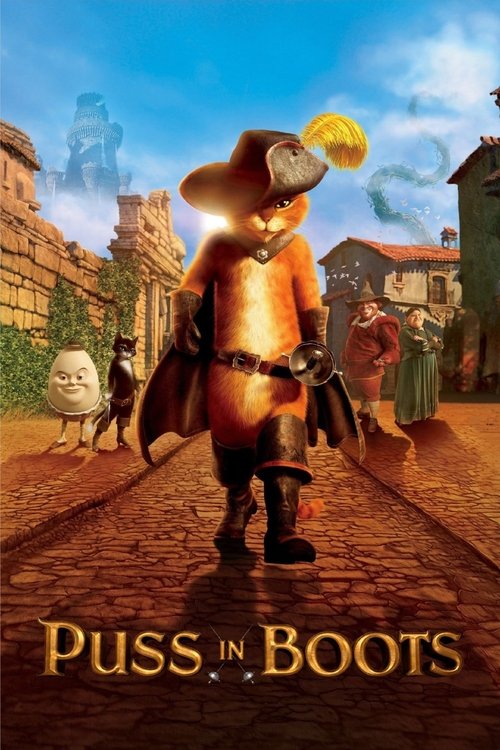
Puss in Boots
2011 · Directed by Chris Miller
Woke Score
CriticCritic Score
Audience
Ultra Based
Critics rated this 57 points above its woke score. Among Ultra Based films, this critic score ranks #767 of 1469.
Representation Casting
Score: 35/100
Latino voice talent in lead roles (Banderas, Hayek) and a female co-protagonist, though these reflect standard casting rather than deliberate diversity initiatives. No commentary on these choices.
LGBTQ+ Themes
Score: 0/100
No LGBTQ+ themes, representation, or subtext present in the film.
Feminist Agenda
Score: 20/100
Kitty Softpaws is a capable, action-oriented female character, but her role remains primarily romantic and complementary to the male protagonist's journey.
Racial Consciousness
Score: 0/100
No racial consciousness or examination of racial themes. Diverse casting reflects industry norms without commentary.
Climate Crusade
Score: 0/100
No climate-related themes or environmental messaging present.
Eat the Rich
Score: 5/100
The orphanage setting suggests poverty, but the film treats this as narrative backdrop rather than critique of economic systems or institutional failure.
Body Positivity
Score: 0/100
No body diversity or body positivity messaging. All characters conform to conventional animated proportions.
Neurodivergence
Score: 0/100
No representation of or commentary on neurodivergent characters or experiences.
Revisionist History
Score: 0/100
No reexamination or reinterpretation of historical narratives from contemporary perspectives.
Lecture Energy
Score: 0/100
The film maintains a lighthearted comedic tone throughout with no preachy or preachy moments regarding social issues.


Synopsis
Long before he even met Shrek, the notorious fighter, lover and outlaw Puss in Boots becomes a hero when he sets off on an adventure with the tough and street smart Kitty Softpaws and the mastermind Humpty Dumpty to save his town. This is the true story of The Cat, The Myth, The Legend... The Boots.
Consciousness Assessment
This 2011 animated prequel operates with the casual sensibilities of a children's adventure film made in the pre-awakening era, which is to say it bears the markers of genuine indifference to modern progressive concerns. The film does include Kitty Softpaws, a competent female character voiced by Salma Hayek who serves as co-protagonist and love interest, though her function remains fundamentally romantic and complementary to Puss's arc. The presence of Latino voice talent in lead roles (Banderas, Hayek) reflects Hollywood's general casting practices rather than any deliberate statement on representation, and the film makes no effort to foreground or examine this choice.
The narrative centers on themes of redemption, betrayal, and friendship, none of which carry contemporary progressive messaging. Humpty Dumpty's villainy stems from personal grievance rather than systemic critique, and the film's exploration of his character demonstrates no interest in class consciousness or institutional critique. The tone remains lighthearted and comedic throughout, with no lecture energy whatsoever. The orphanage setting and Puss's origin story touch on poverty and abandonment, but treat these as plot devices rather than subjects for social examination.
What prevents this film from scoring lower is the simple fact that it employs a female character of genuine agency alongside the male lead, which registers faintly on representation metrics despite lacking any intentional progressive framework. The film remains, by and large, a straightforward family adventure comedy with no discernible interest in contemporary cultural consciousness beyond standard children's entertainment inclusivity.
Analysis generated by our Consciousness Algorithm
Critic Reviews
“Thanks to Banderas and his Corinthian leather purr and writers who know how to use it, "Puss" is the best animated film of 2011. ”
“The results are so funny and irresistible audiences are bound to be swept away into this kitty's universe.”
“A perfectly diverting romp that happens to showcase some of the best 3D work yet from a mainstream animated feature. Colorful, clever enough, free of cloying showbiz in-jokes, action-packed without being ridiculous about it and even well choreographed.”
Consciousness Markers
Latino voice talent in lead roles (Banderas, Hayek) and a female co-protagonist, though these reflect standard casting rather than deliberate diversity initiatives. No commentary on these choices.
No LGBTQ+ themes, representation, or subtext present in the film.
Kitty Softpaws is a capable, action-oriented female character, but her role remains primarily romantic and complementary to the male protagonist's journey.
No racial consciousness or examination of racial themes. Diverse casting reflects industry norms without commentary.
No climate-related themes or environmental messaging present.
The orphanage setting suggests poverty, but the film treats this as narrative backdrop rather than critique of economic systems or institutional failure.
No body diversity or body positivity messaging. All characters conform to conventional animated proportions.
No representation of or commentary on neurodivergent characters or experiences.
No reexamination or reinterpretation of historical narratives from contemporary perspectives.
The film maintains a lighthearted comedic tone throughout with no preachy or preachy moments regarding social issues.