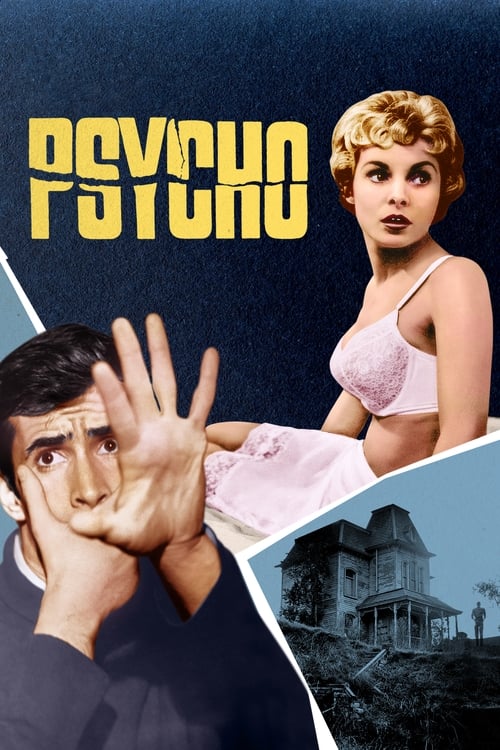
Psycho
1960 · Directed by Alfred Hitchcock
Woke Score
CriticCritic Score
Audience
Ultra Based
Critics rated this 43 points above its woke score. Among Ultra Based films, this critic score ranks #1235 of 1469.
Representation Casting
Score: 5/100
The cast is uniformly white and drawn from the conventional Hollywood hierarchy of the era. Marion Crane's female protagonist status reflects 1960 casting conventions rather than contemporary diversity commitments.
LGBTQ+ Themes
Score: 0/100
No LGBTQ representation or themes are present in the film. The narrative makes no apparent engagement with sexual identity or orientation.
Feminist Agenda
Score: 3/100
Marion Crane functions as an active protagonist early in the film, but her agency is ultimately punished through murder. The narrative reinforces mid-century anxieties about female sexuality and moral transgression rather than challenging them.
Racial Consciousness
Score: 2/100
The film contains no racial representation or engagement with racial themes. The motel setting and supporting cast are entirely white, which was unremarkable for 1960 Hollywood but reflects the absence of any conscious racial awareness.
Climate Crusade
Score: 0/100
Climate change and environmental consciousness are entirely absent from the film's concerns and narrative.
Eat the Rich
Score: 5/100
Marion's theft of $40,000 initiates the plot, but the film treats her criminality as a moral failing rather than as social critique. There is no anti-capitalist commentary or systemic critique of economic structures.
Body Positivity
Score: 2/100
The film presents the female body as object of voyeuristic consumption and ultimately violence. The famous shower scene exemplifies the era's approach to the female form rather than any commitment to body positivity.
Neurodivergence
Score: 3/100
Norman Bates is presented as psychologically disturbed, but the film pathologizes mental illness as a source of horror rather than engaging with neurodivergence as a dimension of human experience worthy of respect.
Revisionist History
Score: 0/100
The film contains no historical narrative or revisionist engagement with historical events. It is a contemporary thriller set in its present day.
Lecture Energy
Score: 2/100
Hitchcock's approach is fundamentally one of suspense craft rather than moral instruction. The film does not lecture its audience, though it does embed certain period attitudes about gender and morality.


Synopsis
When larcenous real estate clerk Marion Crane goes on the lam with a wad of cash and hopes of starting a new life, she ends up at the notorious Bates Motel, where manager Norman Bates cares for his housebound mother.
Consciousness Assessment
Psycho remains a technical masterwork of cinema, yet it emerges from an era before modern progressive cultural consciousness became a defining feature of contemporary filmmaking. The film's treatment of its female protagonist, Marion Crane, reflects the anxieties of 1960 rather than any contemporary commitment to social representation. She is punished swiftly and brutally for her moral transgression, a narrative choice that speaks to the sexual repression and gender dynamics of the era rather than to any self-aware engagement with feminist critique. The film's depiction of mental illness through Norman Bates trades in psychological pathology as spectacle, presenting his condition as intrinsically tied to maternal domination in ways that modern audiences might find troubling, though such concerns were not part of the cultural vocabulary at the time.
The cast is uniformly white and heterosexual by default rather than by deliberate commitment to diversity. The film contains no apparent LGBTQ representation, no climate consciousness, no anti-capitalist sentiment, and no investment in body positivity or neurodivergent representation. What we have instead is a film preoccupied with genre innovation, suspense mechanics, and the violation of Hollywood's Production Code, concerns that were genuinely transgressive in 1960 but cannot be mistaken for modern social consciousness.
That Psycho remains a work of artistic genius does not require us to retroactively claim it as an early champion of progressive values. It is instead a film of its moment, a horror picture that shocked audiences through formal innovation and the audacity of its plot rather than through any commitment to cultural awareness. To score it highly on contemporary social consciousness markers would be to misunderstand both the film and the historical moment that produced it.
Analysis generated by our Consciousness Algorithm
Critic Reviews
“Norman Bates is alive and well, and just a tad kinkier than you remember him. ”
“William H. Macy is fine as the detective Arbogast, wearing a hat he could have borrowed from Martin Balsam in the original role.”
“The film is shot in color and includes an amped-up Danny Elfman version of Bernard Herrmann's haunting score.”
Consciousness Markers
The cast is uniformly white and drawn from the conventional Hollywood hierarchy of the era. Marion Crane's female protagonist status reflects 1960 casting conventions rather than contemporary diversity commitments.
No LGBTQ representation or themes are present in the film. The narrative makes no apparent engagement with sexual identity or orientation.
Marion Crane functions as an active protagonist early in the film, but her agency is ultimately punished through murder. The narrative reinforces mid-century anxieties about female sexuality and moral transgression rather than challenging them.
The film contains no racial representation or engagement with racial themes. The motel setting and supporting cast are entirely white, which was unremarkable for 1960 Hollywood but reflects the absence of any conscious racial awareness.
Climate change and environmental consciousness are entirely absent from the film's concerns and narrative.
Marion's theft of $40,000 initiates the plot, but the film treats her criminality as a moral failing rather than as social critique. There is no anti-capitalist commentary or systemic critique of economic structures.
The film presents the female body as object of voyeuristic consumption and ultimately violence. The famous shower scene exemplifies the era's approach to the female form rather than any commitment to body positivity.
Norman Bates is presented as psychologically disturbed, but the film pathologizes mental illness as a source of horror rather than engaging with neurodivergence as a dimension of human experience worthy of respect.
The film contains no historical narrative or revisionist engagement with historical events. It is a contemporary thriller set in its present day.
Hitchcock's approach is fundamentally one of suspense craft rather than moral instruction. The film does not lecture its audience, though it does embed certain period attitudes about gender and morality.