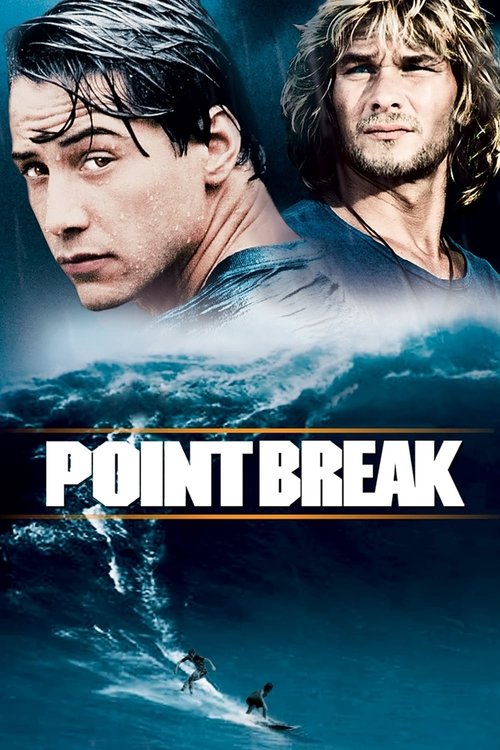
Point Break
1991 · Directed by Kathryn Bigelow
Woke Score
CriticCritic Score
Audience
Ultra Based
Critics rated this 56 points above its woke score. Among Ultra Based films, this critic score ranks #914 of 1469.
Representation Casting
Score: 25/100
Lori Petty appears as Tyler, a female surfer character, but she is largely peripheral to the narrative. Female representation exists but lacks substantive development or meaningful agency.
LGBTQ+ Themes
Score: 0/100
No LGBTQ+ themes, characters, or subtext are present in the film. The narrative is entirely heteronormative and contains no evidence of queer representation.
Feminist Agenda
Score: 15/100
While Kathryn Bigelow's direction applies a female gaze to the male body and masculinity, the film does not engage in explicit feminist messaging or critique. Any feminist subtext is interpretive rather than overt.
Racial Consciousness
Score: 0/100
The film contains no racial consciousness, discussions of race, or meaningful representation of non-white characters. Race is not addressed as a thematic concern.
Climate Crusade
Score: 0/100
No climate-related themes, environmental messaging, or ecological consciousness appears in the film. The natural setting of the beach is purely aesthetic.
Eat the Rich
Score: 20/100
The bank robbery plot contains implicit anti-establishment sentiment and critique of institutional authority, though this is framed as personal rebellion rather than systemic critique or explicit anti-capitalist ideology.
Body Positivity
Score: 0/100
The film celebrates athletic, conventionally attractive male bodies in the action and surfing sequences, but this is standard action genre convention, not body positivity messaging.
Neurodivergence
Score: 0/100
No neurodivergent characters, representation, or discussion of neurodivergence appears in the film.
Revisionist History
Score: 0/100
The film contains no revisionist historical narrative or reinterpretation of historical events. The Reagan-era presidential masks are aesthetic rather than historical commentary.
Lecture Energy
Score: 0/100
The film does not engage in preachy moralizing, explicit social instruction, or lecture-like exposition about social issues. The narrative prioritizes action and spectacle over ideological instruction.


Synopsis
In Los Angeles, a gang of bank robbers who call themselves The Ex-Presidents commit their crimes while wearing masks of Reagan, Carter, Nixon and Johnson. Believing that the members of the gang could be surfers, the F.B.I. sends young agent Johnny Utah to the beach undercover to mix with the surfers and gather information.
Consciousness Assessment
Point Break arrives as a curio in the annals of woke cinema, a film that contemporary critics have attempted to retrofit with progressive credentials it does not truly possess. Directed by Kathryn Bigelow, a woman working in an aggressively male-dominated action genre, the film has been retroactively praised as a "female-gaze action movie" and an examination of toxic masculinity. This interpretation, while not entirely unfounded, mistakes artistic sophistication for social consciousness. Bigelow's visual treatment of the male body and her exploration of masculine performance are indeed distinctive, but they represent an aesthetic intervention rather than an ideological one. The film does not announce itself as a critique of patriarchy or offer systematic analysis of gender dynamics. It simply makes the male form an object of visual attention, which in 1991 was sufficiently novel to register as transgressive.
The narrative itself remains largely indifferent to progressive sensibilities. Lori Petty's Tyler is present as a surfer character, but she occupies peripheral space in a story fundamentally concerned with the homoerotic tension between two male leads and their competing philosophies of freedom. The film's anti-establishment impulses, embodied in Patrick Swayze's Bodhi and his crew of bank-robbing surfers, express a kind of libertarian individualism rather than systemic critique. These criminals reject society's rules not because they object to capitalism or institutional injustice, but because they experience themselves as transcendent beings for whom conventional morality is an obstacle to authentic living. This is rebellion as personal ego gratification, not as political awakening.
What makes Point Break worth examining is precisely its refusal to telegraph social consciousness at all. It is a 1991 action thriller that happens to be directed by a woman and happens to contain visual language that contemporary critics can mine for progressive meaning. The film scores modestly on the register not because it actively engages with modern progressive sensibilities, but because it contains traces of feminine perspective and vague anti-institutional sentiment. For those seeking a genuinely progressive action film, we must look elsewhere. For those seeking a well-crafted action film from the pre-woke era, this remains a legitimate artifact of its time.
Analysis generated by our Consciousness Algorithm
Critic Reviews
“In all fairness, this swill's swells are in the action: car chases, foot chases, wipeouts, shootouts, brawls and falls -- and they're terrific. Director Kathryn Bigelow pumps up the action to, indeed, full adrenal dimension. [12 July 1991]”
“The plot of Point Blank, summarized, invites parody (rookie agent goes undercover as surfer to catch bank robbers). The result is surprisingly effective.”
“At her best—and even in a hand-me-down project like Point Break—Bigelow is a uniquely talented, uniquely powerful filmmaker. Where the male action directors are still playing with toys-with dolls and models and matte shots-Bigelow has tapped into something primal and strong. She is a sensualist of genius in this most sensual of mediums.”
“Whatever raffish charm Reeves and Swayze exhibit is lost in the superficial gloss of Iliff's screenplay and Bigelow's direction. [12 July 1991, p.7]”
Consciousness Markers
Lori Petty appears as Tyler, a female surfer character, but she is largely peripheral to the narrative. Female representation exists but lacks substantive development or meaningful agency.
No LGBTQ+ themes, characters, or subtext are present in the film. The narrative is entirely heteronormative and contains no evidence of queer representation.
While Kathryn Bigelow's direction applies a female gaze to the male body and masculinity, the film does not engage in explicit feminist messaging or critique. Any feminist subtext is interpretive rather than overt.
The film contains no racial consciousness, discussions of race, or meaningful representation of non-white characters. Race is not addressed as a thematic concern.
No climate-related themes, environmental messaging, or ecological consciousness appears in the film. The natural setting of the beach is purely aesthetic.
The bank robbery plot contains implicit anti-establishment sentiment and critique of institutional authority, though this is framed as personal rebellion rather than systemic critique or explicit anti-capitalist ideology.
The film celebrates athletic, conventionally attractive male bodies in the action and surfing sequences, but this is standard action genre convention, not body positivity messaging.
No neurodivergent characters, representation, or discussion of neurodivergence appears in the film.
The film contains no revisionist historical narrative or reinterpretation of historical events. The Reagan-era presidential masks are aesthetic rather than historical commentary.
The film does not engage in preachy moralizing, explicit social instruction, or lecture-like exposition about social issues. The narrative prioritizes action and spectacle over ideological instruction.