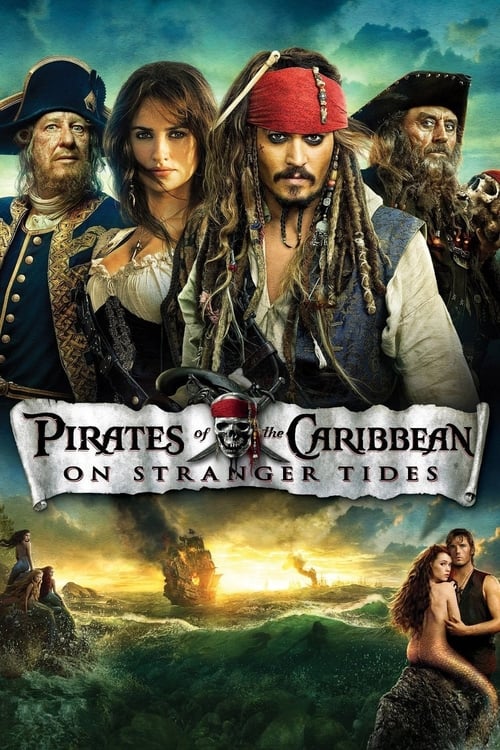
Pirates of the Caribbean: On Stranger Tides
2011 · Directed by Rob Marshall
Woke Score
CriticCritic Score
Audience
Ultra Based
Critics rated this 37 points above its woke score. Among Ultra Based films, this critic score ranks #1264 of 1469.
Representation Casting
Score: 25/100
Penélope Cruz provides modest female representation in an action role, though the cast remains predominantly white and Eurocentric. The inclusion feels conventional rather than progressive.
LGBTQ+ Themes
Score: 0/100
No LGBTQ+ themes, representation, or subtext present in the film. The narrative is entirely heteronormative.
Feminist Agenda
Score: 20/100
Cruz's character is a pirate and capable fighter, but the narrative ultimately subordinates her arc to male-centered adventure and romantic entanglement with the protagonist.
Racial Consciousness
Score: 5/100
The film demonstrates minimal racial consciousness. While there are Black characters in background and supporting roles, they receive no narrative attention or thematic engagement.
Climate Crusade
Score: 0/100
Climate themes are entirely absent. The Fountain of Youth plot device serves only as a MacGuffin for adventure narrative.
Eat the Rich
Score: 0/100
No critique of capitalist systems, corporate power, or economic inequality. Pirates themselves are portrayed as romantic rogues rather than class consciousness rebels.
Body Positivity
Score: 0/100
The film exhibits conventional Hollywood beauty standards with no engagement with body diversity or positive representation of non-normative bodies.
Neurodivergence
Score: 0/100
No representation of neurodivergent characters or themes. The film contains no engagement with disability or neurodiversity.
Revisionist History
Score: 5/100
While the film takes fantastical liberties with historical piracy, these are entertainment choices rather than revisionist historical consciousness. No attempt to reframe historical narratives through contemporary values.
Lecture Energy
Score: 0/100
The film contains no preachy messaging, social commentary, or attempts to educate the audience about social issues. It is purely entertainment.


Synopsis
When Jack crosses paths with a woman from his past, he's not sure if it's love...or if she's a ruthless con artist using him to find the fabled Fountain of Youth.
Consciousness Assessment
Pirates of the Caribbean: On Stranger Tides represents the pre-awakening blockbuster, a film constructed before the specific cultural markers of contemporary progressive consciousness became standard expectations in mainstream cinema. The inclusion of Penélope Cruz as a pirate character provides modest gender representation in the action-adventure space, though the narrative itself demonstrates no engagement with the frameworks we now associate with social consciousness. The film is apolitical by design, concerned entirely with spectacle and commercial appeal rather than cultural awareness or progressive messaging. It exists as a pure entertainment product, untethered from any preachy impulse or social consciousness raising. This is not a film interested in interrogating power structures, environmental crisis, historical injustice, or the lived experiences of marginalized communities. It is simply a pirate adventure, and it makes no apologies for the limitation. Viewed through the lens of 2020s cultural sensibilities, the film reads as almost innocent in its lack of engagement with contemporary progressive frameworks. There are no lectures embedded in the narrative, no revisionist historical impulses, no climate anxiety, and no critique of capitalist systems. What emerges is a film that belongs entirely to its moment, a commercial product designed to entertain without complicating the viewer's relationship to social structures or cultural hierarchies.
Analysis generated by our Consciousness Algorithm
Critic Reviews
“This is the perfect summer movie and perhaps the best Pirates of them all. ”
“On Stranger Tides feels as fresh and bracingly exhilarating as the day Jack Sparrow first swashed his buckle.”
“Depp and Cruz only occasionally strike the sparks expected from two of the world's most beautiful people. ”
“This isn't absurdity. This is nonsense - and it's as boring as nonsense. ”
Consciousness Markers
Penélope Cruz provides modest female representation in an action role, though the cast remains predominantly white and Eurocentric. The inclusion feels conventional rather than progressive.
No LGBTQ+ themes, representation, or subtext present in the film. The narrative is entirely heteronormative.
Cruz's character is a pirate and capable fighter, but the narrative ultimately subordinates her arc to male-centered adventure and romantic entanglement with the protagonist.
The film demonstrates minimal racial consciousness. While there are Black characters in background and supporting roles, they receive no narrative attention or thematic engagement.
Climate themes are entirely absent. The Fountain of Youth plot device serves only as a MacGuffin for adventure narrative.
No critique of capitalist systems, corporate power, or economic inequality. Pirates themselves are portrayed as romantic rogues rather than class consciousness rebels.
The film exhibits conventional Hollywood beauty standards with no engagement with body diversity or positive representation of non-normative bodies.
No representation of neurodivergent characters or themes. The film contains no engagement with disability or neurodiversity.
While the film takes fantastical liberties with historical piracy, these are entertainment choices rather than revisionist historical consciousness. No attempt to reframe historical narratives through contemporary values.
The film contains no preachy messaging, social commentary, or attempts to educate the audience about social issues. It is purely entertainment.